

The desert air will feel different next week in Las Vegas. It always changes a little during NAB week—the hotels buzz louder, the taxis run hotter, and the strip hums with caffeine, curiosity, and people carrying hard cases full of dreams. But this year feels heavier, sharper, maybe even historic. When the 2026 NAB Show opens its doors on April 18 at the newly renovated Las Vegas Convention Center, it won’t just be another week of gear demos and glowing badges. It’ll be the moment broadcasting officially catches up to the future it’s been talking about for a decade.
The word echoing through pre-show chatter is convergence. Traditional media, artificial intelligence, and the creator economy are colliding in a way that finally feels less like speculation and more like a handshake. The banners hanging over Paradise Road say it plainly: “From Experimentation to Real-World Impact.” It’s not just marketing this time. Everyone heading to Vegas knows this year isn’t about theory—it’s about execution.
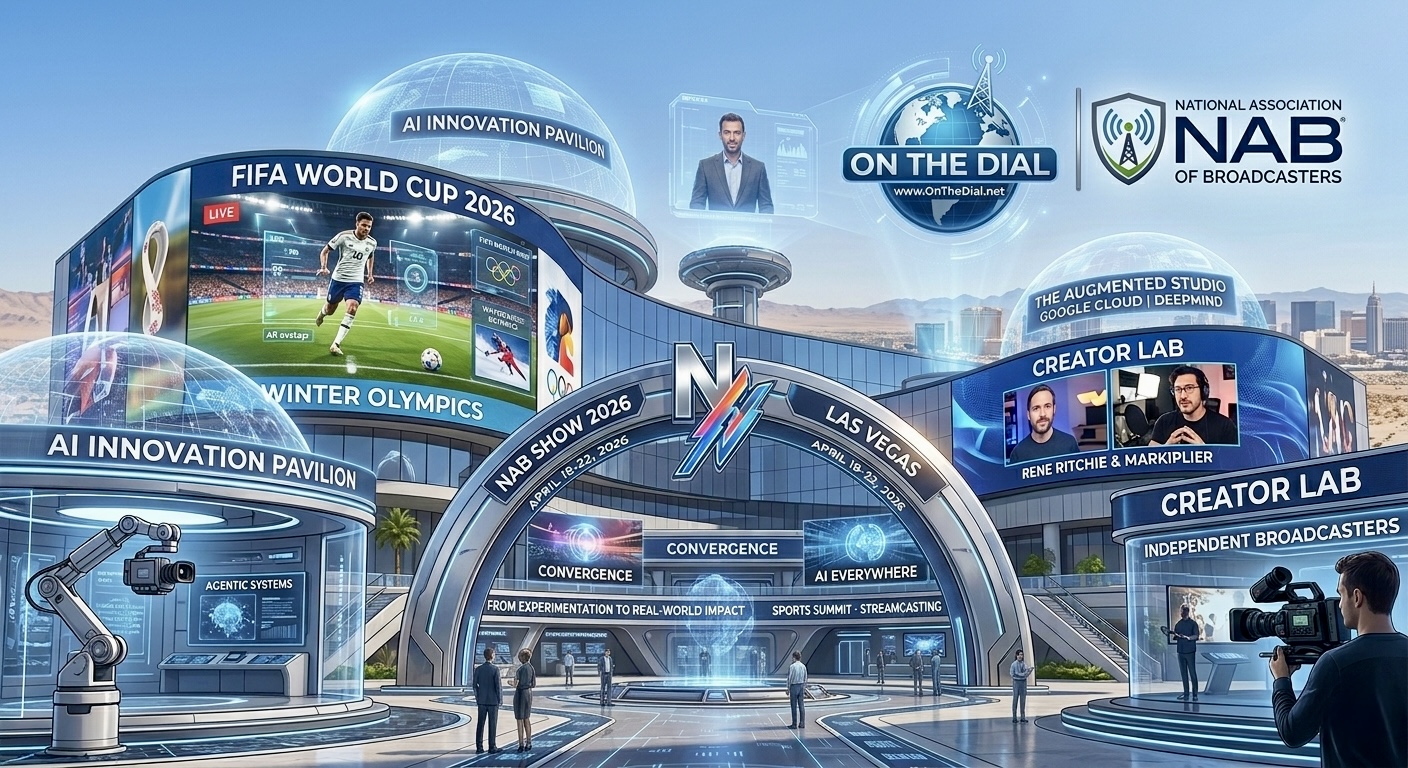
AI, as it always does, is set to dominate the conversation. In years past, the Innovation Zone was full of half-demos and over-promises. This year, the talk will be about agentic systems—AI that actually does the work without needing a babysitter. These aren’t toys spitting out copy and retouched photos; they’re background collaborators capable of indexing archives, cutting highlight reels, cleaning audio, and building metadata in real time. Google Cloud’s Anil Jain and DeepMind’s Márcia Mayer will anchor the week with a keynote called “The Augmented Studio,” and they’re expected to show what happens when creativity stops reacting to AI and starts directing it.
The AI Innovation Pavilion is shaping up to be the heart of the exhibition floor. Adobe’s bringing a version of its suite that’ll feature built-in autonomous agents working automatically within Premiere and Audition—think real-time editing companions nested in your workflow. Microsoft will have its own take on AI-powered production baked directly into its operating system. The show’s motto is “AI Everywhere,” and this year, that’s not hyperbole. Every piece of gear, from cameras to mixers to servers, seems to be learning how to think.
But NAB’s always been about more than tech—it’s about broadcast’s personality. That’s why the expansion of the Sports Summit feels like a shot of adrenaline into the schedule. With both the FIFA World Cup and the Winter Olympics ahead, those four days are poised to redefine how live sports reach fans. The word you’ll hear over and over on those panels is streamcasting, and it might be the most radical reimagining of broadcast infrastructure since color TV. These are fully digital, modular control centers that can be deployed anywhere—stadium parking lots, hotels, even pop-up venues. Gone are the monster trucks and cable tangles. The new model is small, smart, and shockingly mobile.
Jon Miller from NBC Sports is slated to sit down for what’s already being whispered as the must-watch fireside chat of the week. He’ll walk through how NBC is reinventing sports storytelling in real-time, from AR overlays to VR fan experiences to athletes running their own content studios. The message is clear—this year, teams and networks aren’t just sharing the field; they’re sharing the broadcast rights with players themselves. Sports coverage, like everything else, has gone from centralized production to personal storytelling.
And then there’s the creative side of things—the soul of NAB, if you know where to look. The Creator Lab is returning bigger than ever, positioned dead center in the Central Hall, and it’s already considered the most chaotic, hopeful part of the show. Once seen as a sideshow for influencers and YouTubers, it’s now a full-scale powerhouse for what the industry calls “independent broadcasters.” That phrase used to sound cute. Now it’s business. YouTube liaison René Ritchie, along with digital heavyweight Markiplier, will bring audiences and advertisers together in jam-packed sessions on creator economies, monetization, and—just as importantly—longevity. There’s even a “Creator-Brand Matchmaking” lounge, where bright ideas are traded as fast as business cards once were. The line between broadcaster and creator is dissolving, and NAB is finally leaning into it.
Beyond the buzzwords and branding, the floor itself is turning into a glimpse of media’s next chapter. Blackmagic Design will roll out its URSA Cine Immersive Camera—the first truly broadcast-friendly tool built for Apple’s immersive formats, including VR180 and Apple Vision workflows. Lawo, the quiet revolutionary from Germany, will unveil its new cloud-native HOME Apps, which run clean on simple COTS servers. It’s the antithesis of bespoke hardware culture; this is production that scales up or down like software, not shipping crates. Everywhere you look, you can feel the ground shifting.
Even the old guard is showing up with stories worth hearing. Sir Roger Deakins, the lighting poet of 1917 and Blade Runner 2049, will hold court in CineCentral, where he’ll talk about cinematography as patience, not pixels. WWE’s Nick Khan and Paul “Triple H” Levesque will dissect the way global entertainment can evolve without losing its edge or its audience. Comedian Nate Bargatze will collect the Television Chairman’s Award, a quiet reminder that in a year driven by code and cameras, comedy still creates connection faster than any algorithm ever will.
One of the most anticipated sessions will belong to neuroscientist Poppy Crum, whose talk on how AI and immersive formats change emotional engagement promises to make attendees rethink what “viewer experience” really means. She plans to unpack how cognition, empathy, and sensory triggers are being redefined by evolving media language. The whole idea—that format can change physiology—is as eerie as it is exciting. It’s exactly the kind of thinking NAB needs right now.
From what’s already known, this year’s show won’t just be about shiny objects or new tech getting applause. It’s a reckoning. Broadcasters have spent half a decade professing transformation, yet living in half-measures. Now, in a freshly wired, AI-augmented world, they finally have to choose between evolution and extinction.
By the time doors open on April 18, the desert air really will feel different—not just because of what’s being shown, but because of what’s being accepted. The fences that used to divide production from distribution, creators from corporations, and humans from machines are finally coming down. For the first time in years, the NAB Show isn’t about waiting for the future to arrive. It’s about realizing it’s already here.
-JPS