


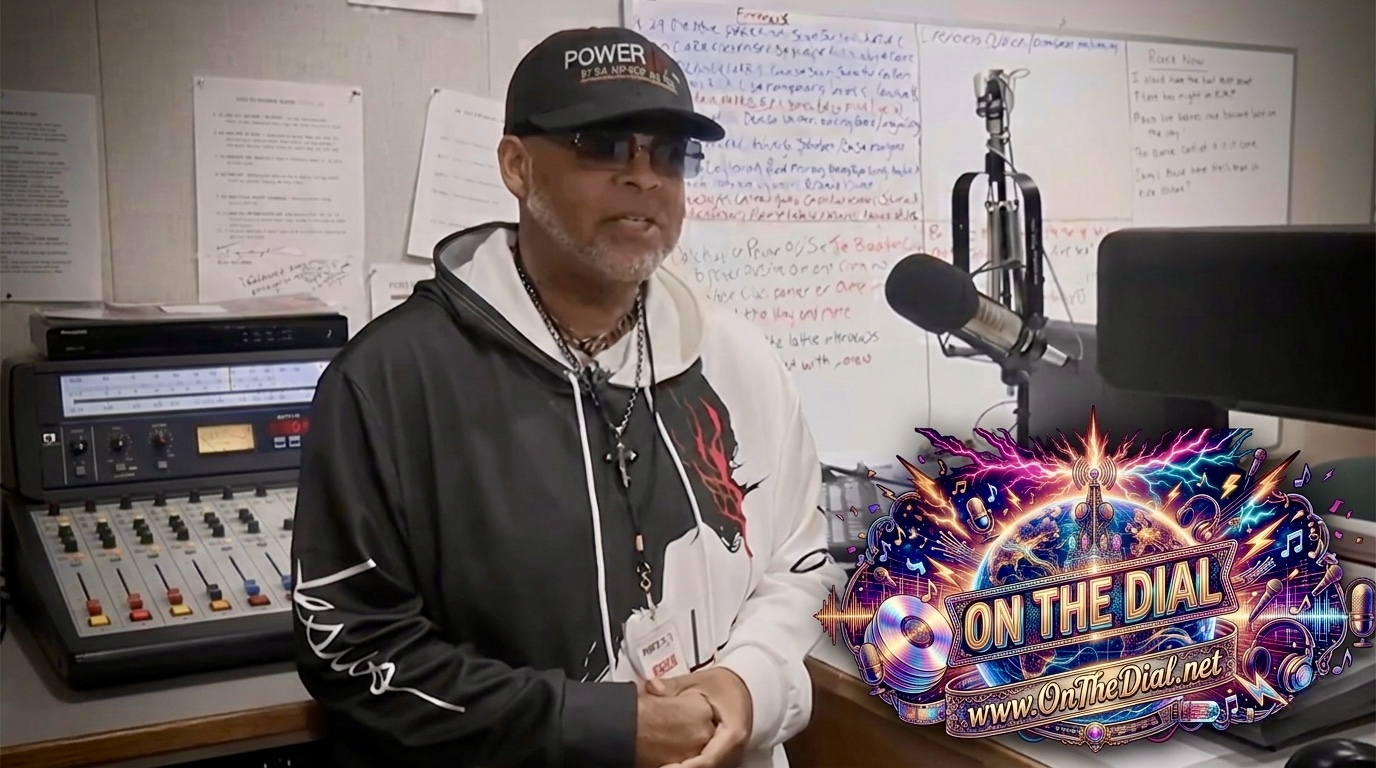
Radio doesn’t always wait for permission to recognize greatness.
Sometimes it just shows up, calls it out, and lets everybody know it’s time.
That’s exactly what’s happening with Brion O’Brion, who is officially headed into the National Black Radio Hall of Fame. And the reaction across the industry has been pretty consistent—no surprise, no debate, just respect.
Because if you’ve been anywhere near the work Brion has done over the years, especially at WQHH-FM, you already understand this isn’t about a single achievement. It’s about a career that has been steady, intentional, and built on something this business doesn’t always reward the way it should: staying power.
But like most real radio stories, this one didn’t start with a title.
It started with a kid in Norfolk who just couldn’t stay away from the station line.
He wasn’t calling for contests. He wasn’t trying to get on for attention. He just wanted to be part of it. A few seconds on the air. A chance to say the call letters. That small moment of connection that feels like everything when you’re young and obsessed with radio.
Most of those kids fade out.
Brion didn’t.
On the other side of those calls was Rick Party, who heard something different in the repetition, the curiosity, the energy. Instead of shutting it down, he leaned into it. He gave Brion a chance to step closer to the environment, to understand what actually happens behind the mic, not just what listeners hear.
That moment matters more than people realize.
Because in radio, access changes everything.
And once Brion got that access, even in small doses at first, something clicked. The curiosity turned into commitment. The hobby turned into direction. And what started as a kid calling a station turned into someone building a life inside one.
Still, it wasn’t a straight line.
There were decisions to make that didn’t always look logical from the outside. At one point, Brion pursued nursing, a path that made sense on paper. Something stable. Something predictable. Something that didn’t come with the volatility of radio.
Because radio, as everyone in this business knows, rarely offers comfort. It offers opportunity—but only if you’re willing to live with uncertainty.
Brion made the choice that most people hesitate on.
He stayed.
And staying, in this business, is sometimes the hardest part.
Over the years, he didn’t just “work in radio.” He became part of its structure. Part of the reason it works. Today, as Program Director of WQHH, he’s not just filling shifts or managing clocks. He’s shaping identity. He’s building consistency. He’s making decisions that listeners feel even if they don’t realize why the station sounds the way it does.
That kind of influence doesn’t come from shortcuts. It comes from years of showing up, learning the audience, adjusting to change, and still keeping the heart of what makes radio connect with people in the first place.
And that’s what makes this moment land the way it does.
Thirty-seven years into a career, Brion O’Brion isn’t being recognized for potential. He’s being recognized for proof.
Proof that he understood the business.
Proof that he adapted with it.
Proof that he never walked away when it would’ve been easier to do exactly that.
The “Talented Brothers of Radio” recognition is part of that story, but the Hall of Fame selection is the exclamation point. The industry looking at a body of work and saying this belongs on a national stage.
And maybe the most powerful part of all of this is how full circle it feels.
The kid who once called a radio station just to get a few seconds on the air is now being honored by one of the most respected institutions in the format. That’s not luck. That’s not timing. That’s decades of persistence finally being seen for what it is.
On The Dial Publisher Steve Mills says, “Brion is an exceptional talent. I’ve known him for a long time. Heck, he was even my roommate for a while once upon a time. He really deserves this recognition and his hard work really shows.”
That’s not just a compliment. That’s context. That’s someone who has seen the journey up close and knows exactly how much went into it.
Because what people see now—a Hall of Fame nod, a respected PD, a recognizable voice—represents only the final frame of a much longer reel.
From Norfolk beginnings to mid-Michigan leadership, from phone calls to program clocks, from listener to builder of stations that listeners rely on.
Brion O’Brion didn’t just find his place in radio.
He helped shape it.
And now, the industry is officially saying what a lot of people have known for a long time—it’s his turn in the Hall.
-JPS