

03/09/2026
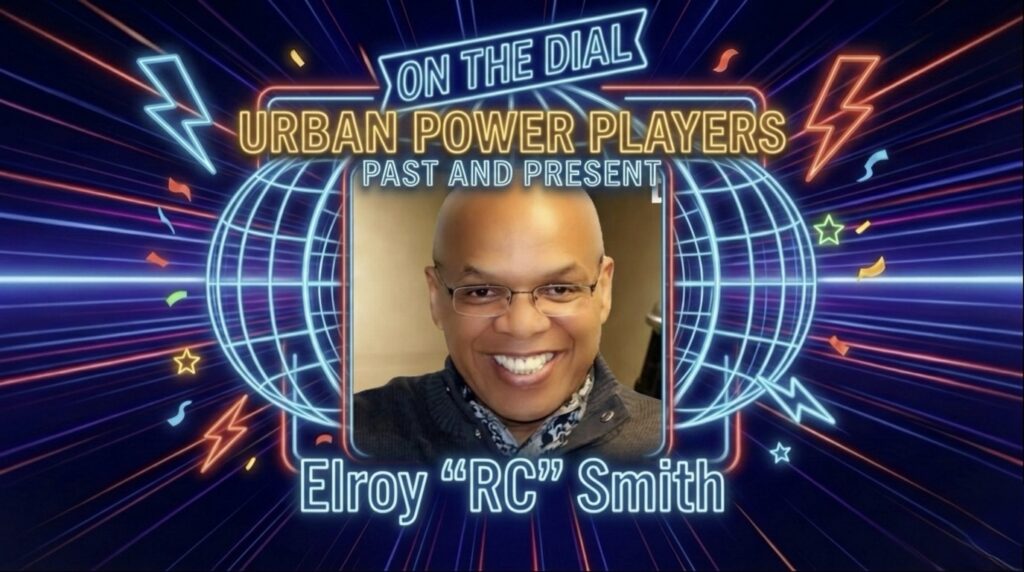
Urban Power Players — Past and Present:
Elroy “R.C.” Smith
Just Plain Steve
When you talk about Urban radio in America — the real architects of the format, the people who didn’t just sit behind a desk but actually shaped the sound of stations and the culture around them — the conversation eventually leads to Elroy “R.C.” Smith. Some programmers simply fill a chair. Others leave fingerprints across markets, decades, and generations of talent. Smith belongs firmly in the second category. His career has spanned cities, formats, and eras of broadcasting, and along the way he’s built a reputation as one of the most respected Urban programmers in the business. The truth is, if you’ve listened to Urban radio in the last thirty or forty years, chances are you’ve experienced something influenced by his programming philosophy whether you realized it or not.
Like many of the great programmers in radio, Smith’s story began with a simple fascination with the medium itself. Growing up with a love for radio, he studied the craft the way musicians study records — listening carefully to how stations sounded, how personalities connected with audiences, and how programming could shape an entire community’s soundtrack. That passion eventually led him to Emerson College in Boston, a school known for producing serious broadcast talent. It was there that Smith began refining the instincts that would eventually define his career.
His professional journey began at Boston’s legendary Urban station WILD, a place that carried enormous cultural influence in the city. WILD wasn’t just a radio station — it was a voice for Boston’s Black community and a platform for music and conversation that mattered. Smith initially hosted a Caribbean music show at the station, but it quickly became clear that his talents extended well beyond the microphone. His understanding of music, audience flow, and community engagement eventually led him into programming leadership, where he served as program director and morning host during the early 1980s.
Even in those early days, Smith displayed the instincts that would later define him as a top-tier programmer. He understood that Urban radio wasn’t simply about filling a playlist with popular songs. It was about connecting the music to the people who lived and breathed that culture every day. Under his leadership at WILD, the station grew its audience and strengthened its community connection. One small but telling moment from that era says a lot about Smith’s ear for hits: he was among the first programmers to spin “Candy Girl” by New Edition when the Boston-bred group was just beginning their rise. Moments like that may seem small at the time, but they often signal the presence of a programmer who understands the pulse of the streets.
From Boston, Smith’s career began expanding into other major markets, and his reputation as a smart, disciplined programmer traveled with him. He played a key role in launching 100.3 JAMS in Dallas, helping shape the sound of the station during a time when Urban radio was evolving quickly across the country. That experience added another chapter to his growing résumé and prepared him for what would become one of the most significant roles of his career.
In 1992, Smith arrived in Chicago to become program director of WGCI-FM, one of the most influential Urban stations in America. Anyone who understands radio knows Chicago is no easy market. It’s competitive, diverse, and filled with listeners who expect excellence from their stations. Smith didn’t just survive in that environment — he thrived. Under his leadership, WGCI and its sister stations became dominant forces in the market. The programming was tight, the personalities were strong, and the station maintained a powerful connection with its audience.
Smith eventually oversaw programming not only for WGCI but also for Chicago’s powerhouse Urban AC station V103 and the gospel station WGRB. For more than fifteen years he helped shape the sound and identity of Urban radio in one of the nation’s biggest cities. During that time, the stations under his leadership received numerous industry awards and consistently delivered strong ratings. But beyond ratings and trophies, Smith’s impact could be felt in the culture of the stations themselves. They sounded confident, relevant, and deeply rooted in the communities they served.
One of the qualities that has always separated Smith from many programmers is his understanding that radio is ultimately about people. Music matters, of course, but personalities and community connections are what turn a station into a brand. Over the years he has worked with and mentored numerous talents who would go on to become major voices in broadcasting. Programmers who worked with him often talk about his ability to coach talent, push them to be better, and at the same time give them room to develop their own style.
After his long run in Chicago, Smith continued expanding his influence in other markets. He spent time with Radio One in Philadelphia, serving as operations manager and helping guide programming for stations including WRNB and Praise 103.9. That role placed him once again at the center of Urban broadcasting, this time in a city with its own deep musical heritage and radio traditions.
Smith later brought his expertise to SummitMedia in Greenville-Spartanburg, South Carolina, where he oversaw stations like 107.3 JAMZ and HOT 98.1. Even in a smaller market, his philosophy remained the same: strong music, strong personalities, and a deep connection to the audience. Those principles have followed him throughout his career regardless of city or company.
Another impressive chapter came when Smith moved to the West Coast to lead programming for KBLX in San Francisco, one of the most respected Urban Adult Contemporary stations in the country. San Francisco is a unique and highly diverse radio market, and succeeding there requires a careful balance of musical heritage and contemporary relevance. Under Smith’s leadership, KBLX climbed to become the number-one music station in the market, a remarkable accomplishment that demonstrated his ability to adapt Urban programming for a wide and varied audience.
More recently, Smith joined Cox Media Group, where he initially oversaw stations such as Star 94.5 in Orlando before eventually being promoted to Director of Urban Content for the company. In that role he has helped guide the strategy and sound of Urban stations across multiple markets, including Atlanta, Miami, Orlando, and Jacksonville. It’s a position that allows him to do what seasoned programmers often do best — share their knowledge, mentor new leaders, and help shape the future of the format.
Along the way, Smith has been recognized for his influence and achievements, including honors from the National Black Radio Hall of Fame. The recognition reflects decades of dedication to a format that has always been about more than just music. Urban radio has long served as a cultural voice, a platform for artists, and a connection point for communities, and Smith’s career has been deeply intertwined with that mission.
Now let me bring this home with a personal note, because radio is a small world and every so often our paths cross with the people we’ve heard about for years. I had the opportunity to spend some time with Elroy at an NAB Radio Show in Atlanta. If you’ve ever attended one of those gatherings, you know they’re filled with programmers, managers, and talent from every corner of the business. Conversations about the industry happen in hallways, hotel lobbies, and coffee lines. Sitting down and talking with Smith, what stood out immediately was how approachable and knowledgeable he is. Great guy. Easy to talk to. And the kind of person who can break down the mechanics of a radio station in a way that makes you realize just how much thought goes into every decision.
The best programmers never really stop learning, and they never lose their love for the medium. That passion still shows when Smith talks about radio today. After decades in the business, he still speaks about programming with the excitement of someone who remembers the first time they cracked a microphone or watched the ratings come in after a big format move.
When you look back across the history of Urban radio, there are certain names that stand out as architects of the format — people who helped guide its sound and identity through different generations of listeners. Elroy “R.C.” Smith is unquestionably one of those names. From Boston to Chicago, from Philadelphia to San Francisco, and now across multiple markets through corporate leadership, his career tells a story of dedication to the craft and respect for the audience.
So when we talk about Urban Power Players — Past and Present, it’s only fitting that Smith’s name appears near the top of the list. In a business that changes constantly and sometimes forgets its own history, it’s important to recognize the people who helped build the format into what it is today. Elroy “R.C.” Smith didn’t just program radio stations. He helped shape the sound of Urban radio in America, and that’s the kind of legacy every programmer hopes to leave behind.