

March 11, 2026
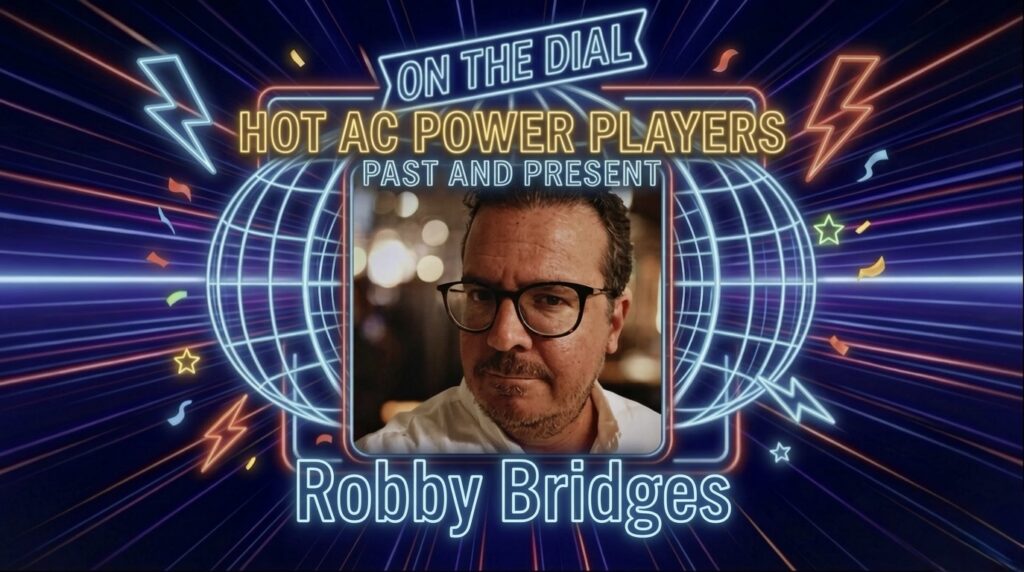
Hot AC Power Players: Past and Present – Robby Bridges
Steven “Just Plain Steve” Mills
There are two kinds of people in the radio business.
The first group studies formats.
The second group studies listeners.
The first group will tell you what category a station belongs in. They’ll talk about whether it’s Adult Contemporary, Hot AC, CHR, or some consultant-invented phrase that sounds like it was cooked up during a long lunch and a longer PowerPoint presentation.
The second group? They turn on the radio and ask a much simpler question:
“Does this thing feel good?”
If you’ve been around long enough, you know the second group usually wins.
And that brings me to WEBE 108, a station that has been quietly doing something very smart for a long time.
Now historically, WEBE has always worn the Adult Contemporary label. It’s the kind of station you’d expect to hear in offices, at the dentist’s office, or floating through the speakers at the grocery store while somebody debates whether they really need another box of cereal.
But if you actually sit down and listen to the station—really listen—you notice something interesting pretty quickly.
The playlist leans hot.
Not reckless hot. Not teenager-with-the-keys-to-the-car hot.
But confident hot.
The kind of hot that keeps the station sounding current without losing the adults who have been listening since before some of today’s streaming platforms were even a thought in somebody’s garage.
That’s not an accident.
That’s programming.
And the guy behind that programming chair is Robby Bridges.
Now if you’ve spent any time around radio programmers, you know it’s a unique tribe. Some are research gurus. Some are music freaks who can name the B-side of a single released in 1987 faster than they can tell you what day it is. Others are brilliant strategists who can see where a station needs to go three years before everyone else figures it out.
The really special ones?
They’re a little bit of all three.
Robby Bridges falls into that category.
His career path reads like a pretty solid road map of major league radio. Along the way he’s programmed stations, shaped formats, and built reputations in markets where expectations are high and the audience is even higher maintenance.
And somewhere along the journey he spent time at one of the most legendary radio brands in the country: WPLJ in New York.
Now let’s pause there for a second, because if you know radio history, you know WPLJ wasn’t just another station on the dial.
That station mattered.
For decades WPLJ was a powerhouse—one of those stations that helped define what Adult Contemporary and Hot AC could sound like in one of the most competitive radio markets on planet Earth. Programming in New York is like trying to land a plane during a windstorm. Everybody’s watching. Everybody’s listening. And everybody has an opinion.
Working in that environment sharpens your instincts pretty quickly.
You learn how to pace music.
You learn how to balance currents and recurrents.
You learn that the difference between a good station and a great one can be three songs in a row that make people stay in the car a little longer than they planned.
That kind of experience travels with you.
And when you land somewhere like WEBE, you bring that programming DNA with you.
Now today WEBE 108 is part of Connoisseur Media, a company that has built a reputation for doing something that sounds simple but isn’t: letting good programmers program.
That might sound obvious, but in a world where algorithms, consultants, and corporate spreadsheets sometimes try to outvote common sense, it’s actually refreshing to see stations where the craft of radio is still respected.
Because make no mistake—radio is a craft.
Anyone can build a playlist.
But building a station? That’s different.
A station has rhythm. It has pacing. It has personality. It breathes differently at 7 in the morning than it does at 2 in the afternoon. The music moves differently when people are driving home from work than it does when they’re cleaning the kitchen after dinner.
Great programmers hear those differences.
And that’s what Robby Bridges seems to understand so well.
WEBE might technically sit in the Adult Contemporary lane, but if you close your eyes and just listen to the flow, there’s a Hot AC engine under the hood. The station has forward motion. It has energy. It doesn’t sound like it’s afraid of the present.
That’s a delicate balance.
Lean too far toward traditional AC and you risk sounding sleepy. Lean too far toward Hot AC and you risk losing the adults who built the station’s audience in the first place.
Walking that line is like threading a needle in a moving car.
But when it works, it’s beautiful radio.
You hear familiar artists that listeners trust. You hear songs that remind people why they fell in love with radio in the first place. And every now and then, a newer record slides in that reminds you the world is still moving forward.
That’s the magic of Hot AC when it’s done right.
And that’s why programmers like Robby Bridges matter.
Because Hot AC has always been a format driven by instinct as much as research. It’s the format where you can’t just stare at numbers—you have to listen to the room.
Adults like hits.
They just like them delivered with a little perspective.
They want energy, but they don’t want chaos. They want familiarity, but they don’t want boredom. They want to hear something new, but they also want to hear something that reminds them of the soundtrack of their life.
Balancing all of that takes experience.
It also takes a programmer who remembers something the greats in this business always understood:
Radio is emotional.
People don’t just listen to stations. They develop relationships with them. A morning drive song can remind someone of their first job. A throwback hit can take somebody right back to the first time they fell in love—or the first time they got their heart broken.
That’s powerful stuff.
And when a station gets it right, listeners stay for years.
Sometimes decades.
That’s why legacy stations like WEBE are so important to their communities. They become part of daily life. They’re there in the morning commute, the afternoon errands, the quiet ride home after a long day.
They’re companions.
And when a programmer respects that relationship, the audience can feel it.
Robby Bridges seems to be one of those programmers who gets it.
He’s been around the industry long enough to understand the mechanics of radio, but also long enough to appreciate the emotion behind it.
That combination is what creates real power players in formats like Hot AC.
Not the loudest programmers.
Not the flashiest.
But the ones who know how to make a station feel like home.
And when you turn on WEBE 108 and hear that steady rhythm of familiar songs, current hits, and smart pacing rolling out of the speakers, you get the sense that somebody in the building still believes in the old-fashioned idea that radio should feel good.
Sometimes that’s the most powerful programming strategy there is.
Just ask Robby Bridges.