


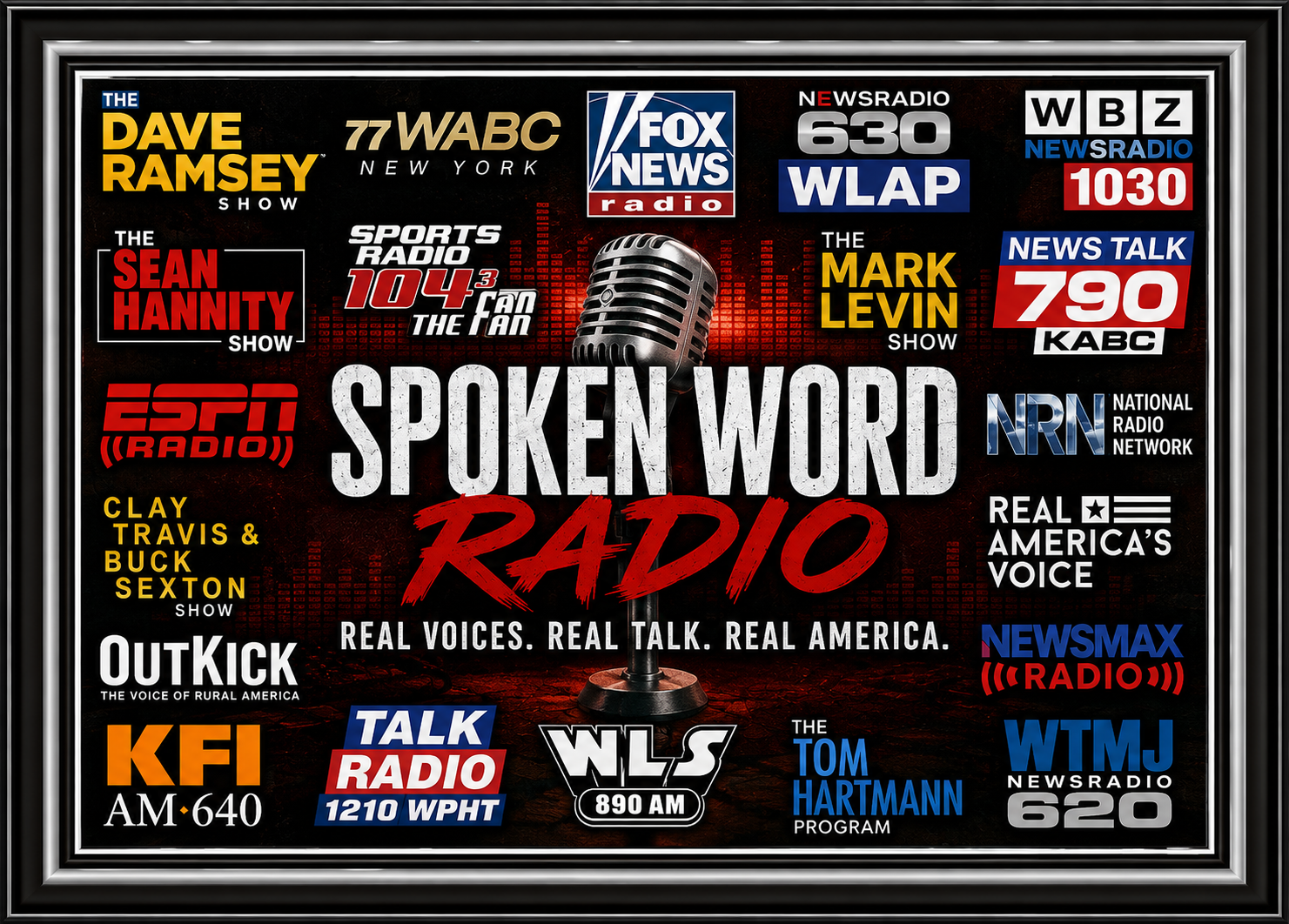
There’s a sound changing across America right now, and if you’ve worked in radio long enough, you can feel it before you even see it on a ratings sheet or a corporate earnings report. The music is still there. The sweepers are still loud. The jingles still fire off between songs. But underneath it all, something deeper is happening inside this business. Stations that once lived and died by the next hit record are now leaning harder into conversation, personality, opinion, sports, storytelling and connection because somewhere along the way corporate radio realized something terrifying: playlists alone are no longer enough to keep people emotionally attached.
That realization is changing everything.
Over the last year, spoken-word formats have quietly become one of the biggest areas of investment in radio. Sports stations are expanding. News/Talk brands are holding strong. Conservative talk remains dominant in many parts of the country. Public radio continues pushing longform content and podcasts. Christian teaching and personality-driven programming are growing aggressively throughout the Southeast and Midwest. Even smaller operators are beginning to rethink what works in a world where listeners can get unlimited music from Spotify, Apple Music, YouTube or TikTok in seconds.
But they still can’t get local companionship from an algorithm.
That matters.
New research from Edison shows podcasts have now officially surpassed AM/FM spoken-word radio nationally among total spoken-word audio consumption. Podcasts now account for roughly 40% of spoken-word listening while traditional radio sits at 39%.
Most people outside the business would hear that and think radio is losing.
Inside the business, many companies actually heard something completely different.
They heard proof that spoken-word content still wins.
Think about what people are consuming now. Debate shows. True crime podcasts. Sports opinion shows. Political commentary. Personality-driven podcasts. Longform interviews. Morning shows clipped onto social media. YouTube streams that feel like radio shows without towers. Audiences are still craving voices. They’re still craving emotion. They still want somebody to laugh with, argue with, agree with or even get angry at during the drive home.
The delivery system changed.
Human connection didn’t.
That’s why Sports radio is suddenly one of the safest bets in the industry. Look around the country right now and you’ll see more AM Sports brands moving to FM signals and translators because companies know loyal male audiences still show up daily for live conversation. Audacy’s launch of “97.1 The Fan” in Los Angeles is part of that bigger movement.
And honestly, if you’ve programmed radio or sat in enough conference rooms over the years, you can almost understand why this shift was inevitable.
Music radio got too safe.
Too polished.
Too tracked.
Too corporate.
Too predictable.
Meanwhile, spoken-word formats still feel alive. Imperfect. Human. Dangerous sometimes. Emotional. Real. People can disagree with a host and still come back tomorrow. That’s power. A Spotify playlist can’t build a relationship with you during a divorce. A TikTok algorithm can’t comfort you after losing your job. A streaming playlist doesn’t know your city just got hit by a tornado or your favorite team blew a playoff game last night.
But radio can.
At least radio used to.
And maybe that’s the deeper emotional undercurrent underneath all of this. Spoken-word expansion isn’t just about money or ratings or digital strategy. It’s about radio trying to rediscover the one thing that made it untouchable for generations in the first place: presence.
Being there.
Being human.
Being local.
Being part of somebody’s daily life.
That’s why companies continue investing in personalities even while trimming music staffs and automating everything else around them. It’s why podcasts keep exploding. It’s why Sports and Talk remain valuable. It’s why local hosts with real audience connection still matter more than any corporate spreadsheet can fully calculate.
Because in the end, people don’t really fall in love with formats.
They fall in love with voices.
And right now, the entire radio industry seems to be waking back up to that fact all over again.
On The Dial covers breaking radio industry news, including layoffs, programming changes, talent moves, and broadcast trends across the United States.