


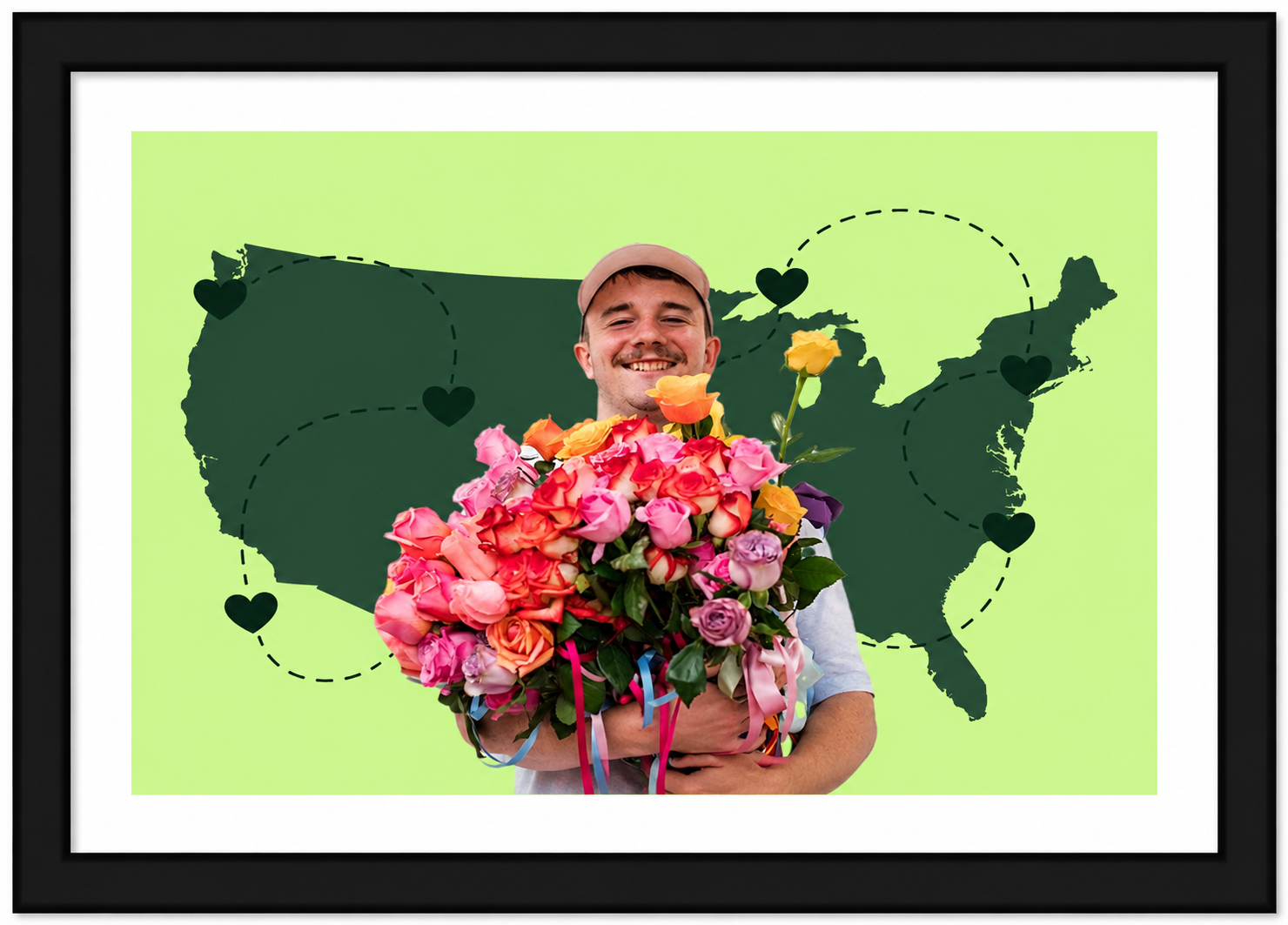
If radio executives, programmers and morning shows across America are looking for another reminder that human connection still beats algorithms, consultants and corporate buzzwords, they may want to stop what they are doing for five minutes and pay attention to what Samuel Weidenhofer is hauling across America right now in a car full of kindness, emotion and enough heart to power an entire broadcast cluster.
And honestly? In an era where half the country is arguing online and the other half is doom-scrolling while pretending not to argue online, the timing could not be better.
Weidenhofer — the Australian kindness content creator known to millions as @itssozer — is in the middle of a nationwide mission called “50 Veterans. 50 States. 50 Days.” The goal sounds ambitious because it is ambitious: travel to every state in America while helping veterans and military families in need and raising $10 million along the way. The campaign is being coordinated through 50 Veterans, but what is happening around it has become much bigger than a website or social media campaign.
This thing has become emotional fuel for people who desperately want to believe there is still good left in the world.
And radio? Radio should be all over it like a listener calling a request line in 1987 trying to win Bon Jovi tickets.
The movement started with 88-year-old Army veteran Ed Bambas of Michigan, who was still working at a grocery store after losing his pension following the GM bankruptcy years ago. Most people probably walked past him without ever knowing his story. Weidenhofer stopped, listened and shared it with the world.
The response was overwhelming.
Millions of dollars were raised. Bambas was finally able to retire. But after that story exploded online, veterans and military families from all across America started reaching out with stories of their own. Suddenly, this was no longer about one veteran. It became about forgotten heroes everywhere.
On The Dial Publisher Steven Mills recently caught up with Weidenhofer during his cross-country trip, and it quickly became obvious this is not somebody chasing clicks or internet fame.
“I made a promise to an 88-year-old veteran, Ed Bambas, that we’d help him retire. Nearly $2 million later, we did. But then the messages started coming from other veterans who needed help too. That’s why we’re now supporting 50 veterans, in 50 states, over 50 days. They showed up for us, now it’s our turn,” Weidenhofer said.
That quote right there? That is radio.
Not the over-produced contest promo voiced by a guy in Los Angeles pretending to sound local to Nebraska. Not another generic “text this keyword to win” campaign. This is the stuff radio stations used to build entire reputations on — serving people, loving communities and reminding listeners they were never alone.
Already, Weidenhofer’s journey has taken him through states including Michigan, Texas, Illinois and Vermont, where veterans and families have opened their homes, shared their struggles and watched complete strangers rally around them. In Texas, country artist Coffey Anderson joined the mission in an emotional visit honoring 90-year-old veteran Charles Deal. The moment spread online rapidly, not because it was flashy, but because it felt real.
And that is what audiences are starving for right now: real.
Listeners can spot fake emotion from a mile away. They know when something is manufactured. They know when talent is reading liner cards and rushing to hit a stopset. But they also know authenticity when they hear it, and this campaign is dripping with authenticity.
Imagine Samuel rolling into your market.
Imagine a local station partnering with a VFW or veterans organization to identify a deserving family. Imagine morning hosts broadcasting live from the event. Imagine listeners bringing donations, food, gift cards, hotel points or even just hugs and encouragement.
That is not old-school radio. That is timeless radio.
And frankly, this campaign almost feels custom-built for the medium. Country stations could embrace the patriotic side. CHR stations could activate younger audiences through social engagement. News/talk could spotlight veteran struggles. Classic hits stations could connect with longtime military families. Gospel stations could turn the mission into ministry.
Everybody has a lane here.
What makes this even more incredible is that Weidenhofer is physically driving to every state himself. No fancy studio setup. No hiding behind a screen. Just one guy meeting veterans face to face, hearing stories that would break most people emotionally and then trying to help however he can.
That matters.
It matters because too many veterans feel invisible once the uniforms come off. Too many military families quietly struggle while the rest of the world keeps spinning around them. And somewhere in the middle of all that noise, a guy from Australia showed up and reminded America what showing up for people actually looks like.
There is also something beautifully ironic about all this. While major media companies spend millions trying to “build engagement,” one man with compassion and a camera is naturally creating the kind of emotional connection broadcasters have been trying to rediscover for years.
No research study required.
No consultant deck necessary.
Just humanity.
Stations interested in following the journey can find Weidenhofer on Instagram at @itssozer. Donations, campaign information and veteran submissions are available through 50veterans.com. Media outlets interested in interviews or station partnerships can contact Mark Bowness for booking and additional information.
And if radio still wants to prove it can change lives instead of simply filling airtime, Samuel Weidenhofer may have just handed the industry one of its best opportunities in years.
On The Dial covers breaking radio industry news, including layoffs, programming changes, talent moves, and broadcast trends across the United States.