


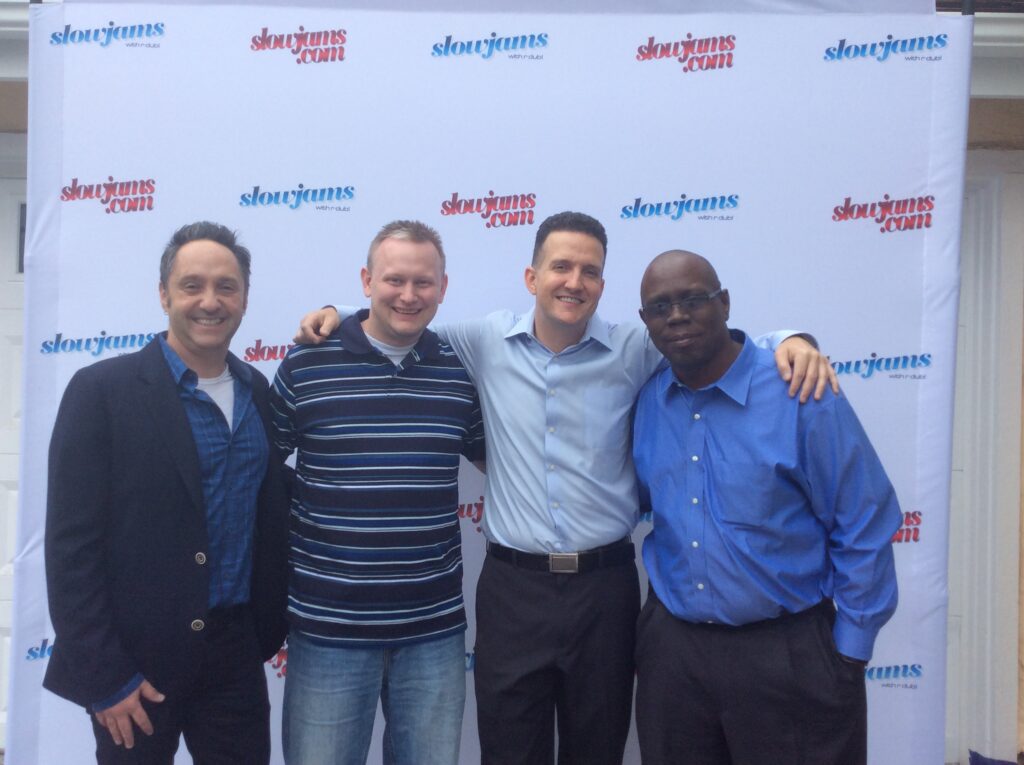
In a business that keeps trying to make everything faster, cheaper and more efficient, Sunday Night Slow Jams still does something wonderfully inconvenient.
It makes people feel.
That may sound simple, but in today’s radio industry, simple emotion has become one of the hardest things to protect.
Hosted and created by R Dub, Sunday Night Slow Jams has become one of the last standing emotional brands in broadcast radio. It is appointment listening. It is dedications. It is heartbreak, love, memory, forgiveness and that one song somebody still cannot hear without thinking about somebody else.
And somehow, in a business obsessed with scale, it scaled without losing its soul.
The show is distributed through Benztown, and what started as one core version of Sunday Night Slow Jams has grown into something much bigger and more flexible. Today, the brand is available in multiple versions for different formats, including mainstream Top 40, rhythmic, R&B and content-only options that let stations customize the music while keeping R Dub’s listener-driven emotional content at the center. Benztown also lists a two-hour Monday-through-Thursday version of the show, giving stations a weekday Slow Jams option beyond the flagship Sunday night program.
That matters.
Because this isn’t just syndication. This is syndication with feeling.
Sunday Night Slow Jams has grown to more than 200 stations across the United States and around the world, reaching millions of listeners each week, according to the show’s own site. The brand also notes that its weeknight version, website and related platforms have expanded R Dub’s reach well beyond one weekly broadcast.
But the heart of the thing is still Sunday.
That is where the magic lives.
R Dub does Sunday Night Slow Jams on Sundays, while the weekday version gives stations another way to bring that sound and emotion into their lineup. More information on both versions is available through slowjams.com and Benztown.com.
Now let me make this personal.
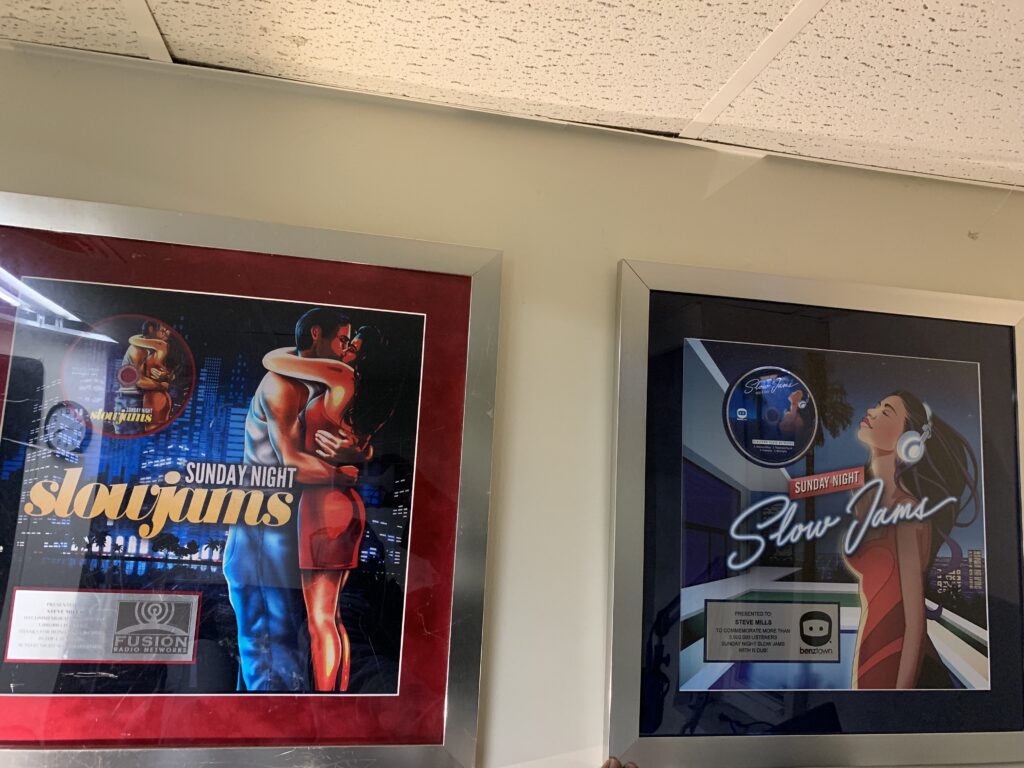
I have had the opportunity to work with R Dub several times during my career. I even had a part, through my camp, in the original syndication model of Sunday Night Slow Jams. R Dub has written about that connection, and about me, in one of his published books. I will be sharing pictures of plaques and memories so people can see that this isn’t just me admiring the show from a distance.
This one is personal.
“I couldn’t imagine my life without Sunday Night Slow Jams,” said On The Dial President and Publisher Steve Mills. “I discovered the show in the early 2000s, but it had already been around a long time. I’m glad that my camp could play a small part in the original syndication of Sunday Night Slow Jams.”
That is why this brand still hits different.
At a time when stations are losing local talent, when shifts are being tracked, when programmers are being regionalized and when connection is too often replaced by convenience, Sunday Night Slow Jams proves there is still room for radio that breathes.
Listeners are not just tuning in for songs.
They are tuning in for the feeling attached to the songs.
They are tuning in because someone is saying what they could not say. They are tuning in because a dedication still matters. They are tuning in because Sunday night still needs a voice.
That is the lesson.
Radio does not have to choose between scale and soul. Sunday Night Slow Jams shows that a syndicated show can still feel intimate, emotional and personal when it is built correctly and protected carefully.
And maybe that is why it has lasted.
Because long after formats change, leadership shifts and corporate models get rebuilt, people still fall in love. People still miss each other. People still remember. People still need a song at the right time.
Sunday Night Slow Jams has understood that from the beginning.
And radio would be wise not to forget it.
On The Dial covers breaking radio industry news, including layoffs, programming changes, talent moves, and broadcast trends across the United States.