


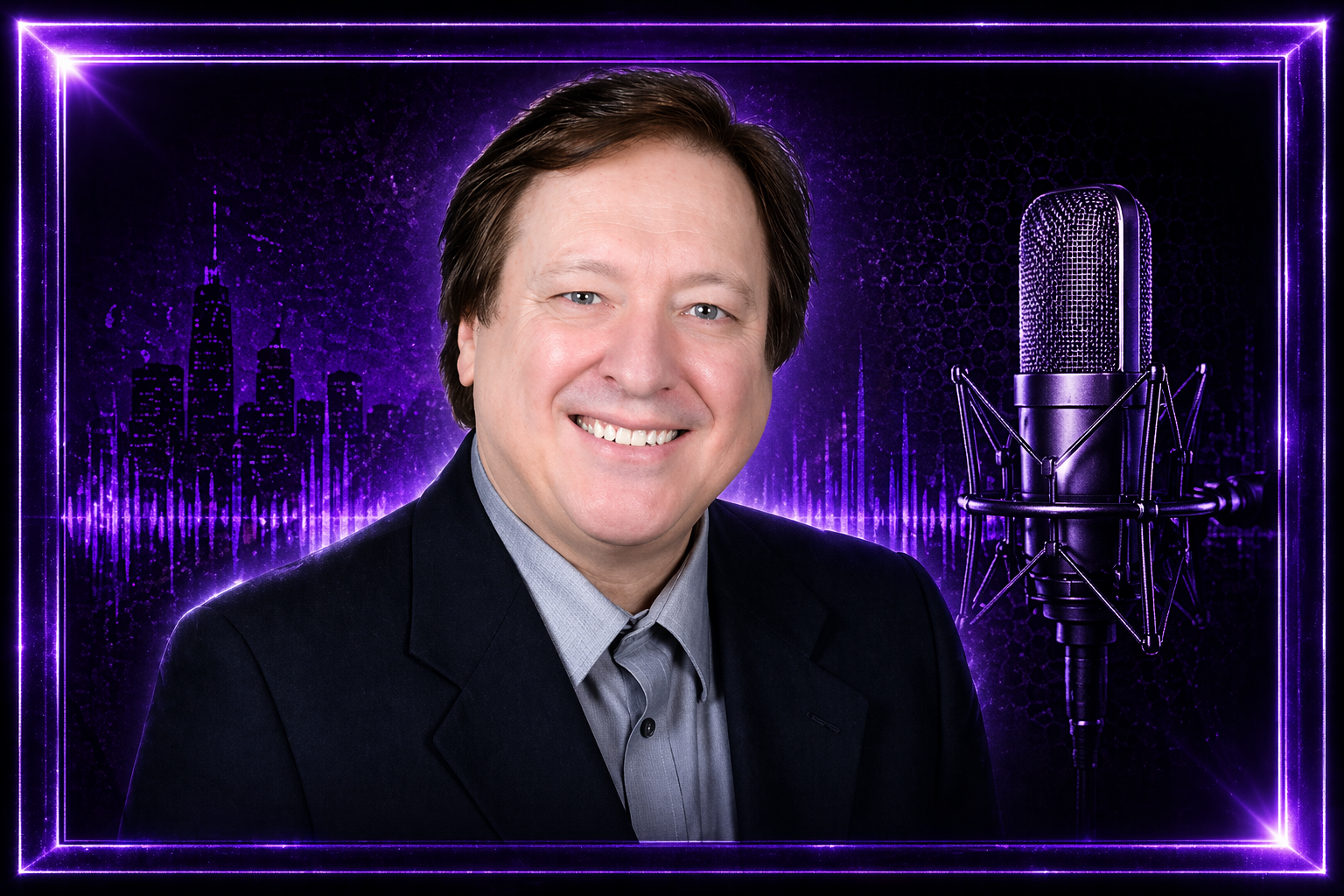
Late-night radio doesn’t just change—it slides.
Quietly. Gradually. Sometimes without a single official word to mark the moment. And right now, that’s exactly how this one is unfolding.
Walter Sterling, a name that carries real weight in talk radio circles, has made a move that’s already being heard across the dial. He is now hosting overnight on 77 WABC in New York, taking control of the 1am–5am slot with a show that leans directly into his signature style—conversational, curious and built for the kind of listener who’s still searching for connection long after midnight.
That part is clear.
What isn’t as clear—at least not publicly, not formally—is what this means for his long-running presence at 1210 WPHT in Philadelphia.
Because if you follow the signals closely, something has shifted.
Sterling’s voice has been a consistent part of WPHT’s nighttime identity. “Sterling Every Damn Night” wasn’t just another syndicated filler—it had tone, personality and a rhythm that fit the overnight lane in a way that many shows struggle to achieve. It wasn’t loud for the sake of being loud. It wasn’t built on outrage. It was built on conversation.
That matters.
Especially in a space where most programming leans toward repetition or automation.
Now, with his presence firmly established on WABC, the question isn’t whether Sterling has moved forward—it’s how far that move extends. WPHT’s current situation remains… quiet. There hasn’t been a formal exit announcement. No definitive statement tying everything together. But the absence of clarity is often its own kind of confirmation in this business.
Because radio doesn’t always announce change.
Sometimes it just becomes change.
And this feels like one of those moments.
WABC, for its part, has been actively reshaping its identity, leaning into live, personality-driven talk in a way that pushes against the more automated, syndicated direction much of the industry has taken. Bringing Sterling into that overnight position aligns with that strategy. It signals intent. It says that even in the late hours, the station wants presence, not placeholders.
That’s a play.
And it’s one worth watching.
Because overnight radio, for all its quiet, has always been one of the most intimate parts of the medium. It’s where personalities either connect deeply or disappear entirely. There’s no middle ground. You’re either part of someone’s routine—or you’re background noise.
Sterling has never been background noise.
And that’s where this story shifts from movement to meaning.
Because talent like that doesn’t just get repositioned randomly. It gets placed with purpose.
Now let me step into this for a second, because this one hits a little different for me.
I’ve long admired Walter Sterling.
Not just for what he does on the air, but for how he approaches the craft. There’s a patience to his style. A willingness to let moments breathe. A confidence that doesn’t rely on volume. That’s not easy to pull off, especially in talk radio, where the pressure to fill space can lead to a lot of unnecessary noise.
Halfway through my own radio journey, I found myself circling a project that Walter was involved in up in the New York City area. It was one of those moments where the industry overlaps in ways that aren’t always obvious from the outside. That project included names like Randy Chase and Randy Michaels—people who have left their own fingerprints on this business in very real ways.
I wasn’t directly inside that project, but I was close enough to feel its gravity.
Working on adjacent pieces, contributing in ways that tied into the larger picture… you know how that goes. You’re not in the room, but you’re connected to what’s happening in the room. You see the machinery. You understand the intention. You recognize the level of thinking behind it.
And being around that—even peripherally—leaves an impression.
It shows you how experienced operators move.
How they think.
How they build.
That’s part of why I pay attention when someone like Walter makes a move like this. Because it’s never just about the slot. It’s about the strategy behind the slot.
Back to now.
The broader context around this shift matters just as much as the move itself. Radio is in a period where syndication, cost control and centralized programming have reshaped how stations operate—especially in overnight hours. Live talent has become less common. Personality-driven shows have become more selective.
So when a station makes the decision to invest in a real voice during that time period, it stands out.
It tells you something.
It tells you they still believe in connection.
It tells you they still believe in presence.
And it tells you they understand that even in the quietest hours, the right voice can carry weight.
For WPHT, the next move becomes the story.
Do they replace that presence with something equally distinctive?
Do they pivot toward a different strategy?
Do they lean into syndication or rebuild the lane?
Those answers haven’t been fully revealed yet, but they’re coming.
Because radio doesn’t leave space empty for long.
It fills it.
Sometimes carefully.
Sometimes quickly.
And sometimes in ways that redefine what was there before.
What’s clear right now is this:
Walter Sterling is on the air in New York.
That’s not speculation.
That’s happening.
What happens next in Philadelphia remains to be fully seen, but the shift is already being felt.
And in a business where the smallest moves can signal much larger changes, this is one of those moments where you listen a little closer.
Because something just moved.
And it didn’t make a lot of noise doing it.
But it definitely moved.
-JPS