


Seven days.
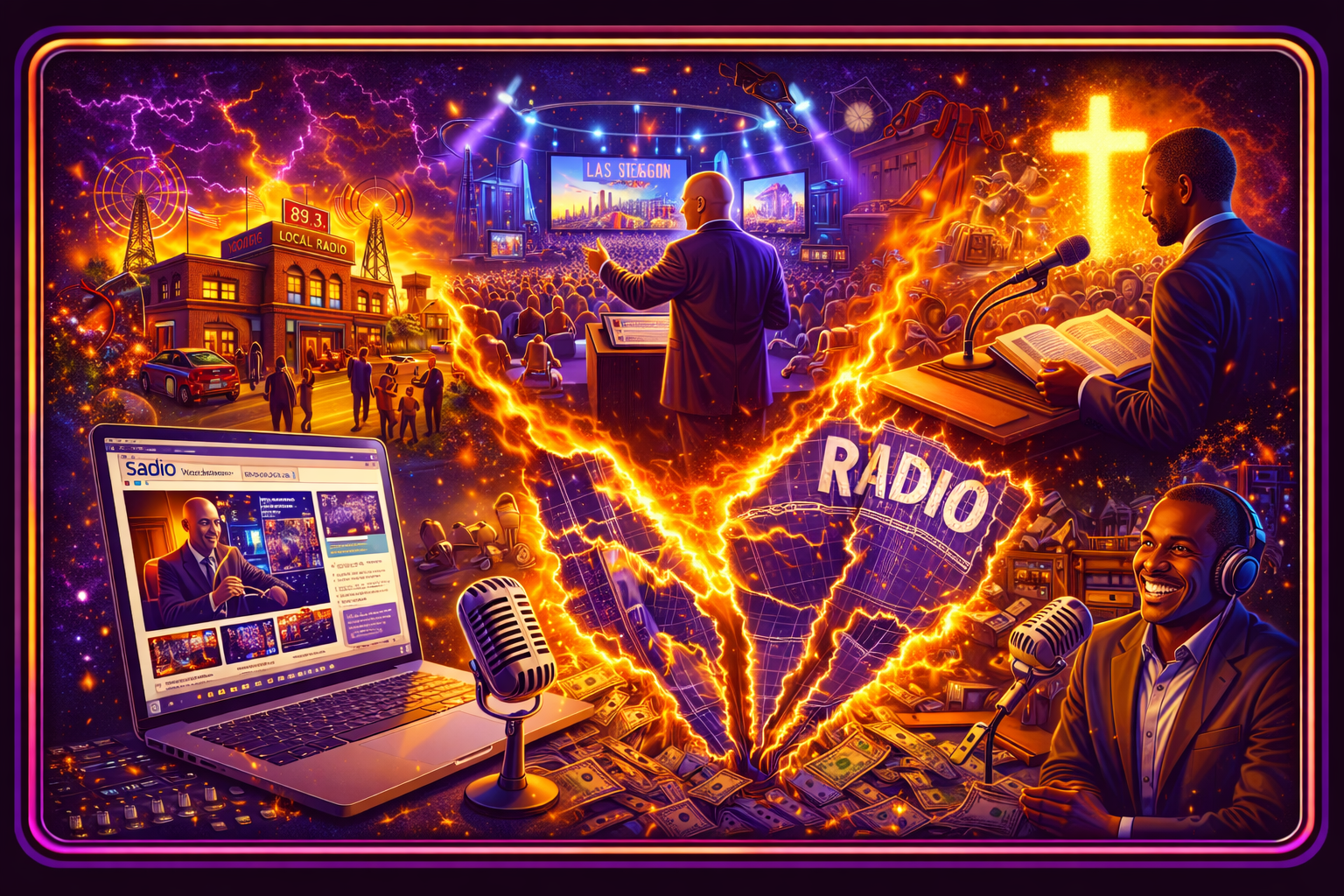
That is all it took for the radio industry, the church lane, and the launch of a brand-new media voice to collide into one of the busiest, loudest and most revealing weeks we have seen in a while.
Some weeks hand you one story and dare you to ride it.
This week handed us a stack.
And sitting on top of that stack, without question, was the official launch of On The Dial.
That was the week’s main event. That was the flag-planting moment. That was the story that moved from concept to reality and from vision to visible. After all the planning, all the positioning, all the talk about creating a different kind of broadcast-industry platform, the site hit the street and immediately made clear it was not built to blend in.
That matters.
Because this business does not need another trade outlet that feels like it was assembled by committee, washed in gray and sanded down until no opinion, no flavor and no pulse survived the editing process. It needs a place willing to cover the radio business like it is still worth watching closely, worth challenging honestly and worth talking about with some fire in its bones.
That is what the launch represented.
It was not just a website going live. It was a declaration that broadcast radio, media movement, talent changes, format shifts, ownership behavior, technology evolution and industry culture still deserve aggressive, creative, fast-moving coverage. It said there is still room for a platform that is willing to tell the story of radio with urgency instead of treating every headline like a company newsletter trying not to upset the furniture.
And if you are being honest, the timing could not have been better.
Because while On The Dial was arriving, the NAB Show in Las Vegas was doing what NAB always does at its best: turning the whole business into one giant, noisy, flashy, slightly over-caffeinated conversation about where media is going next.
That made NAB the clear No. 2 story of the week.
The show floor gave the industry what it always wants from Las Vegas — spectacle, handshakes, technology, panels, products, smiles, power lunches, hallway whispers and enough future-talk to make half the room feel inspired and the other half feel slightly threatened. But underneath the lights and polished presentations, this year’s NAB carried a more serious undercurrent. AI was all over the place. Streaming remained a major pressure point. NextGen TV conversations kept pushing forward. Engineering, monetization and workflow talk stayed central. Everywhere you turned, the business was trying to show how modern it is becoming while still dodging the harder question of whether it is modernizing in a way that actually preserves the heart of what made it matter in the first place.
That tension gave the week its electricity.
Because on one hand, NAB still proved that broadcasting can gather the smartest people in the room and make the room feel important. On the other hand, the same industry that can fill convention halls with innovation still has a bad habit of gutting the local people, local brands and local presence that made broadcasting powerful long before half these buzzwords showed up on hanging banners.
That is why the NAB coverage mattered. It was not just about booths and badges. It was about what the show revealed. It showed an industry still full of ideas, still full of talent, still full of possibility — but also still wrestling with itself.
And after those two major stories, the week widened fast.
One of the loudest recurring themes was the ongoing churn in radio staffing and programming. Market after market kept feeding the same larger reality: the radio business is still making hard, often ugly choices while trying to tell the world everything is fine. Layoffs, exits, programming shifts and restructuring stories all continued to paint a picture of an industry that still gets results, still reaches audiences and still moves advertisers, but too often seems determined to weaken its own foundation by cutting into the very voices and local personalities that make the medium work.
That is part of what made the broader radio commentary this week hit so hard.
Because the contradiction is impossible to ignore now. The data still supports radio. Reach still matters. Trust still matters. Ad-supported audio time still leans heavily toward radio. The dashboard still belongs to radio in ways many newer platforms would kill for. And yet the behavior of some of the biggest ownership groups keeps raising the same maddening question: if the medium still works, why do these companies keep acting like the answer is to strip away its most human parts?
That question hovered over several stories this week and gave them a sharper edge. The issue is no longer whether radio still delivers. The issue is why some of the people running it keep behaving like localism, community presence and market familiarity are optional luxuries instead of the very blueprint the business was originally licensed to serve.
And that led directly into the week’s broader tone on corporate radio.
This was a week where the frustration came into clearer focus. The story is no longer just about layoffs. It is about philosophy. It is about whether the biggest operators in the space still believe in the local mission deeply enough to protect it. It is about whether a station licensed to serve one community can really claim that mission while being run from somewhere else, housed somewhere else, staffed thinner than ever and in some cases sounding like it has been emotionally outsourced. That line of thinking gave some of the week’s strongest stories their bite, because it forced the business to confront something it would rather avoid: radio may still be strong as a medium while being mishandled as a business.
At the same time, not everything in the week leaned negative.
There were real signs of momentum in programming and talent movement too. We looked at higher-profile programming changes around the country, including station resets, lineup adjustments, new branded shows and strategic promotions. Those stories mattered because they showed that even in a business under pressure, there are still people making moves, stations trying new things and operators betting on talent when they decide to build rather than simply cut.
That made stories like the Shawn Knight rise in Jacksonville stand out all the more.
His promotion was one of the week’s stronger examples of radio actually doing something right for a change. Instead of another departure post and another sad thread of goodbye comments, that story gave us a real advancement. It gave us a broadcaster who has put in the time, developed across markets and formats, and earned a larger programming role while still staying visible on the air. It also gave the week some heart. In a landscape full of reduction, seeing somebody trusted with more responsibility instead of less was worth noticing.
And from this side of the world, with that Topeka connection in the mix, it was worth saying plainly that some people really do earn their next step.
There was also plenty happening on the content and visual side of the week.
Graphic creation became part of the rhythm in a major way. NAB-themed graphics, radio-industry visuals, launch pieces, promotional images, tribute work and station-specific graphics all helped shape the visual identity of the stories being told. That mattered more than some people may realize, because in 2026, the story is not just what is written. It is how it is presented, how it lands on the page, and whether the visual hits hard enough to stop someone mid-scroll. This week made clear that if On The Dial is going to compete in this space, it cannot just write sharply. It has to look like it means business too.
That visual side also reinforced what kind of week this was overall: not a quiet week, not a placeholder week, not a “let’s get through it” week. This was a build week. A statement week. A visibility week.
And outside the direct radio-industry lane, the ministry side of the week remained important as well.
Church communication, sermon shaping, devotion framing and message-building all stayed active, showing once again that the work this week was not confined to one platform or one audience. The same seven-day stretch that saw On The Dial launch and NAB dominate the trade conversation also carried weight in the church world, where message, mission and community still mattered just as much. That dual movement is part of what made the week feel so full. One side was industry. One side was ministry. Both required voice, clarity, urgency and purpose.
That is what made this week different.
It was not just busy.
It was layered.
The launch of a new platform. The industry gathering under the lights in Las Vegas. The continuing fight over what radio still is and what corporate radio is doing to it. The rise of certain personalities. The fall of others. The visual branding work. The church messaging. The sermon preparation. The commentary. The questions. The energy.
All of it stacked on top of each other.
And when you pull back far enough, that is the recap that matters most.
The last seven days were not random.
They were defining.
On The Dial stepped into the room.
NAB reminded the business it can still put on a show.
Radio once again proved it still gets results while the people running parts of it keep making choices that deserve harder scrutiny.
Programming moved.
Talent shifted.
Messages were built.
Graphics were sharpened.
And the week, taken as a whole, made one thing very clear:
There is a lot happening right now, and none of it looks like a business or a ministry standing still.
-WW