


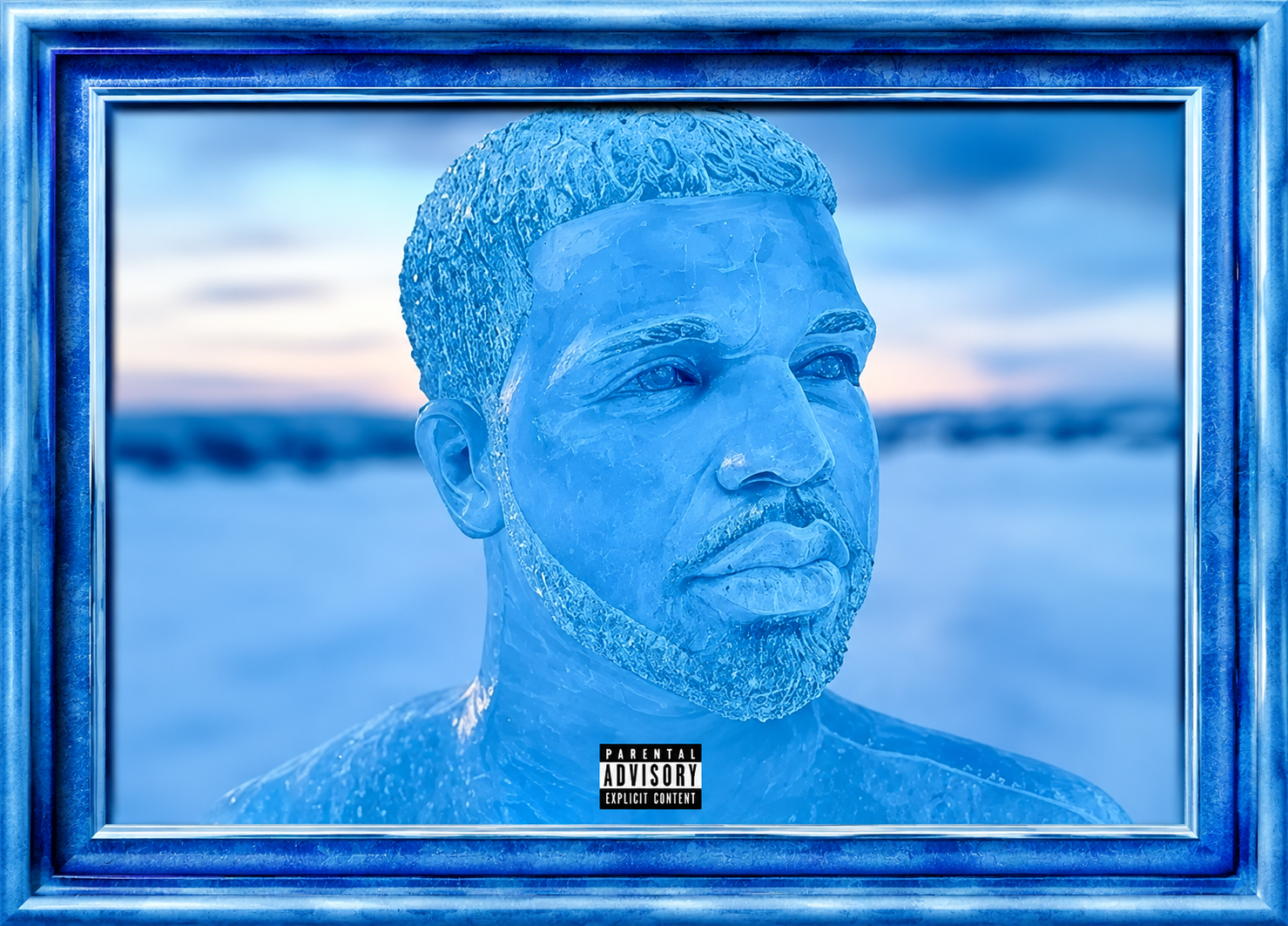
UPDATE: Just when fans thought “ICEMAN” alone was enough to send streaming services into cardiac arrest, Drake reportedly stunned the music world even further by simultaneously releasing not one, not two, but three full-length studio albums at the same time: ICEMAN, Maid of Honour, and Habibti.
And suddenly, the jokes about streaming servers catching fire don’t feel quite so exaggerated anymore.
What initially looked like a major album rollout quickly transformed into one of the boldest surprise releases of Drake’s career — a sprawling musical avalanche covering heartbreak, reflection, relationships, pain, luxury, loyalty, and vulnerability all at once. Social media timelines turned into confusion, celebration, emotional therapy sessions, and lyrical investigations simultaneously as fans tried to process nearly an entire season’s worth of Drake music overnight.
Inside radio circles Friday morning, the reaction bordered on disbelief.
Program directors were scrambling to figure out which songs to prioritize. Music directors suddenly found themselves with enough new Drake material to build entire weekend specials around. Morning shows that planned one Drake segment suddenly needed four. Somewhere, an overnight DJ probably looked at the playlist system and whispered, “Man… this dude really went Thanos on the industry.”
And honestly, that’s the part that makes Drake so fascinating in the modern era of music.
Most artists spend months slowly feeding audiences singles, teasers, snippets, cryptic tweets, and rollout calendars. Drake apparently looked at all of that and decided, “What if I just emotionally overwhelmed the entire planet before breakfast?”
What’s also becoming increasingly clear is that these projects aren’t simply about streaming dominance or chart warfare. Beneath all the numbers and online hysteria sits a deeply personal undercurrent — especially after Drake revealed his father Dennis Graham is battling cancer on the emotionally devastating “Make Them Cry.”
That revelation now casts an even deeper shadow across all three albums.
Fans aren’t just hearing music anymore. They’re hearing a man trying to process life in real time while the entire world watches through headphones and phone screens.
And in classic Drake fashion, somehow he managed to make sadness sound massive.
Again.
ORIGINAL STORY: At exactly midnight, millions of people hit play expecting another Drake takeover.
Another viral moment.
Another flex anthem.
Another internet explosion big enough to shut timelines down from Toronto to Tokyo.
Instead, listeners got something far heavier.
Somewhere inside the haze of “ICEMAN,” between the cold production, sharp lyrics, and late-night confessional energy Drake has practically patented over the last decade and a half, the superstar quietly delivered one of the most vulnerable moments of his entire career. On the emotionally crushing record “Make Them Cry,” Drake revealed his father, Dennis Graham, is battling cancer. And suddenly, one of the biggest artists on Earth no longer sounded untouchable.
He sounded like somebody’s son.
And if you’ve followed Drake’s career from the beginning, maybe that’s why this moment feels so incredibly personal.
Long before the private jets, billion-stream records, sold-out stadiums, and internet debates over who sits on rap’s Mount Rushmore, there was a young actor from Toronto trying to convince American radio that feelings belonged in hip-hop too. Back then, people laughed at the kid from “Degrassi.” They questioned the singing. Questioned the softness. Questioned whether he was “real enough.”
Then Drake did what Drake has done better than almost anybody in modern music history:
He turned emotion into domination.
From “So Far Gone” to “Take Care,” from “Nothing Was The Same” to “Views,” from “Scorpion” to now “ICEMAN,” Drake built an empire by making records that sounded like conversations people were too afraid to have out loud themselves. He made heartbreak cool. Loneliness cinematic. Regret platinum-selling.
Radio loved him because listeners saw themselves in him.
And that’s why “Make Them Cry” hit like a freight train overnight.
Dennis Graham has always been woven into Drake’s story. The flashy suits. The smooth Memphis personality. The humor. The soul. The cool dad energy that somehow made him feel like everybody’s uncle at the cookout. Fans watched their relationship evolve publicly through music, interviews, jokes, ups and downs, and genuine affection.
There was always something human there.
And now people are hearing Drake process fear in real time.
Not rap beef fear.
Not chart fear.
Not internet backlash fear.
Real fear.
The kind that shows up when the person who helped shape your life suddenly becomes fragile.
As of Friday morning, Drake has not publicly revealed the specific type of cancer Dennis Graham is facing. But honestly, after hearing the emotion buried inside the record, fans immediately stopped caring about gossip and started caring about family.
Because cancer doesn’t care how famous you are.
And maybe that’s part of why this album release felt so explosive emotionally. Drake entered 2026 already carrying the weight of one of the most publicly dissected rap battles in recent memory. The Kendrick Lamar situation turned social media into a digital civil war for months. Everybody suddenly became a rap historian, a lyric breakdown expert, or an FBI-level investigator with a YouTube channel and too much free time.
And look — even Drake fans can admit Kendrick landed some heavy punches.
But here’s the funny thing about Drake:
Every single time the internet declares him finished, he somehow comes back bigger, richer, louder, and still sitting on top of streaming platforms like he owns the servers personally.
At this point, Spotify engineers probably hear the words “Drake surprise drop” and immediately call their families to say goodbye for the weekend.
Overnight, fans flooded social media reporting crashes, buffering problems, frozen apps, and loading errors across streaming platforms as “ICEMAN” dropped. Some outages remain unofficially confirmed, but timelines were full of people joking that Drake broke the internet again before sunrise. Somewhere inside a corporate server room, somebody definitely yelled, “Not THIS dude again!” while rebooting a rack of overheated computers.
And honestly? That chaos almost mirrors Drake’s entire career.
Too emotional for some people.
Too dominant for others.
Too melodic.
Too vulnerable.
Too successful.
Too everywhere.
And yet somehow still impossible to ignore.
That’s what makes “Make Them Cry” feel so powerful. It strips away the memes, the rap wars, the endless online narratives, and the celebrity armor. For a few minutes, Drake isn’t “the brand.” He isn’t “the algorithm king.” He isn’t “the guy everybody debates.”
He’s just Aubrey.
A son hurting quietly while trying to function publicly.
And radio heard that immediately.
Morning shows started discussing the song before daylight. DJs who grew up alongside Drake’s music suddenly found themselves reflecting on their own fathers, their own families, their own hospital visits, their own fears. Because radio — real radio — still recognizes authenticity when it comes through the speakers.
Anybody can make noise.
But not everybody can make millions of people stop scrolling and feel something.
That’s what Drake did here.
Ironically, the artist many critics spent years accusing of being “too emotional” may have ultimately outlasted nearly everybody because of it. While trends came and went, Drake stayed connected to listeners by never fully hiding the human side underneath the superstar image.
And now, in what may become one of the defining moments of his catalog, that humanity feels louder than ever.
So while “ICEMAN” melts streaming servers, dominates group chats, fuels radio conversations, and reignites the endless Drake discourse machine all over again, another reality sits quietly underneath all the headlines:
A son is worried about his father.
And suddenly, millions of people are too.
If Drake ever reads the reaction pouring in from fans today, hopefully he understands something bigger than charts or numbers:
People didn’t just show up for the music last night.
They showed up for you.
And perhaps that’s the biggest reminder for radio in all of this. In an era where algorithms often decide what people hear next, moments like this still prove why personality, emotion, storytelling, and connection matter. Somewhere today, a night jock is cracking the mic to talk about calling his dad. Somewhere a morning host is taking requests from listeners fighting cancer alongside their families. Somewhere a programmer is realizing that “Make Them Cry” is bigger than a trending record — it’s a human moment listeners are carrying with them into work, into traffic, into hospital rooms, and into life itself. And for all the conversations about whether radio still matters in the streaming age, Drake may have accidentally answered that question overnight. Radio still matters because feelings still matter.
On The Dial covers breaking radio industry news, including layoffs, programming changes, talent moves, and broadcast trends across the United States