

The Internet Did Not Replace the Radio This Time It Led Right Back to It
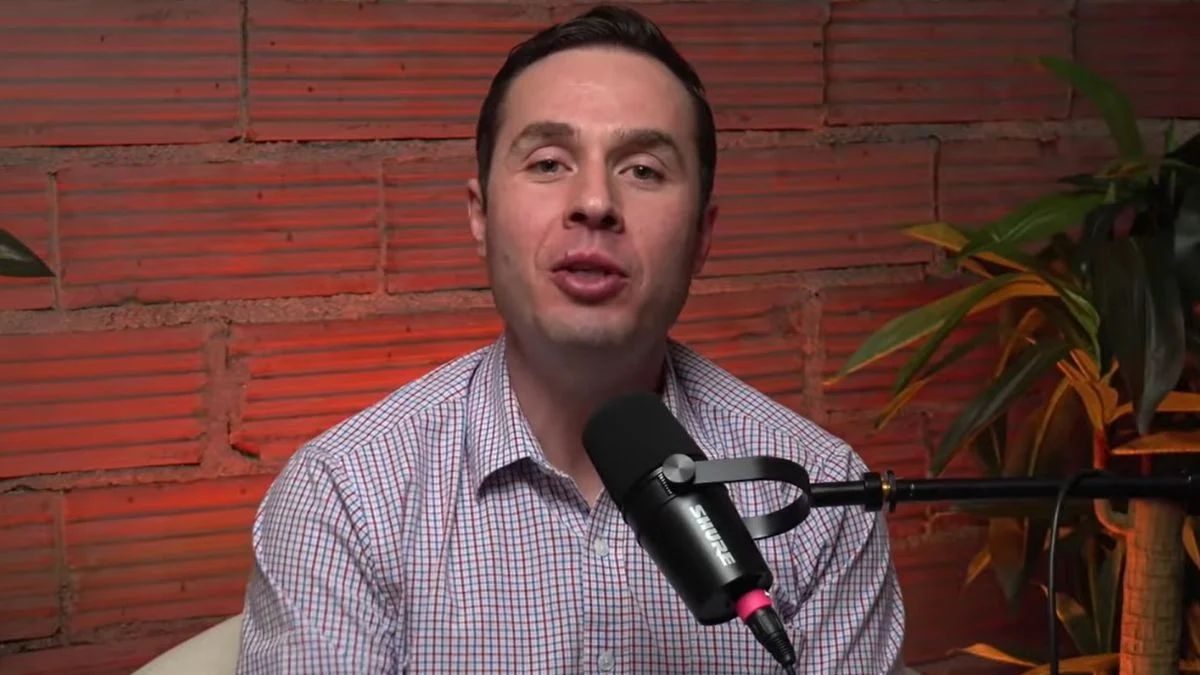
Radio has spent the better part of the last decade worrying that YouTube, streaming and digital creators are coming to steal its audience, but Rob Kendall and WJOB are about to flip that entire conversation upside down. Kendall, the outspoken Indiana talk personality whose run at 93 WIBC ended earlier this year after a prolonged contract impasse, didn’t disappear when his terrestrial microphone went silent. He built another one. He took his voice directly to YouTube, launched The Rob Kendall Show, kept talking to the audience and demonstrated something radio companies should probably write on the conference-room wall: when the relationship between a personality and the audience is strong enough, the transmitter is no longer where the brand lives. Now Kendall is coming back through an actual transmitter as Hammond’s 1230 WJOB and 104.7 FM bring his digital show onto terrestrial radio.
And this isn’t Kendall crawling back to radio.
Radio came looking for what Kendall built after radio.
That distinction makes this story fascinating.
Remember He Didn’t Leave WIBC Because Nobody Was Listening
Kendall’s departure from 93 WIBC was unusual.
He had been part of the station’s midday programming alongside Casey Daniels, but contract negotiations eventually reached an impasse. Reporting at the time indicated Kendall had continued working for months after his previous agreement expired before the relationship ultimately ended in February.
That’s important context.
This wasn’t the familiar radio story where a show disappears and the personality quietly updates LinkedIn.
Kendall already had an identity.
An audience.
An opinion.
And, perhaps most importantly in modern media, people willing to follow him somewhere else.
So he did something that would have been almost impossible for a displaced local radio personality twenty years ago.
He essentially said:
Fine.
I’ll build the station myself.
No Tower No Problem
The Rob Kendall Show launched digitally in March.
Weekdays.
10 a.m. to noon.
YouTube became the transmitter.
Kendall’s own digital presence became the distribution system.
And instead of waiting for another program director to offer him a chair, he created his own. The show’s current YouTube presence continues to identify it as a weekday 10-to-noon program focused heavily on Indiana taxpayers, government and politics.
That changes the power dynamic considerably.
Once upon a time, losing the radio station meant losing almost everything.
The station owned the tower.
The promotion.
The audience funnel.
The studio.
The distribution.
Today?
A microphone.
A camera.
An internet connection.
A recognizable personality.
And an audience willing to follow.
Suddenly you’re back in business.
Then WJOB Did Something Smart
Instead of looking at Kendall’s YouTube show as competition, WJOB looked at it as programming.
There it is.
That’s the story.
WJOB is putting the first hour of Kendall’s existing digital program onto 1230 AM and 104.7 FM, creating a hybrid in which a program born outside terrestrial broadcasting now gains traditional radio distribution. Kendall himself announced Friday that the show can now be heard on the Hammond station.
Initially, it’s one hour.
Could it eventually become both hours?
That’s certainly the obvious question.
For now, there is no confirmed expansion beyond that initial hour.
But we’d be watching very closely.
Because if the first hour works?
Why wouldn’t you want the second?
This Is What Radio Should Be Doing With Digital Creators
Stop treating every person with a camera and a YouTube channel like they’re coming to burn down the transmitter site.
Recruit them.
Partner with them.
Simulcast them.
Develop them.
Put the best ones on the radio.
Radio spent decades being the place where talent was created.
There’s no reason it cannot also become the place where independently created talent gets amplified.
That’s precisely what makes the Kendall arrangement so interesting.
WJOB doesn’t have to create Rob Kendall from scratch.
Rob already exists.
The show exists.
The content exists.
The digital distribution exists.
The audience exists.
WJOB adds something extraordinarily valuable:
another way to find him.
And WJOB Is the Kind of Station Where This Makes Sense
WJOB has always had a decidedly local personality.
It’s Hammond.
Northwest Indiana.
The Region.
This isn’t a station pretending that what happens 700 miles away automatically matters more than what’s happening down the street.
And Kendall’s particular brand of talk has been heavily rooted in Indiana government, taxpayers and political accountability.
That makes the geography interesting.
Indianapolis may have lost his daily terrestrial voice.
But Kendall didn’t suddenly stop talking about Indiana.
Now his radio footprint shifts north.
Way north.
From Indianapolis toward Northwest Indiana and the edge of the Chicago media universe.
That’s potentially a whole new audience.
Rob Kendall Is Also Not Everybody’s Cup of Tea
Good.
Seriously.
Talk radio personalities aren’t supposed to be warm milk.
Kendall has built his identity around strong opinions, political confrontation and an aggressive approach to government accountability.
Some listeners will love him.
Some will absolutely not.
Some will listen specifically because they want to yell at him through the dashboard.
Welcome to talk radio.
The worst possible reaction to a talk personality isn’t anger.
It’s:
Who?
Kendall doesn’t have that problem.
WJOB Gets Something Else Too
Attention.
We’re talking about WJOB right now.
So are other people.
That’s valuable.
A heritage local AM paired with an FM translator has to fight for awareness in a media universe that contains practically unlimited content.
Bringing in a personality with an existing digital audience creates immediate curiosity.
Some Kendall followers who have never intentionally listened to WJOB may now discover it.
And here’s where WJOB has an opportunity.
Don’t just borrow Kendall’s audience. Introduce that audience to WJOB.
Promote the other shows.
Promote local coverage.
Cross-pollinate the audiences.
Use Kendall’s digital reach to introduce people to the station and use WJOB’s terrestrial presence to introduce new people to Kendall.
That’s how this becomes more than plugging a hole in the schedule.
There Is a Lesson Here for Every Personality Who Just Got Laid Off
And unfortunately, we’ve written about far too many of you lately.
Your career does not necessarily end when the station email stops working.
That doesn’t mean building independently is easy.
It isn’t.
It doesn’t mean everyone can immediately generate an audience large enough to support themselves.
They can’t.
But Kendall demonstrates why personalities should be thinking about ownership of audience long before the corporate meeting happens.
Your YouTube.
Your podcast.
Your email database.
Your social accounts.
Your website.
Your community relationships.
Your personal brand.
Build them while you’re employed.
Because radio employment can end at 10:03 on a Tuesday.
The relationship you’ve built with listeners doesn’t have to.
This Is Also a Warning to Radio Companies
For decades, stations largely controlled access to audiences.
That leverage has changed.
If you develop a compelling personality for ten years and that personality leaves, you no longer necessarily keep the entire audience.
Some of those people can follow the talent.
Immediately.
The station loses exclusivity.
The personality gains independence.
And another broadcaster can eventually come along and say:
We’ll take the show.
That’s basically the fascinating part of what’s happening here.
The digital world has created portability for radio personalities.
That’s powerful.
The Transmitter and YouTube Can Actually Be Friends
What a concept.
We’ve spent years debating:
Radio versus streaming.
Radio versus podcasts.
Radio versus YouTube.
Radio versus digital.
Maybe that’s the wrong damn question.
Maybe it’s:
Radio plus everything.
Broadcast the show.
Stream the show.
Film the show.
Clip the show.
Post the best moments.
Turn arguments into Shorts.
Put segments on Facebook.
Build the podcast.
Let terrestrial radio create discovery.
Let YouTube create visual engagement.
Let social media create virality.
Let the personality connect everything.
Now you’ve stopped operating a radio show.
You’re operating a content brand.
That’s where the business is going.
And Suddenly Kendall Has Something He Didn’t Have Before
A fascinating hybrid.
He maintains the independence of his digital operation while gaining terrestrial distribution.
That’s a potentially attractive model for established personalities.
Instead of asking:
Which radio station employs me?
The question becomes:
Which platforms distribute me?
Huge difference.
A personality can potentially own the underlying content while radio becomes one of several outlets.
That’s not necessarily how every arrangement will work, of course.
But conceptually, that’s where this gets interesting.
The station is no longer automatically the sun with every other platform orbiting around it.
The show can become the sun.
Now Give Us Hour Two
We’re getting ahead of ourselves.
But come on.
You knew we were going there.
WJOB starts with the first hour.
Smart.
Test it.
Watch listener response.
See what happens digitally.
See whether Kendall’s audience follows him onto the station.
See whether WJOB listeners discover him.
And if everything clicks?
Open up the second hour.
Because there’s something wonderfully backward about a YouTube show becoming successful enough to make its way onto AM/FM radio.
After twenty years of radio sending programming to digital platforms, digital is finally sending programming back to radio.
Full circle.
Rob Kendall Didn’t Wait for Somebody to Give Him Another Microphone
That’s what we like most about this story.
The WIBC chapter ended.
Kendall could have spent six months telling everyone how unfair radio is.
Instead, within weeks, he had another show.
Different platform.
Same voice.
Then roughly five months later, terrestrial radio comes back into the picture.
That’s reinvention.
And in 2026, reinvention may be one of the most important survival skills a broadcaster can possess.
Welcome Back to the Dial Rob
Different city.
Different station.
Different business arrangement.
Different distribution model.
But there is once again an AM/FM frequency carrying The Rob Kendall Show.
And WJOB deserves credit for recognizing an opportunity instead of getting hung up on where the show originated.
Because great radio programming doesn’t have to be born inside a radio station anymore.
Sometimes it can be born on YouTube.
Build an audience.
Find its voice.
Prove itself.
And then walk through the front door of terrestrial radio carrying its own listeners.
That’s not digital replacing radio.
That’s digital feeding radio.
And if broadcasters are paying attention, Rob Kendall’s move to WJOB might be considerably more important than one new show on one Indiana radio station.
An On The Dial Perspective
Radio should stop viewing every emerging platform as an existential threat and start asking how those platforms can become talent incubators. Rob Kendall left an established Indianapolis radio position, built his own weekday digital program and now finds that program returning to terrestrial broadcasting through WJOB. That’s a roadmap worth studying. Let personalities build brands. Let digital create audiences. Let radio provide reach, immediacy and discovery. Then stop arguing about which platform wins and concentrate on making content people actually want.
Welcome back to terrestrial radio, Rob.
And WJOB?
Nice pickup.
Now we’ll be watching to see whether one hour becomes two.
The Rob Kendall Show on YouTube
#OnTheDial #RobKendall #WJOB #1230WJOB #1047FM #TheRobKendallShow #IndianaRadio #HammondIndiana #NorthwestIndiana #TheRegion #TalkRadio #NewsTalk #RadioPersonality #RadioTalent #YouTube #DigitalMedia #DigitalRadio #RadioInnovation #ContentCreators #LocalRadio #AMRadio #FMRadio #RadioProgramming #FutureOfRadio #RadioPeople #Broadcasting #RadioIndustry #RadioStillMatters