


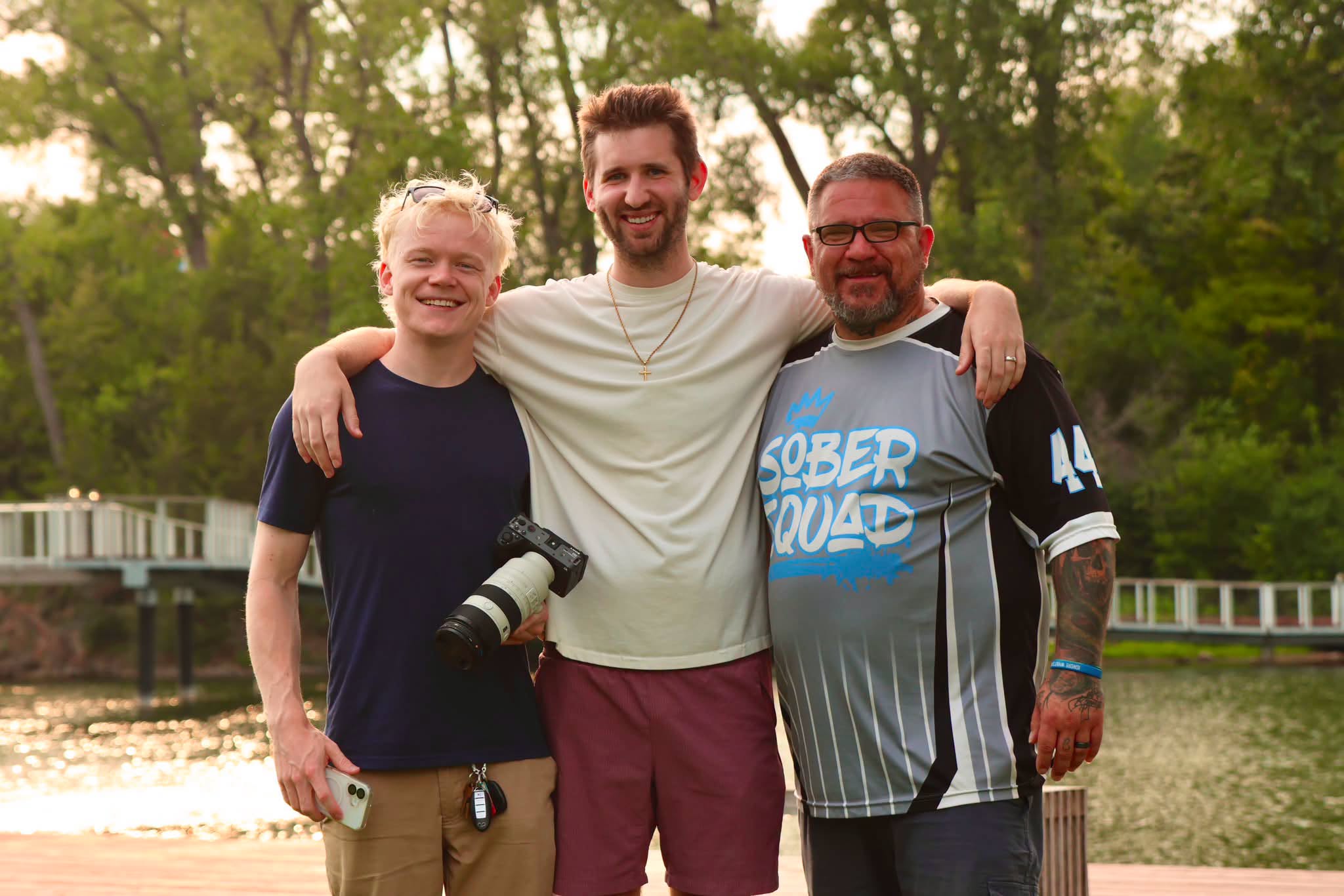
There are people who build audiences because they want to be famous, people who build audiences because they want to sell something, and people who eventually realize that having millions of human beings listening to you creates an opportunity far more powerful than either of those things. Josh Liljenquist — known to tens of millions online as Joshlilj — belongs firmly in that last category. Through Live to Love, Josh and the small team around him have spent 2026 moving from one human story to another: families facing medical crises, people trying to find safe housing, someone needing transportation, people fighting addiction, veterans, hungry families and complete strangers who simply needed somebody to notice them. His official archive now documents 18 separate impact stories, and the remarkable thing isn’t simply how much money has been raised. It’s that Josh keeps coming back. He meets people. He listens. He follows up. And lately, he and his team have been crisscrossing the Midwest doing something deceptively simple that the radio industry could stand to relearn: using an audience to make somebody else’s life better.
Josh Liljenquist / Live to Love
And if you’re reading On The Dial, there’s a reason we’re talking about this.
Because Josh’s work may have absolutely nothing to do with radio…
and everything to do with what radio could become again.
The Steven Mills Campaign Changed My Understanding of Reach
I know this one differently because I’m the person on the other side of the camera.
When Josh learned about my search for an extraordinarily difficult living kidney donor match, he could have shared a post.
He could have wished me well.
He could have moved on to the next story.
Instead, Josh and his team helped turn one man’s desperate medical search into something millions of people could see.
The campaign brought enormous attention to my living-donor search and generated tens of thousands of dollars in public support. By August 7, the documented fundraiser had already passed $55,000, while television and radio coverage helped push the donor search far beyond anything I could have accomplished myself.
But here’s what matters most to me:
Josh made people see a person instead of a diagnosis.
A husband.
A father.
A pastor.
A broadcaster.
A radio programmer.
A publisher.
A human being asking for more time.
That’s what storytelling is supposed to do.
And then Josh kept moving.
Then There’s Harper
Most recently, Josh and his team traveled into Missouri to personally meet Harper and the family behind another campaign they’re supporting.
And that detail matters.
Because Live to Love isn’t supposed to be kindness performed from behind a laptop.
When possible, these aren’t simply GoFundMe links being thrown into the internet and abandoned.
People get visited.
Stories get followed.
Families get hugged.
The camera eventually gets turned off.
And somebody still has to care when it does.
That’s one of the recurring principles in Josh’s own description of the work: the public video isn’t intended to be the end of the story. Live to Love emphasizes practical follow-through involving housing, transportation, recovery, medical care and family stability.
That’s important.
Because viral is a metric.
Follow-through is character.
On the Way, They Found Shawna Feeding People in Hutchinson
This may be my favorite part.
While traveling through Kansas, the team stopped to support Shawna and her work feeding hungry people in Hutchinson.
Think about the philosophy behind that.
You’re already traveling to help somebody.
You encounter somebody else helping people.
So you stop…
and help the helper.
That’s Live to Love in one sentence.
And wouldn’t radio be extraordinary if we started looking at our communities that way?
Not:
“What’s in it for our station?”
But:
“Who’s already doing something good here, and how can our microphone make it bigger?”
That costs almost nothing.
Reanna Needed a Safe Home
Then there’s Reanna Robinson and her children.
Community support around Reanna’s story grew to approximately $133,000, helping her family pursue something most of us take for granted:
safe, stable housing.
Josh didn’t simply post the original story and disappear after the views arrived.
On August 20, he was in Elgin, North Dakota, visiting the family as part of the fundraiser follow-up.
There’s that word again.
Follow-up.
Radio people should underline it.
Because we are extraordinarily good at promoting something before it happens.
What if we became equally obsessed with showing listeners what happened because they helped?
Gigi Became Something Extraordinary
Then came Azeza and Gigi.
A mother caring for her seriously ill teenage son while the family faced enormous financial and care pressures.
Josh encountered a mother who needed something money cannot actually purchase:
time with her child.
His audience responded on an almost incomprehensible scale.
More than $600,000 was ultimately raised in public support, helping relieve pressure surrounding care, bills, housing and everyday stability. A March follow-up documented a check presentation of $590,210 before the campaign later crossed the $600,000 mark.
Six hundred thousand dollars.
Not from one billionaire.
Not from some enormous corporation.
People.
Lots and lots of ordinary people deciding somebody else’s pain mattered.
That’s the power of an audience.
Keegan Needed Transportation
Another family needed something much more practical.
A safe vehicle.
The campaign surrounding Keegan and Natasha ultimately produced a documented $78,797 presentation to help provide safer transportation connected to Keegan’s care and everyday life.
Again, notice what’s happening.
The problem isn’t always glamorous.
Sometimes somebody doesn’t need a miracle.
Sometimes they need a van.
Sometimes kindness is chemotherapy support.
Sometimes kindness is rent.
Sometimes kindness is groceries.
Sometimes kindness is treatment.
Sometimes kindness is a roof.
Sometimes kindness is transportation.
And sometimes kindness is simply:
“I see you.”
Mindy, Reanna, Gigi, Keegan — And So Many More
Not every story becomes a $600,000 phenomenon.
And that’s precisely the point.
There have been stories involving Mindy and many others whose circumstances were different but whose humanity was exactly the same.
There was Chuck, whose campaign generated more than $300,000 and helped him move from homelessness into a condominium while also improving his mobility.
There was Aaron, whose story became about treatment, encouragement and recovery — eventually reaching more than 100 days sober.
There was Nick Best, whose need became a completed roof-and-gutter project worth approximately $30,000 in donated work.
There was Kris, whose viewer support helped address transportation and housing needs.
There was Cicero Taylor, whose story generated more than $70,000 for a Minneapolis nonprofit doing outreach work.
There were Santos and Amaru, whose campaign helped provide legal assistance for their family.
And there are more.
I couldn’t independently verify enough public detail about Mindy’s or Harper’s current campaigns to responsibly print medical, financial or family specifics here. That’s actually consistent with the philosophy behind Live to Love: dignity and privacy should matter more than filling every paragraph with intimate details. Josh’s own public materials explicitly emphasize consent, privacy and careful follow-through.
So Why Does Josh Do This?
This may be the most important part of the entire story.
Because eventually somebody watches enough of these videos and wonders:
Why?
Why spend your life walking toward other people’s problems?
Why carry their stories?
Why deal with the emotional weight?
Why travel?
Why keep coming back after the viral moment ends?
Josh’s own account of his upbringing provides part of the answer.
Service was modeled for him.
He describes growing up around family members who opened their homes, shared professional skills, sacrificed income, traveled enormous distances for their children and stepped in when somebody needed help.
Today, his wife Ingrid Liljenquist is part of the foundation underneath that work, supporting the unpredictable schedules, travel and emotional demands that come with it.
Live to Love, then, isn’t really about making kindness videos.
The videos are the delivery system.
The mission is people.
And Josh Isn’t Doing It Alone
This deserves saying loudly.
Behind the public-facing creator is a small team.
Ben Steine, Josh’s videographer and editor, helps turn complicated human moments into stories millions can understand.
James Cowan Jr. has one of the most remarkable connections to the mission: he originally met Josh through an act of support himself. After viewers helped raise $50,000 and James purchased his first home, he eventually became part of the team — helping with filming, setup and reviewing nominations.
The person who was helped became one of the helpers.
If that doesn’t perfectly explain the ripple effect of kindness, I’m not sure what does.
RADIO: ARE YOU PAYING ATTENTION?
Because now we arrive at the reason this belongs in On The Dial.
Josh Liljenquist has more than 30 million people watching him across platforms.
Radio has millions upon millions of people listening every week.
We already possess the machinery.
Transmitters.
Studios.
Websites.
Apps.
Social accounts.
Morning shows.
Promotions departments.
Sales departments.
Newsrooms.
Personalities.
Community relationships.
And something incredibly valuable that social creators spend years trying to build:
local trust.
So what are we doing with it?
What If Every Radio Station Adopted One Family?
I’m serious.
Not another contest.
Not another “text this keyword to win $500.”
Imagine if every radio station in America identified one legitimate need every quarter.
One.
A family whose house burned down.
A teacher buying supplies with her own paycheck.
A kid whose wheelchair van stopped running.
A veteran sleeping in his car.
A food pantry whose shelves are empty.
A waitress walking three miles to work.
A mother sitting beside her child in a hospital wondering how she’s going to pay next month’s rent.
And instead of simply mentioning it during a 22-second community calendar…
we put the entire power of the radio station behind them.
Morning show.
Afternoons.
Social.
Website.
Sales partners.
Listeners.
Clients.
Community organizations.
Everybody.
Imagine what happens.
Stop Measuring Everything in Ratings Points
Radio desperately needs revenue.
That’s reality.
Employees deserve paychecks.
Transmitters require electricity.
Buildings cost money.
Companies need profits.
Nobody is suggesting otherwise.
But every second of airtime does not have to answer the question:
“How do we monetize this?”
Sometimes the return is trust.
Sometimes the return is relevance.
Sometimes the return is somebody remembering:
“That station helped my neighbor.”
You can’t purchase that relationship with another $25,000 television campaign.
You earn it.
This Is What “Local” Actually Means
Radio executives love the word local.
Local content.
Local connection.
Local personalities.
Local engagement.
Fine.
Then prove it.
Local isn’t simply saying the city’s name between records.
Local is knowing who’s hurting in the city.
Local is knowing who is feeding people.
Local is knowing which teacher needs help.
Local is knowing which nonprofit is quietly doing extraordinary work.
Local is knowing which family needs somebody to notice.
Local is showing up.
That’s what Josh does.
And he doesn’t own a single transmitter.
Radio Has Something Josh Would Understand Immediately
Reach.
That is our superpower.
One person speaks.
Thousands hear it simultaneously.
Think about how insane that remains.
We’ve become so accustomed to broadcasting that we’ve forgotten what an extraordinary privilege it is.
Josh has demonstrated what can happen when reach is combined with compassion.
People move.
They donate.
They share.
They volunteer.
They pray.
They nominate somebody else.
They begin looking around their own communities differently.
And then something beautiful happens:
the person who was helped starts helping somebody else.
That’s the ripple.
An On The Dial Perspective
I have a different relationship with this story because I have personally experienced what happens when Josh Liljenquist decides somebody needs to be seen.
He did it for me.
And now I watch him do it for Harper.
For Shawna.
For Reanna.
For Gigi.
For Keegan.
For Mindy.
For people whose names most of America never knew until somebody stopped long enough to listen.
That’s why I believe radio should study what he’s building.
Not copy the videos.
Copy the heart.
Don’t manufacture tears.
Don’t exploit tragedy.
Don’t turn suffering into a promotion.
Don’t slap the station logo across somebody’s worst day and congratulate yourself for “engagement.”
Do something much harder.
Care.
Listen first.
Protect people’s dignity.
Ask permission.
Figure out what would actually help.
Use your audience.
Bring partners together.
Follow through.
And when the campaign ends…
GO BACK.
Show the audience what their kindness accomplished.
That’s the part Josh understands extraordinarily well.
Maybe Radio’s Next Great Format Is Humanity
We’ve spent years asking how radio competes with Spotify.
How do we compete with podcasts?
How do we compete with TikTok?
How do we compete with YouTube?
Maybe we’re asking the wrong question.
Spotify can play the same song.
A podcast can provide better niche content.
TikTok can generate more views.
YouTube can provide unlimited video.
But your radio station can walk into the food pantry down the street.
Your morning personality can know the mother whose house burned down.
Your sales manager can call the furniture store.
Your GM can call the grocery store.
Your listeners can show up Saturday morning.
Your station can become the place where a community doesn’t merely hear about itself.
It takes care of itself.
That’s something worth fighting for.
Josh Liljenquist calls his mission Live to Love.
Maybe radio doesn’t need to borrow the name.
Maybe we just need to remember the idea.
Because we have microphones.
We have audiences.
We have influence.
We have reach.
And somewhere within the coverage area of virtually every transmitter in America tonight…
somebody needs to know they haven’t been forgotten.
Josh keeps asking people, in one way or another:
Do you see me?
Radio…
we’ve spent more than a century asking people to listen to us.
Maybe it’s time we showed them…
we see them, too.
— Steven Mills
President & Publisher, On The Dial
Link to Joshua Liljenquist/Steven Mills Story
https://joshliljenquist.com/impact-steven-mills-kidney-donor-search
#OnTheDial #JoshLiljenquist #JoshLilj #LiveToLove #DoYouSeeMe #KindnessMatters #LoveOutLoud #StevenMills #BenSteine #JamesCowanJr #RadioFamily #RadioPeople #LocalRadio #RadioWithHeart #CommunityRadio #RadioCares #BroadcastRadio #RadioIndustry #RadioProgramming #MorningRadio #RadioTalent #CommunityMatters #Humanity #Compassion #BeKind #MakeADifference #RadioStillMatters