


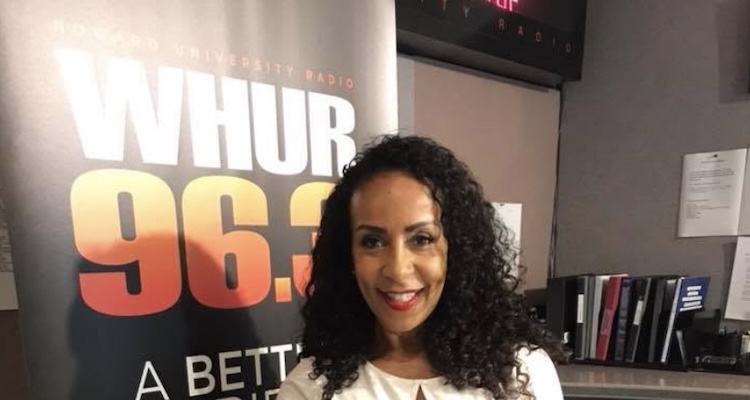
There is something about nighttime radio that daytime broadcasters will never completely understand. When the traffic finally settles, the television goes off and the rest of the house is asleep, the person coming through that radio can become awfully important. Washington understood that relationship long before the rest of the country began borrowing the Quiet Storm format. Angela Stribling understood it too, and for years, she used one of the most recognizable voices in broadcasting to keep people company when they needed it most.
Angela died Saturday, September 26, following a two-year battle with brain cancer. She was 58. Her husband, Dr. Ken Washington, confirmed that she passed peacefully at home with him and her sister, Darlene, beside her. A celebration of her life is being planned in Washington, with arrangements to be announced. The news has understandably brought an outpouring of emotion from the people who worked with her and the listeners who considered her part of their lives.
I’ve been thinking about what it actually means to spend a career being invited into somebody else’s home. We talk about audience loyalty, ratings, brand identity and all the other things that keep our business operating. Angela’s career reminds me that there is another side to that relationship, one that rarely makes its way into a programming meeting. Sometimes the listener simply needs somebody to talk to, and a good broadcaster understands the responsibility that comes with being that person.
To appreciate Angela’s contribution, you have to understand what WHUR means to Washington.
The station’s Original Quiet Storm began in 1976 when a young Howard University student named Melvin Lindsey unexpectedly found himself behind the microphone during a labor dispute. His extraordinary sense of musical flow and his understated presentation eventually created a format that spread across the country. Fifty years later, broadcasters are still borrowing from what happened in that Howard University studio.
Angela became the first woman to host the Original Quiet Storm. That accomplishment deserves its place in broadcasting history, particularly when you consider the opportunities available to women in radio during much of the format’s development. She also shared a close friendship and professional partnership with Lindsey, and their work together extended beyond WHUR into television.
What I find particularly moving is the timing of her passing. Earlier this month, WHUR celebrated the Quiet Storm’s 50th anniversary as part of Washington’s Art All Night festivities. The celebration took place at the Martin Luther King Jr. Memorial Library, bringing together former personalities and current host Raheem DeVaughn to recognize a program that has become part of the city’s cultural identity.
Just weeks later, Washington was remembering Angela.
And hers was a career worthy of remembering well.
Angela was originally from Buffalo, New York, but Washington became the place where much of her professional identity developed. She began with opportunities at WTTG television and WOL radio, learning a business that would eventually take her far beyond the nation’s capital. At WOL, she worked in several areas of the operation, including sales, production and on-air broadcasting. She understood radio from more than one side of the building, something I have always appreciated in people who build lasting careers in this industry.
Her television career developed through an opportunity that sounds almost too perfect. After filling in for a friend on a Washington television program, she attracted the attention of a BET producer and was invited to audition. That eventually led to her work on Video Soul and a four-year run on Screen Scene, where she worked alongside Melvin Lindsey.
She later became an important part of BET’s jazz programming, helping introduce audiences to the artists and music she genuinely loved. Her work included Jazz Central with Ramsey Lewis and Lou Rawls, along with other programs devoted to established and emerging jazz musicians.
There was also Baltimore. Angela reported for WJZ-TV’s Evening Magazine and co-hosted On Time, a television program serving the city’s African American community. Her professional reach was national, but her work repeatedly brought her back to audiences in Washington and Baltimore.
And she could sing.
Angela was a classically trained jazz vocalist whose performing career took her around the world. She appeared on stages with Stevie Wonder and Chaka Khan, performed internationally and developed an extensive career in commercial voice work. Her voice was heard in national advertising campaigns for major brands, but I suspect many Washington listeners would tell you that her most important performances happened in much smaller, more intimate settings.
Those were the nights when they heard her on WHUR.
Her program, Pillow Talk with Angela, brought something especially personal to the station. Music provided the atmosphere, but Angela wanted the conversations to mean something. She was genuinely interested in relationships, love, heartbreak and the complicated business of being human.
In a 2021 interview with The Washington Informer, Angela explained that helping other people was an important part of her purpose. She wanted listeners to find happiness and develop healthier relationships, regardless of where they happened to be in life.
That interview stayed with me as I researched this story.
We have all encountered tremendously talented broadcasters who knew how to make a microphone sound good. Angela certainly knew how to do that. But here was somebody whose ambitions extended beyond delivering an outstanding radio program. She wanted the people listening to feel better about their own lives.
And she took that relationship outside the studio.
In 2018, Angela wrote about the success of a Pillow Talk singles event in Washington. Listeners came together, met new people, enjoyed an evening out and, in some cases, made romantic connections. Her account of the gathering was wonderfully enthusiastic, filled with appreciation for the people who attended and the colleagues who helped make it happen.
I love that little piece of her history because it tells us something about the woman behind the program. She wasn’t content to spend an hour talking about relationships and then send everybody home. She created an opportunity for listeners to actually meet one another.
That is local radio doing something meaningful.
It is also what made her relationship with Washington special. Angela’s career could have taken her permanently into national television, commercial voice work or the international music business. She accomplished things in all three. Yet she maintained a connection with the local audience that had embraced her.
There is a lesson there for every broadcaster who believes a larger platform automatically represents a more important career.
Sometimes the most important work you do is right there in your own community.
On Monday, Donnie Simpson joined FOX 5 in Washington to remember his longtime friend and former BET colleague. His reflections focused on Angela’s personality and the extraordinary impact she had on the people around her. He also acknowledged the difficulty of losing someone so young while expressing gratitude for having known her.
That was particularly touching because Donnie knew Angela in ways most of us never could. Their professional histories intersected during an important period in Black television, and the friendships that developed during those years continued long after the programs and assignments changed.
WHUR has also been remembering Angela through the voices of colleagues and friends, including former Quiet Storm host Alvin Jones, Gospel Spirit host Jacquie Gales-Webb, NBC4 journalist Tracee Wilkins and longtime friend Toni Robinson.
The memories coming from the people who knew her tell us that her contribution cannot be measured simply by the programs she hosted.
As broadcasters, we spend so much time moving forward that we sometimes fail to recognize what is happening around us. Somebody retires. Somebody changes markets. Somebody leaves the business. We promise to get together at the next convention, have dinner the next time we’re in town or finally make that telephone call we’ve been putting off.
Then a story like this comes across my desk, and I find myself thinking about how much we should appreciate people while they are still here.
Angela was only 58 years old.
Her husband and family have endured an extraordinarily difficult two years, and I cannot imagine what these past several days have been like for them. I hope they find comfort in the remarkable number of people whose lives Angela touched, although I understand that public admiration can never replace the presence of somebody you love.
I also hope Washington takes some time to remember exactly what she contributed to its broadcasting history.
This was a woman who helped carry forward one of the most influential formats Black radio ever created. She opened doors for women in broadcasting, worked alongside some of the industry’s most respected personalities and built a career that connected local radio with national television and international music.
Yet when given an opportunity to explain what mattered to her, she talked about helping people.
I think that tells us everything we need to know.
On behalf of Joseph Collins, our entire On The Dial family and myself, I want to extend our deepest condolences to Dr. Ken Washington, Darlene, Angela’s family and everyone at WHUR. Our thoughts and prayers are also with the many friends, colleagues and listeners who are mourning her passing.
Angela Stribling helped give Washington a reason to turn on the radio after dark. She helped preserve a remarkable musical tradition, and she understood that the person listening might need much more than another love song.
That is a beautiful thing to have accomplished in 58 years.
And it is a beautiful way to be remembered.
Rest peacefully, Angela. Thank you for reminding this industry that the greatest thing we can do with a microphone is make somebody else’s life a little better.
#OnTheDial #AngelaStribling #WHUR #TheOriginalQuietStorm #QuietStorm #BET #WashingtonDC #DMVRadio #BlackRadio #RadioHistory #WomenInBroadcasting #RememberingAngelaStribling