


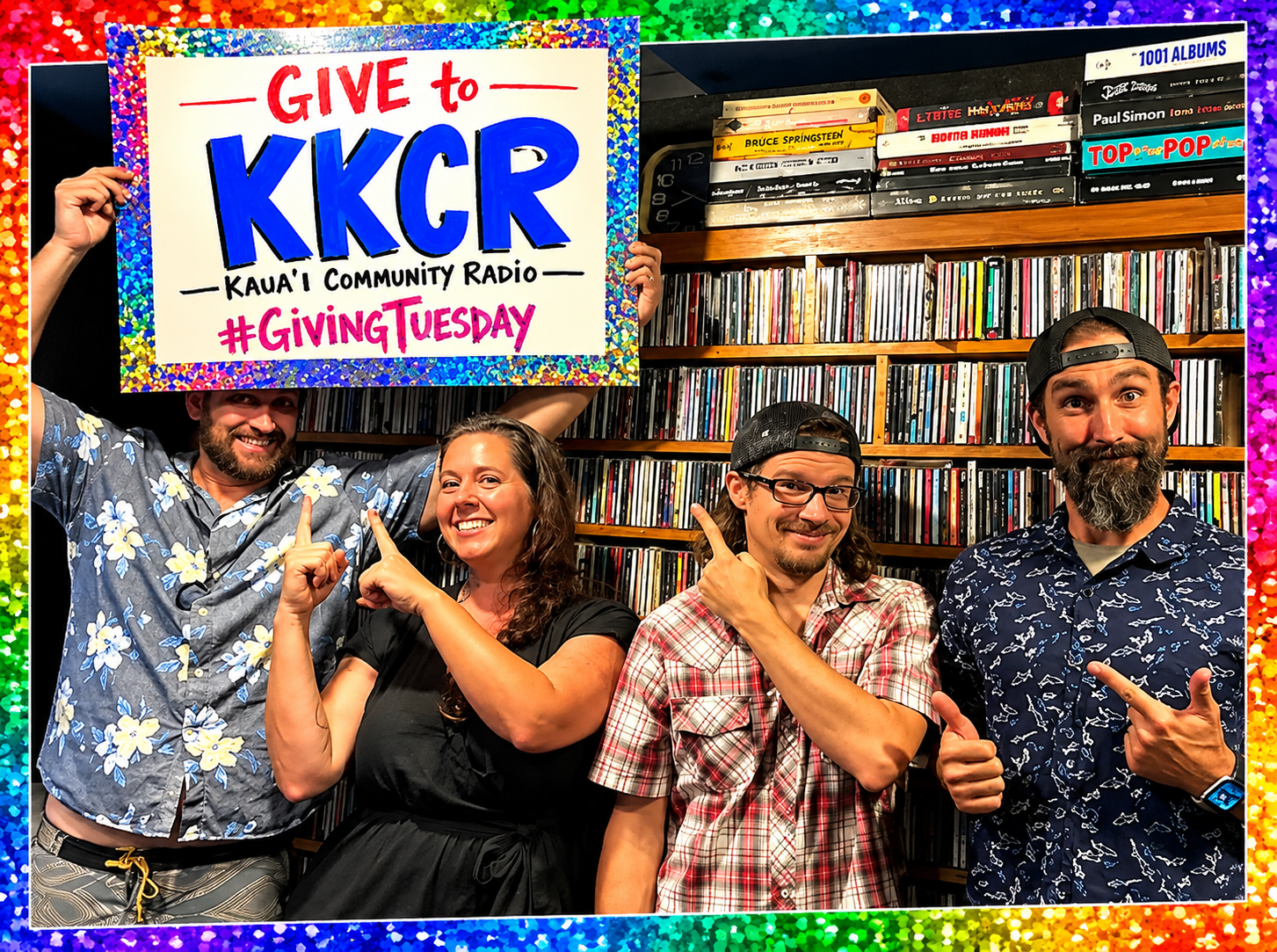
For nearly thirty years, I’ve heard our industry tell the same story about what happens when disaster strikes. The electricity fails, the internet disappears, cell service becomes unreliable, and eventually somebody reaches for a battery-powered radio. We have built entire public-service campaigns around that scenario, and with good reason. But earlier this month, a hurricane passing dangerously close to Kauaʻi exposed something we don’t discuss nearly enough. When people desperately needed their radio stations, much of the island couldn’t hear them. And one little community station that managed to keep broadcasting is now fighting to stay in business.
I want every broadcaster reading this to spend a few minutes thinking about what happened in Hawaiʻi, because this story reaches considerably farther than one island in the Pacific.
On September 7, Hurricane Lowell passed just west of Kauaʻi and neighboring Niʻihau, bringing destructive winds, heavy rainfall and widespread power failures. Roads became impassable, trees came down, communications were disrupted, and residents were left trying to figure out what was happening around them. The hurricane’s center didn’t have to pass directly over Kauaʻi to create an emergency. By the time the storm moved away, the island was dealing with damaged infrastructure and thousands of people trying to contact one another.
And there, on the North Shore, was a little radio station called KKCR.
If you’ve never heard of Kauaʻi Community Radio, you’re about to understand why I believe its story deserves the attention of our entire industry.
KKCR operates out of Princeville, with its original 90.9 FM signal licensed to Hanalei. The station’s home is tucked away at the end of a winding road, surrounded by the kind of tropical landscape that makes Kauaʻi one of the most beautiful places on earth. It’s not a massive broadcasting operation with corporate engineering departments scattered around the country. It’s a nonprofit community station supported by listeners, local businesses, a small staff and dozens of volunteers who genuinely love what they’re doing.
Its programming is as wonderfully unpredictable as the community it serves. Hawaiian music, reggae, jazz, blues, Rock, local musicians, cultural programming and conversations about the things that actually matter to people living on Kauaʻi. On a typical day, you might hear somebody discussing farming, affordable housing or Hawaiian culture before another volunteer introduces you to music you probably wouldn’t discover anywhere else.
That is precisely what community radio is supposed to be.
And when Lowell arrived, that community needed every bit of it.
General Manager Anni Caporuscio and the station’s volunteers continued broadcasting through the storm using backup generator power. They relayed weather information, accepted calls from listeners and helped residents communicate when their usual sources of information weren’t available. Kauaʻi Mayor Derek Kawakami and Emergency Management Agency Administrator Elton Ushio also called the station to provide updates.
Think about that for a moment. Local government officials were calling a community radio station because they needed to reach people who might not have electricity, internet access or reliable telephone service.
That’s the kind of public service we spend our careers telling people radio can provide.
But the operation was hardly functioning under ideal circumstances.
Fallen trees and storm debris surrounded the station. Volunteer broadcaster Hari Khalsa was photographed helping clear the damage with a chainsaw. KKCR’s internet service eventually failed, and the station had to rely on its generator to maintain the 90.9 signal. Other transmission sites weren’t equipped with the same backup power, leaving the station unable to provide its normal coverage across the island.
By September 10, its surviving FM signal was reaching primarily the North Shore and eastern communities down toward Kapaʻa.
Imagine being the general manager of a station during an island-wide emergency, knowing people need your information but also knowing your signal cannot reach everyone you’re trying to help.
That is a broadcaster’s nightmare.
Kauaʻi’s other designated emergency broadcaster, KONG 93.5, encountered problems of its own. The station initially operated on generator power, but its transmitter generator failed early on September 8. KONG’s team eventually restored service on September 10 and resumed providing recovery information, including road conditions, food distribution locations and updates from county officials.
I want to give those broadcasters their due as well. Nobody working through a hurricane needs somebody sitting comfortably thousands of miles away questioning their commitment. These people were dealing with extraordinarily difficult circumstances, just like the listeners they were trying to serve.
The problem wasn’t a lack of dedication.
It was infrastructure.
KKCR received some much-needed help when the Lāhui Foundation donated a Starlink connection, restoring its ability to communicate through the internet. The station continued directing listeners toward information about road closures, available water, food assistance and other recovery resources.
A generator, some diesel fuel, a satellite internet connection and broadcasters who refused to abandon their community.
That was the operation.
And it shouldn’t take a catastrophe to remind us how important those things are.
What makes this story particularly remarkable is that KKCR exists largely because Kauaʻi has been through something like this before. Plans for a North Shore community station began before Hurricane ʻIniki devastated the island in 1992, but that disaster demonstrated just how badly residents needed reliable emergency communications. Those efforts ultimately produced KKCR’s first island-wide broadcasts in the summer of 1997.
The station is approaching its 30th anniversary next year.
Nearly three decades after coming to life with emergency communications as one of its founding purposes, KKCR found itself confronting another major hurricane. Its broadcasters were ready to serve, but the financial resources necessary to keep every part of the operation functioning simply weren’t there.
And that brings me to the part of this story that genuinely bothers me.
Just before Lowell arrived, KKCR was already facing a serious financial crisis.
The station lost approximately $83,000 in annual federal support following the withdrawal of funding and subsequent closure of the Corporation for Public Broadcasting. For a nonprofit station operating on an annual budget of approximately $400,000, that is an enormous amount of money to replace.
Its September fundraising campaign was supposed to help close that gap. Instead, the station found itself trying to raise money while the very community that normally supports it was dealing with the destruction left behind by a hurricane.
How do you ask somebody to contribute to their local radio station when they may be trying to repair their home, replace spoiled groceries or figure out when the electricity will return?
Caporuscio and her team understand that predicament. Their fundraising appeal specifically acknowledges that they aren’t asking struggling local families to give money they cannot afford.
Which is one of the reasons I’m writing this story.
Because KKCR’s audience doesn’t end at the shoreline.
In June, the nonprofit noncomMUSIC Alliance profiled the station and reported that KKCR had attracted approximately 176,000 unique online listeners during the previous year. That’s a remarkable international audience for a community broadcaster serving an island of roughly 74,000 residents.
But the most interesting part of that profile had nothing to do with audience numbers.
Caporuscio was originally a listener herself. She spent years working locally, eventually owned a coffee shop and developed the kind of familiarity with KKCR’s personalities that radio people spend their entire careers hoping to create. When those familiar voices began showing up at her business, the people she had listened to for years became part of her everyday life.
Eventually, she became part of theirs.
She served on the station’s board, volunteered behind the microphone, worked in development and ultimately became general manager.
That’s a wonderful radio story. It’s also an important reminder that the strongest community stations don’t merely broadcast to the places they serve. They become part of those places.
Now consider what’s happening elsewhere in Hawaiʻi.
Local reporting following Lowell revealed that emergency radio infrastructure problems extend well beyond Kauaʻi. Earlier this year, severe weather on Maui damaged transmission facilities, and difficult conditions prevented engineers from reaching one affected mountaintop site for weeks. Broadcasters throughout the islands have been dealing with questions about backup generators, transmitter reliability, fuel supplies and the expense of maintaining facilities that may become essential during an emergency.
These problems deserve serious attention because the public is repeatedly encouraged to keep radios available for disasters.
That’s good advice.
But we’re not fulfilling our side of that arrangement if the stations people are supposed to hear cannot stay on the air.
And this is not exclusively a public-radio problem.
Commercial broadcasters have the same responsibility to prepare their facilities, train their people and work with emergency-management agencies. Some companies have invested heavily in redundant systems and emergency operations. Others operate with considerably fewer resources.
Kauaʻi demonstrated how quickly the difference can become painfully obvious.
I spent years working in radio operations, programming and corporate broadcasting. I understand the difficult conversations about expenses, engineering projects and the pieces of equipment that nobody wants to replace because the old ones are still functioning.
Generators aren’t particularly exciting.
Neither are backup transmission paths, fuel contracts, maintenance schedules or emergency operating procedures.
They’re also difficult to promote during a ratings presentation.
But when a hurricane knocks out the electricity and somebody is sitting inside a dark house waiting to find out whether it’s safe to leave, that equipment suddenly becomes considerably more important than the morning show’s latest contest.
That’s the part of the business I hope we never forget.
And there is another lesson here for those of us who spend so much time talking about the future of radio.
We talk about artificial intelligence, automation, streaming, connected dashboards, podcasts and every other technological development changing the industry. Those are important conversations, and we’ll continue having them here at On The Dial.
But somewhere on Kauaʻi, a volunteer was clearing fallen trees while his colleagues kept a community informed using a generator.
I think there’s room in our industry conversations for that story too.
Actually, I think there’s an obligation to tell it.
KKCR’s financial situation remains serious, although its exact remaining fundraising need should be confirmed directly with the station as contributions continue arriving. Its website continues to accept donations and promote fundraising activities, including an October 9 benefit concert at Kauaʻi Community College featuring local musicians performing the music of Michael Jackson.
I hope our broadcasting community pays attention.
Maybe you operate a large group with engineering resources that could help. Maybe your company has retired equipment that could find a second life. Perhaps you’re a manufacturer, an equipment supplier or somebody who knows how to help a small station secure the backup systems it needs.
And if you’re simply a broadcaster who understands what KKCR’s volunteers accomplished, perhaps you’ll consider making a contribution or sharing their story.
You can find the station and its fundraising information at www.kkcr.org.
I would also encourage broadcast organizations and emergency-management professionals to examine what happened across Hawaiʻi. An emergency communications plan is only as dependable as the equipment, power supplies and people responsible for carrying it out. We need to know which stations can remain operational during extended outages and where assistance is needed before the next disaster arrives.
The hurricanes and floods we’ve witnessed this year should make that conversation a priority.
I keep coming back to one image from this story.
A little radio station on Kauaʻi, surrounded by fallen trees, broadcasting to people who were frightened and uncertain about what was happening around them.
No enormous production budget. No fancy television studio. No national marketing campaign.
Just people who understood their community needed them.
They showed up.
And despite everything working against them, they kept talking.
Now it’s our turn to pay attention.
Because the next time somebody tells America that radio will be there when everything else fails, I want that promise to mean something.
I want the generators to start, the transmitters to work and the people behind those microphones to have everything they need.
Most of all, I want stations like KKCR to still be there when their communities need them again.
That’s a future for radio worth investing in.
#OnTheDial #KKCR #Kauai #KauaiCommunityRadio #HurricaneLowell #HawaiiRadio #EmergencyBroadcasting #BroadcastEngineering #LocalRadio #CommunityRadio #RadioIndustry #RadioMatters #RadioLeadership #Broadcasting