


Two More Major Markets Welcome Back a Radio Tradition That Started With a Teenage Dream. For On The Dial Publisher Steven D. Mills, This Isn’t Just Another Syndication Story. He Was There When the Dream First Went National.
DENVER, SALT LAKE CITY AND A LITTLE PIECE OF TULSA RADIO HISTORY — Before there were hundreds of affiliates, millions of listeners, international broadcasts, bestselling books and a self-proclaimed Sultan ruling over a place called Slowjamastan, there was a young broadcaster named Randy Williams with an idea that was so beautifully simple it almost sounds ridiculous by today’s corporate radio standards. Play great love songs, let real people dedicate them to other real people, and give listeners a reason to feel something when they turn on the radio. No expensive gimmicks, no outrageous promotional budget and no need for somebody in a conference room to explain the concept with a 47-page PowerPoint presentation.
Just music, memories, love and a microphone.
And more than three decades later, that idea is still working.
R Dub! IS STILL MAKING PEOPLE FALL IN LOVE. AND I’M PROUD TO SAY I WAS THERE WHEN HIS SYNDICATION DREAM BEGAN.
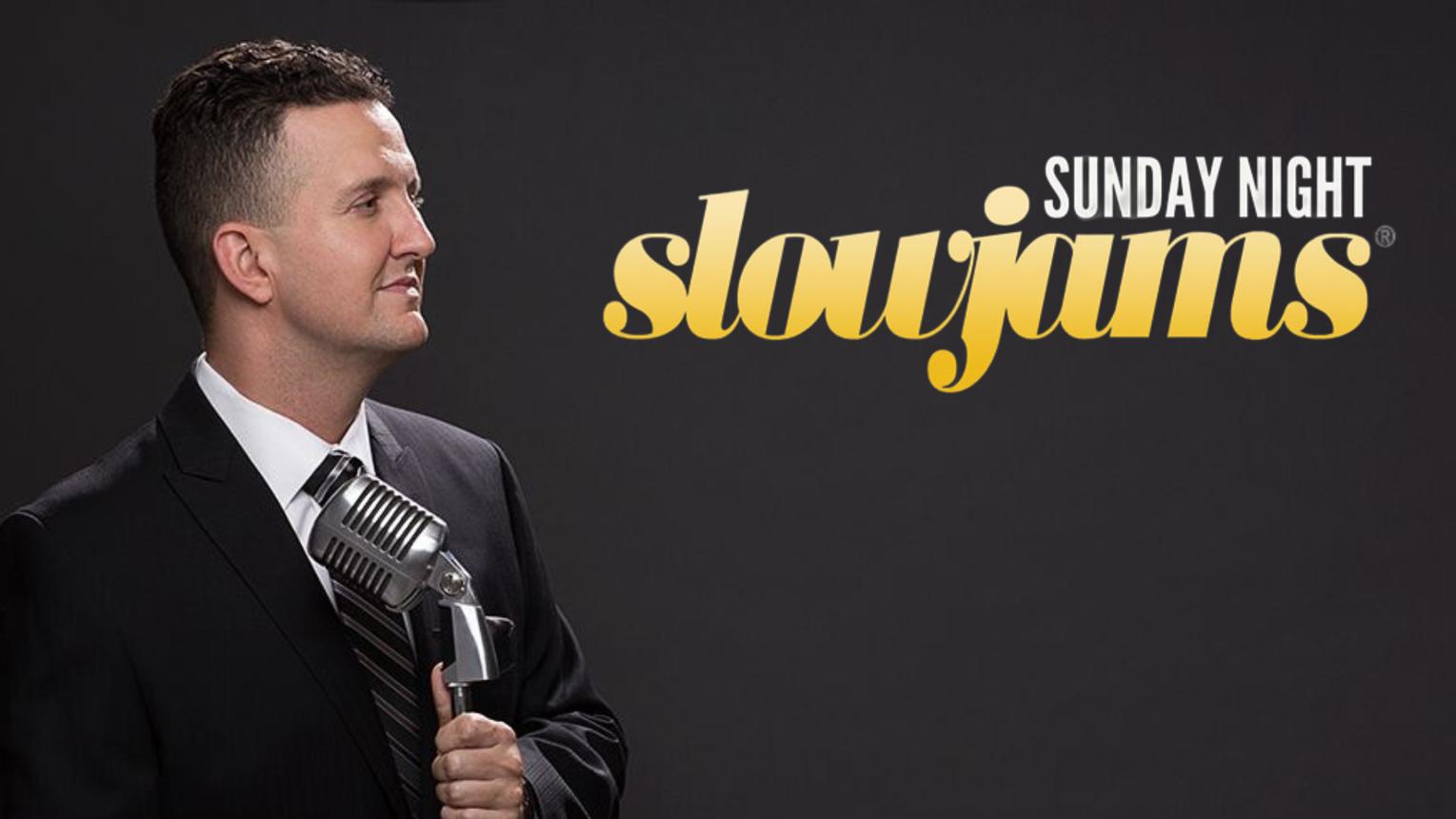
R Dub’s internationally syndicated Sunday Night Slow Jams has returned to two significant Western markets, with KSE Media Hot AC Mix 100, KIMN-FM, Denver, adding the program November 1 and Broadway Media’s Rhythmic Throwbacks 92.5 The Beat, KUUU-FM, Salt Lake City, welcoming it back in September.
For most radio publications, that’s a perfectly respectable programming announcement.
Two stations.
One syndicated show.
Congratulations, everybody.
Next story.
BUT NOT SO FAST.
Because this particular story has a history, and some of that history began in a Tulsa radio studio where I happened to be the program director.
Before There Were Hundreds of Stations, There Was Tulsa
Let me take you back to 2003.
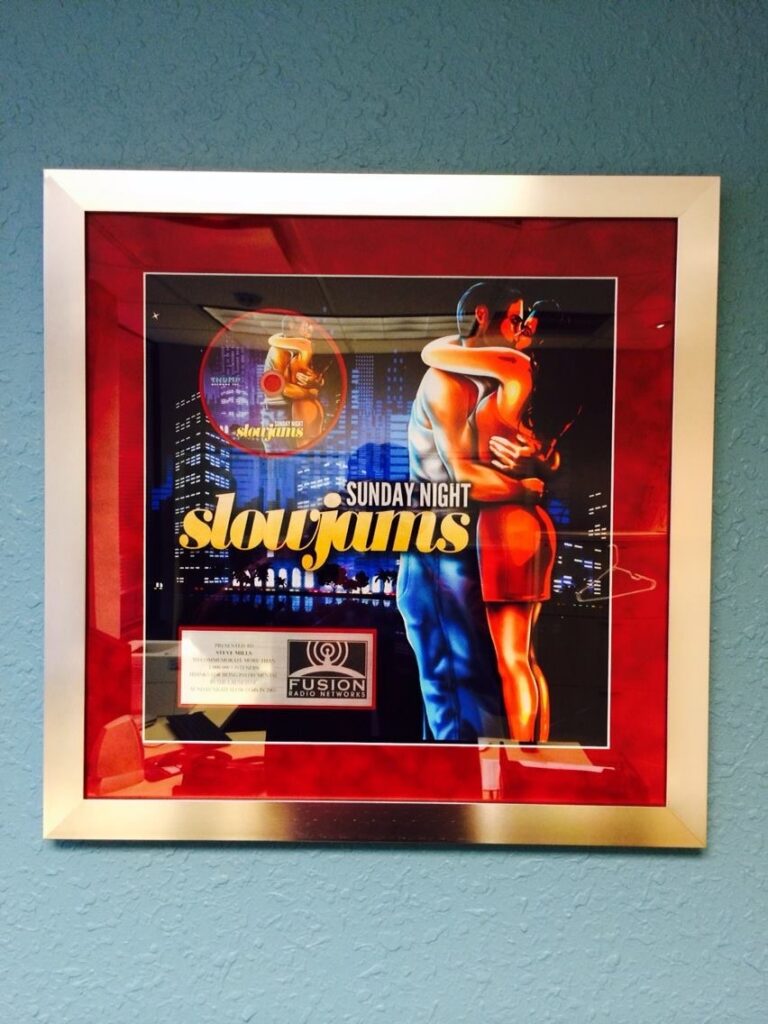
I was programming KTBT-FM, 101.5 The Beat, in Tulsa, Oklahoma, and Randy Williams, better known to the world as R Dub! was working to take his beloved Sunday Night Slow Jams beyond its Tucson roots.
I knew R Dub! during those early days, and I had the privilege of working with him on the syndication project from the beginning.
And here’s the part that makes this story personal.
KTBT WAS THE FIRST STATION OUTSIDE HIS HOME MARKET TO TAKE THE SHOW.
Think about that for a moment.
Before the national affiliate lists.
Before the international recognition.
Before the books and television appearances.
Before anybody could point to hundreds of stations as proof that the concept worked.
There was a decision to give the program a home in Tulsa.
I made that decision as the station’s programmer, and I have never regretted it.
R Dub!’s own historical account places KTBT among the three stations carrying the program when its national distribution began in February 2003. His website also identifies KTBT as the first affiliate outside Tucson. That distinction matters to me because it confirms something I remember firsthand: Tulsa was there at the beginning.
And I wasn’t just watching from the sidelines.
I was part of it.
SOMETIMES YOU DON’T REALIZE YOU’RE HELPING MAKE RADIO HISTORY UNTIL YEARS LATER, WHEN YOU LOOK BACK AND SEE HOW FAR SOMEBODY HAS COME.
Here’s What Made the Show Work
Anybody who has spent time programming radio knows the difference between a show that fills airtime and a show that creates an appointment.
Sunday Night Slow Jams was appointment radio.
And the genius wasn’t complicated.
Somebody in Tulsa could call and dedicate a song to the person they loved.
Somebody else could apologize for a mistake.
A husband could tell his wife how much she meant to him.
A woman could send a message to someone she hadn’t seen in years.
And occasionally, somebody would use four minutes of beautiful R&B to say something they probably should have said face-to-face three months earlier.
LORD, THE RELATIONSHIPS THIS SHOW HAS PROBABLY SAVED!
And let’s be fair.
There are probably a few relationships that ended because somebody dedicated the wrong song to the wrong person.
But that’s another story.
R Dub! understood that music was only half the experience.
The other half was the listener.
His signature Oral Expressions feature turned ordinary people into participants in something deeply personal.
And that’s the part of radio I have always loved.
Not the corporate terminology.
Not the quarterly presentations.
Not the endless arguments about whether a station should play a particular song 17 times or 19 times a week.
THE PEOPLE.
The listeners who remember where they were when a song played.
The couples who associate a particular record with their first date.
The people who hear an old favorite and suddenly find themselves thinking about somebody they haven’t spoken to in 20 years.
R Dub! built an entire broadcasting institution around those moments.
Denver and Salt Lake City, Welcome Back to the Romance Department
Now that institution is returning to two markets where listeners already know the sound.
In Denver, Mix 100 introduced Sunday Night Slow Jams on November 1.
Program Director Big Rob indicated that listeners had been asking when the show would return.
That’s an important detail.
Because when listeners start asking for a program that isn’t currently on the air, you’ve accomplished something a lot of radio companies spend millions trying to manufacture.
YOU’VE BECOME MISSED.
In Salt Lake City, 92.5 The Beat brought the show back in September, with a Sunday evening schedule of 7 to 11 p.m.
Operations Manager Justin Taylor reported that listeners reached out to thank the station for restoring the program, and Salt Lake City callers were already participating within the first two weeks.
That tells a story.
Listeners remembered.
They returned.
And they wanted to be part of the experience again.
For broadcasters who sometimes wonder whether audiences still develop emotional attachments to radio programs, there’s your answer.
YES. THEY DO.
You simply have to give them something worth becoming attached to.
From a Teenage Dream to an International Radio Institution
R Dub! began Sunday Night Slow Jams in Tucson in 1994, when he was just 16 years old.
Sixteen!
At an age when many teenagers are still trying to figure out how to borrow the family car, this young man was already figuring out how to build a radio show around love songs and listener dedications.
The concept survived station changes, career moves and the unpredictable realities of broadcasting.
In 2003, it entered national syndication.
In 2015, it reached 100 affiliates.
By 2021, it had passed 200 stations.
Today, the program’s official promotional materials describe an international audience spanning more than 200 stations.
And the growth hasn’t been limited to one format.
Versions of the show have been developed for multiple music formats, including Top 40, Hot AC, Rhythmic, Urban, Throwback and Urban AC.
That’s remarkable versatility for a concept built around something as universal as love.
But the expansion also says something important about R Dub! himself.
He didn’t abandon the original idea simply because the industry changed.
He adapted the presentation while preserving the emotional foundation.
THAT’S NOT JUST GOOD RADIO PROGRAMMING. THAT’S KNOWING WHAT YOUR PRODUCT REALLY IS.
And Yes, He Put Me in His Books
Here’s another part of this story that makes me smile.
R Dub! has written two books, and he mentions me in both of them.
Now, I don’t say that to make this story about me.
I say it because there’s something special about being remembered by someone whose career you watched grow from an ambitious idea into an international success.
When you’re working in radio, you make hundreds of decisions.
You hire people.
You launch programs.
You take chances.
Some work.
Some don’t.
And some turn into stories you get to tell for the rest of your life.
Being part of those early syndication days with R Dub! is one of those stories for me.
I didn’t create Sunday Night Slow Jams.
That was Randy’s vision, his persistence and his work.
But I recognized something in the program and helped give it a place on the dial beyond Tucson.
And seeing what he has accomplished since then brings me genuine happiness.
THERE’S NOTHING QUITE LIKE WATCHING SOMEBODY YOU BELIEVED IN PROVE THAT YOUR BELIEF WAS WELL PLACED.
The Sultan of Slowjamastan, Because Apparently Radio Wasn’t Enough
Of course, anybody familiar with R Dub! knows his ambitions didn’t stop with radio syndication.
He’s traveled the world.
He’s written books.
He’s appeared on Shark Tank.
He’s supported efforts to bring clean water to communities in need.
And, because apparently being an internationally syndicated broadcaster wasn’t interesting enough, he created the Republic of Slowjamastan, a novelty micronation in California.
Yes.
A country.
With a Sultan.
And naturally, R Dub! appointed himself.
RANDY, MOST OF US ARE JUST TRYING TO GET OUR STATIONS THROUGH THE NEXT RATINGS BOOK. YOU WENT OUT AND STARTED A COUNTRY!
I suppose when you’ve already conquered Sunday nights, you start looking for additional territory.
But underneath the humor is a broadcaster who has consistently demonstrated creativity, determination and an unusual willingness to pursue ideas other people might dismiss.
That spirit was there in the beginning.
And it’s still there today.
What Today’s Radio Industry Can Learn From This
I recently read a wonderful reflection by broadcaster Kevin Fodor about the days when radio was fun.
He remembered promotions, concerts, artist encounters and those unforgettable experiences that made listeners feel connected to their favorite stations.
His point resonated with me.
Because the industry didn’t become special through technology alone.
It became special through imagination.
Through personality.
Through the willingness to try something different.
R Dub!’s story belongs in that conversation.
He created a program that made listeners part of the entertainment.
And instead of treating audience interaction as an interruption between songs, he made it the centerpiece.
That’s a lesson worth remembering in an era of consolidation, automation and increasingly standardized programming.
Radio companies can share programming across markets.
They can reduce operating costs.
They can introduce new technology.
But they cannot automate the feeling someone experiences when a familiar voice introduces a dedication meant just for them.
YOU CAN PROGRAM THE MUSIC. YOU CAN SCHEDULE THE COMMERCIALS. BUT YOU CAN’T MANUFACTURE THE FEELING OF BEING LOVED.
And for more than 30 years, R-Dub has understood that distinction.
A Personal Word to Randy
Randy, if you’re reading this, I want you to know something.
I’m proud of you.
Not because your program is on hundreds of stations.
Not because you’ve written books or traveled the world.
And certainly not because you somehow managed to appoint yourself Sultan of an entire country.
I’m proud because you believed in something, worked to make it happen and never stopped building.
I remember those early days.
I remember what it meant to help bring the program to Tulsa.
And I remember believing that there was something special about what you were creating.
More than two decades later, Denver and Salt Lake City are welcoming you back.
That’s a beautiful thing.
And I’m grateful that our paths crossed when they did.
Radio has given me some extraordinary experiences over the years.
Working with you during the earliest days of Sunday Night Slow Jams syndication is one I will always treasure.
The Final Word From On The Dial
There are broadcasters who spend their entire careers chasing the next trend.
And there are broadcasters who recognize something timeless and build around it.
R Dub! belongs to the latter tradition.
His program has survived changing formats, changing ownership, changing technology and changing audience habits.
And now, in 2026, stations in Denver and Salt Lake City are welcoming it back.
Not because somebody invented a revolutionary new audio processor.
Not because an algorithm discovered a secret formula.
But because people still want to hear beautiful music and tell somebody they love them.
Imagine that.
THE NEXT GREAT IDEA IN RADIO MIGHT JUST BE REMEMBERING WHY PEOPLE FELL IN LOVE WITH IT IN THE FIRST PLACE.
For me, this story is especially meaningful.
I was there when R Dub! took his syndication dream beyond Tucson.
I was programming KTBT in Tulsa.
I believed in the show.
And today, watching that dream continue to grow, I couldn’t be happier for him.
Congratulations, R Dub!.
Keep making people smile.
Keep making them remember.
Keep giving them a reason to turn on the radio.
And keep reminding this industry that the most powerful thing coming out of a transmitter isn’t always the music.
Sometimes it’s the emotion attached to it.
FROM ONE STATION IN TULSA TO LISTENERS AROUND THE WORLD, THE LOVE SONGS NEVER STOPPED.
AND NEITHER DID R Dub!.
Listen and Connect
Sunday Night Slow Jams: https://slowjams.com/
Mix 100 Denver: https://www.mix100.com/
92.5 The Beat Salt Lake City: https://u92slc.com/
Hashtags
#OnTheDial #RDub #SundayNightSlowJams #WhenRadioWasFun #RadioHistory #TulsaRadio #SlowJams