


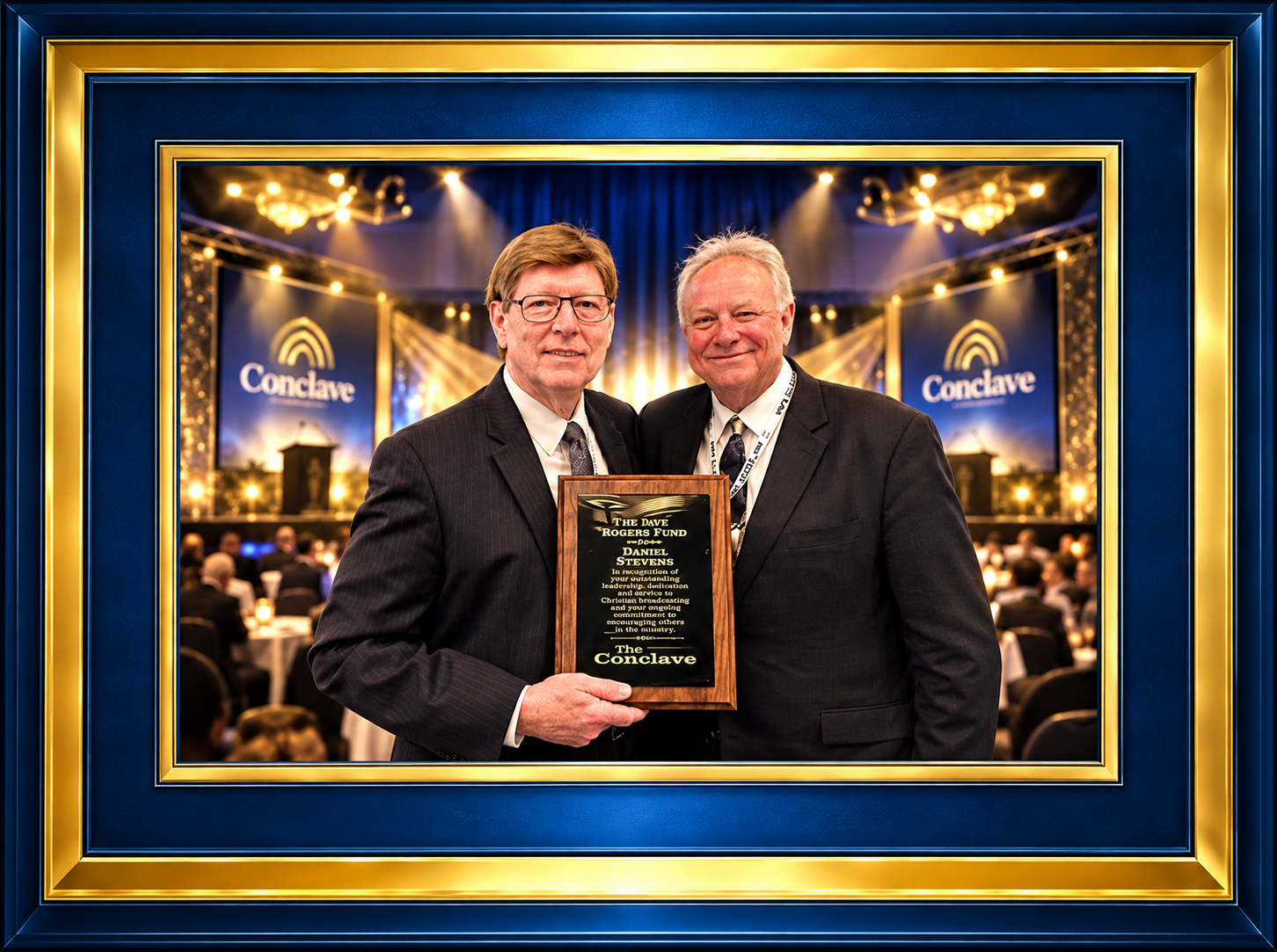
Radio is very good at celebrating the person standing in front of the microphone when the ratings come in, and we are pretty good at celebrating the Program Director when a station suddenly catches fire. What we do not do nearly enough is talk about the person who spent two hours on the phone with that Program Director three weeks earlier, tore apart a clock, asked a hundred questions about the market, listened until he actually understood the problem, and then quietly helped build the architecture that allowed everybody else to win. Jeff McCarthy has been doing that kind of work at Midwest Communications for more than four decades, and I think it is long past time somebody said his name a little louder.
Jeff is Midwest Communications’ Vice President of Programming, working from Green Bay and carrying programming responsibility across a company that grew from Duke Wright’s first little Top 40 AM in Wausau into more than 80 stations across nine states. MusicMaster recently recognized just how long Jeff has been doing this, documenting more than 41 years of continuous work with Midwest and a relationship with music scheduling that goes all the way back to the MusicScan days. This is not a guy who learned how to move categories around because corporate programming was suddenly added to his title. This is somebody who has spent most of his adult life studying how radio stations breathe.
And I use the word studying intentionally, because Jeff McCarthy is still a student of this business.
That may be one of the things I respect most about him. After four decades, after countless stations, format changes, ratings books, music meetings, morning shows, personalities and market battles, he still approaches programming like there is another answer hiding somewhere in the data if he listens closely enough. MusicMaster’s recent profile described a programmer who has used the system across hundreds of radio projects and still looks at music scheduling as a creative exercise rather than clerical work. Anybody who has ever spent a night staring at unscheduled positions knows there is a very big difference between those two approaches.
A clock is not just a clock to Jeff.
It is architecture.
Where does the listener enter the station? How long do we make them wait for the payoff? Where are we exposing a weakness? What happens when the competitor hits commercials? How often are we asking the audience to tolerate something before we give them another reason to stay? Is the music flow creating momentum or merely satisfying a spreadsheet? Great programmers hear those questions while everybody else is staring at colored boxes.
That is where my friend Tyler Foxx comes into this story.
Tyler is the Brand Manager of Hot 96 WSTO in Evansville and still handles afternoons from 2 to 7. Hot 96 is operating in one of those competitive radio situations where every decision becomes important, because Tyler describes himself as fighting five direct format competitors, including competition coming from inside his own broader cluster environment. Midwest’s current materials confirm Tyler is the guy responsible for the Hot 96 brand, and the station continues to position itself squarely as the Tri State’s hit music station.
Tyler told me something recently that stuck with me.
He had a programming problem, and Jeff did not send him a memo.
Jeff did not email him a generic corporate clock.
Jeff did not say, “Here is what we do in Green Bay, try this in Evansville.”
He got on the telephone.
For roughly two hours.
And he listened.
Tyler walked him through what was happening in Evansville, where the pressure was coming from, how the competition was positioned and what he was trying to accomplish with Hot 96. Jeff asked questions until he understood the battlefield, went away and did the work, then came back with a clock Tyler believes put him in a much stronger position to compete.
That is programming leadership.
There is a lazy version of corporate programming where somebody hundreds of miles away tells a local Program Director what to do because the title on the business card says they can. Then there is the Jeff McCarthy version, where the corporate programmer spends enough time understanding the local market that the answer eventually belongs to the person who has to execute it.
Tyler described Jeff to me as almost the guy behind the curtain, the person doing work most listeners will never know happened. He also called him one of the smartest programmers he has ever worked for and credited Jeff with giving him enough direction to strengthen the station while still leaving him room to actually program it.
That last part matters to me.
Program Directors need help.
They do not need babysitters.
The best corporate programming people know the difference.
There is something else I noticed when Tyler talked about Jeff. He was excited about programming. Think about that for a minute, because in 2026 we have an industry full of Program Directors who are also doing an airshift, handling social media, managing promotions, answering sales questions, editing audio, solving digital problems and occasionally wondering whether somebody has secretly added eight more hours to their job while leaving the day at twenty-four. Tyler was talking about clocks like a kid who had just figured out how to make the car go faster.
That is what a great leader can do.
Jeff did not take programming away from him.
He made him want to program more.
We can find evidence of that philosophy throughout Jeff’s career.
When Jim Murphy retired from WIXX after 32 years in morning drive, the Wisconsin Broadcasters Association documented something easy to overlook. Jeff McCarthy was one of the people who hired him. Murphy had come out of a softer AC environment, the transition to WIXX was not immediately perfect, and Duke Wright gave Jeff and then Program Director Dan Stone a very short window to get the show right. They did, and the guy who needed some adjustment at the beginning became a Green Bay institution who spent more than three decades waking up Northeast Wisconsin.
That is programming too.
Sometimes the smartest programming decision is not replacing the talent.
It is coaching the talent.
Murphy eventually became so woven into Green Bay that he spent 28 years working Lambeau Field game days and even led the Packers down Lombardi Avenue during the Super Bowl XXXI victory celebration. By the time he retired, the Neville Public Museum had already recognized him among influential people in Brown County history. The broadcaster Jeff helped hire became part of the place.
That is one hell of a return on a programming decision.
Jeff learned a lot of that philosophy from Duke Wright.
Duke founded what became Midwest Communications in 1958 after his family purchased the 1400 AM facility that became WRIG in Wausau. He believed deeply in technical quality, great programming, talented broadcasters and giving people the opportunity to do their jobs well. Midwest’s own history still describes those principles as the foundation of the company, and the relationship between Duke and Jeff went far beyond the usual CEO and programming executive arrangement.
Jeff and current Midwest President Peter Tanz came into Duke’s world at roughly the same time. After Duke’s death in 2022, Jeff described the two of them as having spent nearly four decades learning from him. That kind of apprenticeship matters because Duke was not simply teaching formatics. He was teaching an operating philosophy built around hiring good people, providing direction and resources, and then allowing them to create.
I know something about that relationship personally.
I worked for Midwest Communications.
And because this is my column and my name is attached to it, I can say this plainly without somebody rewriting it into corporate language.
I had a good time working with Jeff McCarthy.
I have never hidden the fact that my experience with some of the local operational side of my time at Midwest became difficult. It did. There were issues there that ultimately mattered to my decision-making, and I am not rewriting my own history to make this piece prettier.
But I also want to be equally clear about something else.
I did not leave Midwest Communications because of the programming leadership.
That part was amazing.
Jeff and I had a great relationship then, and we have maintained one since. I could talk programming with him. I could disagree with him. I could ask questions. I knew he understood the business well enough that a conversation did not have to become a performance where one person pretended to know everything.
And through Jeff, something else happened that means a great deal to me personally.
I met Duke Wright.
More than that, Duke befriended me.
When people talk about radio careers, they tend to remember the jobs, markets and stations. I increasingly remember the people. Getting to know Duke is part of my radio life that I still treasure, and Jeff McCarthy is part of the reason our paths crossed.
That matters to me more than any music log ever will.
There is an interesting line connecting all of this. Duke believed radio became something special when you put good people inside it, Jeff absorbed that philosophy, and decades later you can still see it in the way Midwest develops people.
Look again at Evansville.
Tyler is not simply somebody sitting in an office moving music. Midwest’s own public-service records show him bringing students through the radio station, explaining scheduling, digital editing and the different jobs inside a broadcast operation. In 2025, he worked directly with a high school student on commercial imaging and later hosted another student for a job-shadow experience that included music scheduling, editing and conversations with department heads.
That is how the chain continues.
Somebody taught Jeff.
Jeff teaches Tyler.
Tyler lets a student stand in the studio and discover that radio is an actual profession.
Maybe that student becomes the next programmer.
That is how this business survives.
Not by talking endlessly about needing young talent while keeping the doors locked.
By letting people in.
Jeff has also understood something that radio companies occasionally forget when they get large: every market has to be allowed to remain itself.
Midwest owns stations in places as different as Green Bay, Evansville, Knoxville, Nashville, Sioux Falls, Fargo, Peoria, Kalamazoo and Wausau. You cannot program those communities by pretending geography is an inconvenience. The company’s history is built on local stations, and Jeff’s job is not making more than 80 radio properties sound like they all came out of the same machine.
The evidence is sitting all over the portfolio.
WIXX is not Hot 96.
Hot 96 is not WIFC.
Y100 Green Bay is not WDEZ Wausau.
A Duke FM Classic Country station should not behave like a CHR.
A heritage Full Service AC like WIKY in Evansville comes with expectations that would make absolutely no sense on an Active Rock station.
Good corporate programming understands the difference between consistency and sameness.
Jeff does.
And here is probably the greatest compliment I can give him.
You do not always see him.
That is why I wanted to write this.
The industry notices the programmer who gives the speech.
We notice the consultant with the big presentation.
We notice the executive making the format announcement.
We notice the personality with the billboard.
Jeff McCarthy spends a great deal of his time doing the part nobody sees.
A phone call with a Program Director.
A clock nobody outside the building will ever look at.
A conversation about why a song keeps landing in the wrong place.
A discussion about talent.
A gut check before somebody blows up a format that probably does not need blowing up.
A little coaching.
A little restraint.
A lot of listening.
Then the local Program Director gets to walk into the building the next morning and look like the genius.
That is leadership.
It is not needing everybody to know you were involved.
There is a reason people stay around Jeff too.
Jim Murphy thanked him when a 32-year run ended. Randy Shotgun Shannon returned to the Brand Manager chair at Y100 in Green Bay last year with Jeff publicly supporting him. Veteran programmer Jon Reilly cited the opportunity to work with Jeff when he joined Midwest in Wausau. These are people at different stages of their careers pointing toward the same programming office.
That does not happen by accident.
You earn that.
Radio needs more people who understand that the Program Director underneath them is not competition.
Their success is your success.
The morning show getting better is your success.
The afternoon personality finding confidence is your success.
The music flow suddenly making sense is your success.
The station winning while nobody outside the building knows you spent two hours fixing the damn clock is your success.
Jeff McCarthy has spent more than forty years doing exactly that.
I have written plenty of stories about people changing jobs.
Jeff has not changed jobs.
I have written about people getting promoted.
This is not a promotion.
I have written about people retiring and finally getting their flowers after the microphone is turned off.
Jeff is still very much working.
That is exactly why I wanted to do this now.
Why do we wait?
Why does radio have such a strange habit of telling somebody what they meant to the business at their retirement dinner?
Why do we wait until somebody leaves the building before we explain what happened while they were inside it?
Jeff McCarthy deserves his flowers while he can still complain about the rotations afterward.
And if he reads this and starts pointing out three things he would change about the clock, that will pretty much prove the entire article.
Tyler Foxx wanted to say something because he sees what Jeff is doing for him right now in Evansville.
I wanted to say something because I know what Jeff did for me.
Jim Murphy’s 32 years on WIXX tell part of the story.
Duke Wright’s influence tells another part.
More than four decades at Midwest Communications tell plenty.
But the best explanation of Jeff McCarthy may simply be this.
Some people program radio stations.
Some people teach other people how to program radio stations.
The really rare ones know when to do both and when to get the hell out of the way.
Jeff McCarthy is one of those people.
I am proud to have worked with him. I am grateful that working with him helped lead me to a friendship with Duke Wright, and I am even happier to know that there are programmers like Tyler Foxx who are still getting those long phone calls, those hard questions and those clocks that suddenly make the whole station sound better.
Radio has plenty of people who want credit.
Jeff McCarthy has spent forty years helping other people earn it.
That deserves to be said out loud.
#OnTheDial #JeffMcCarthy #MidwestCommunications #RadioProgramming #ProgramDirector #TylerFoxx #Hot96 #WSTO #WIXX #DukeWright #GreenBayRadio #EvansvilleRadio #LocalRadio #CHR #MusicScheduling #RadioLeadership #BroadcastLeadership #RadioPeople #RadioIndustry #Broadcasting