


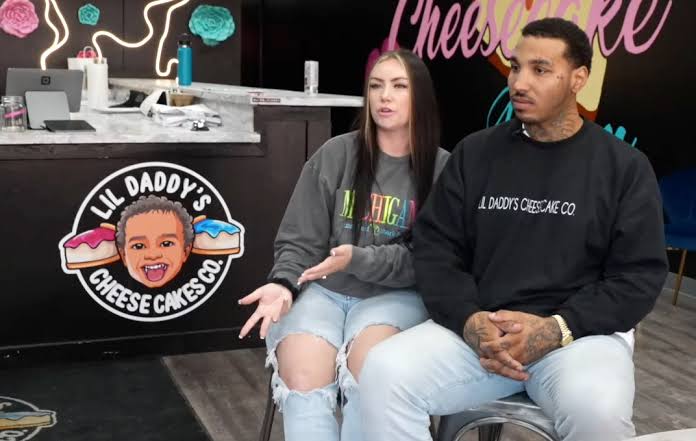
A tribute to a father, a husband, a cancer fighter, and a man who brought strangers together through the power of his story.
There are people who come into our lives without ever walking through our front doors. We don’t shake their hands, sit across from them at dinner, or exchange telephone numbers. Yet somehow, through the stories they share and the lives they allow us to witness, they become part of our daily routines. We begin looking for their updates, celebrating their victories, worrying about their setbacks, and praying for miracles as though we’ve known them for years. Marcel Johnson was one of those people.
Like so many others, I began following Marcel on Facebook and Instagram as he fought stage 4 stomach cancer. What started as watching another person’s difficult journey became something much more personal. I found myself wanting to know how he was doing, hoping the next update would bring encouraging news, and admiring the courage it took to share something so deeply private with an audience that extended far beyond his family and friends.
Marcel was only 32 years old. He was a husband, a father of five boys, and a man with dreams, responsibilities, plans, and people who depended on him. Before he became a familiar face to thousands of people following his illness, he was somebody’s husband, somebody’s daddy, somebody’s son, and somebody’s friend.
And that is what I hope people remember most.
Not the diagnosis. Not the hospital visits. Not the physical changes brought on by cancer.
Remember the man. Remember the love. Remember the family.
The Man Behind the Medical Updates
One of the cruelest things about a life-threatening illness is how quickly it can threaten to become a person’s entire identity. Suddenly, conversations revolve around test results, medications, treatments, hospitalizations, and the next appointment. People begin asking how the cancer is doing before asking how the person is doing.
But Marcel was always more than his illness.
He was a man who loved his family. He was raising five boys who deserved every possible moment with their father. He had a wife, Taylor, who was navigating an experience no spouse ever wants to face. He had a life beyond the medical terminology that eventually became so familiar to the people following his story.
Through social media, Marcel allowed us to see pieces of that life.
There were moments of strength and determination. There were moments of tenderness and vulnerability. There were moments that reminded us how much a simple smile, an embrace, or an ordinary day at home can mean when tomorrow is no longer something anyone takes for granted.
For many of us, the most powerful parts of his journey weren’t necessarily the medical updates.
They were the reminders of what he was fighting for.
His wife. His children. His family. His future.
Those are things we can all understand, regardless of whether we’ve ever faced cancer ourselves.
When Social Media Becomes Something Beautiful
I have spent much of my adult life working in broadcasting, and I’ve watched media change in ways that would have been almost unimaginable when I first stepped behind a microphone.
There was a time when a story like Marcel’s might have appeared in a local newspaper or on an evening television newscast. People would have watched, felt sympathy, perhaps said a prayer, and eventually moved on to the next story.
Today, something different is possible.
Through Facebook, Instagram, and other platforms, people can follow a family’s journey as it unfolds. They can hear directly from the people experiencing it. They can witness the ordinary moments between the extraordinary challenges.
And sometimes, something remarkable happens.
An audience becomes a community.
People who have never met begin praying for the same person. Strangers offer encouragement. Families share the story around dinner tables. People check their phones in the morning hoping to see another update.
The distance between the person telling the story and the person receiving it begins to disappear.
Marcel’s journey demonstrated that beautifully.
For all the criticism social media receives, and much of that criticism is deserved, we cannot ignore its extraordinary capacity to connect people through compassion.
We have seen these platforms used to humiliate strangers, spread misinformation, manufacture controversy, and reward some of the worst behavior imaginable.
But we have also seen them used to bring meals to struggling families, raise money for medical expenses, find organ donors, organize prayer communities, and remind people facing unimaginable circumstances that they have not been forgotten.
Marcel’s story belonged to that better side of the internet.
He gave people a reason to stop scrolling and start caring.
And perhaps that’s something all of us should think about the next time we open one of these apps.
Behind every medical update is a human being. Behind every hospital photograph is a family. Behind every request for prayer is someone hoping that tomorrow will be better than today.
What His Journey Meant to Me
I cannot write about Marcel without acknowledging why his story affected me so deeply.
I have survived cancer twice. I’ve experienced the uncertainty of medical treatments, the exhaustion that can accompany serious illness, and the emotional weight of wondering what the future might hold.
Today, I am fighting kidney failure and searching for an extraordinarily rare compatible kidney donor.
Those experiences do not mean I know everything Marcel endured. Every illness is different, every family’s experience is different, and no two people carry the same burdens in exactly the same way.
But I understand what it means to look at the people you love and realize just how precious time has become.
I understand how difficult it can be to share medical information publicly. Some days you want to tell the world everything. Other days, you would rather close the curtains, silence the telephone, and simply be left alone.
I also understand that when someone shares their journey, they are often doing much more than providing an update.
Sometimes they’re asking for prayer. Sometimes they’re trying to encourage someone facing a similar diagnosis. Sometimes they’re preserving memories for the people they love.
And sometimes they’re simply saying, without actually using the words, “I’m still here. Please don’t forget about me.”
I don’t presume to know every reason Marcel chose to share his experience.
But I know what his willingness to do so meant to those of us who followed him.
It made us care.
It made us appreciate our own families.
And it reminded us that the people we watch on our phones are living real lives with real consequences long after we put those phones down.
The People Who Carry the Story Forward
There is another part of Marcel’s journey that deserves our attention, and that is his family.
When someone becomes seriously ill, the people closest to them begin carrying burdens the public rarely sees.
There are the appointments, the difficult conversations, the financial pressures, the sleepless nights, and the emotional exhaustion of trying to remain strong for someone you love.
There are children who may not fully understand why their father is sick, but who know that something in their world has changed.
There is a spouse trying to be a partner, caregiver, parent, advocate, and source of encouragement, sometimes all in the same hour.
And when a family has allowed the public into its journey, there is the additional challenge of sharing updates while trying to preserve moments of privacy.
That is an enormous responsibility.
My heart is with Taylor and those five boys.
I hope they know that the compassion people expressed for Marcel was not simply curiosity about his condition. For many of us, it was genuine concern for a family facing circumstances no family should have to endure.
And I hope that concern continues.
Because one of the things I’ve learned about public attention is that it can be both extraordinary and painfully temporary.
A story can reach millions of people on Monday and disappear beneath a thousand unrelated headlines by Friday.
But grief doesn’t operate on a news cycle.
Children don’t stop missing their father because the internet has found something new to discuss.
A wife doesn’t stop needing encouragement because the videos are no longer appearing in everyone’s feed.
If we truly cared about Marcel while he was fighting, then we should continue caring about the people he loved.
That is how compassion becomes something more meaningful than a reaction button.
The Difference Between Watching and Showing Up
I think Marcel’s journey should challenge all of us to reconsider what it means to support somebody.
It is easy to click a heart beneath a video. It takes only a second to write, “Praying for you.” And sometimes those simple gestures mean more than we realize.
But there are also opportunities to do more.
We can share important stories with people who might be able to help. We can support families facing overwhelming medical expenses when we have the means. We can offer practical assistance, send encouragement, and remember people long after the public attention has faded.
We can also become more thoughtful about the content we choose to amplify.
Think about how quickly we share an embarrassing video, a celebrity argument, a political insult, or something designed to make us angry.
Now imagine what might happen if we brought that same enthusiasm to stories about people who genuinely need help.
Imagine if compassion traveled as quickly as controversy.
Imagine if a family facing cancer received the same sustained attention we give to the latest internet sensation.
Imagine if we made kindness something worth going viral.
The greatest thing social media can do is not make somebody famous. It is make somebody feel less alone.
That is a lesson I hope we carry forward from Marcel’s story.
Faith Doesn’t Eliminate Grief
As a pastor, I know that people sometimes struggle to find the right words when someone is facing a terminal illness or when a family is grieving.
We want to explain the unexplainable. We want to find a reason. We want to say something that will somehow make everything hurt less.
But there are moments when the most faithful thing we can do is simply acknowledge the pain and stand beside those experiencing it.
The Bible tells us in Romans 12:15 to “weep with them that weep.”
It doesn’t instruct us to explain away their sorrow. It doesn’t tell us to hurry them through their grief.
It tells us to be present.
And in John 11:35, we find two of the most powerful words in Scripture:
“Jesus wept.”
Even with His understanding of eternity, Jesus demonstrated the reality of human sorrow.
There is no weakness in grieving. There is no failure of faith in missing someone. And there is nothing wrong with asking God difficult questions when life has taken a turn we never expected.
For Marcel’s family, I pray for comfort that reaches beyond anything the rest of us can provide.
I pray for strength on the difficult mornings, peace during the quiet evenings, and the reassurance that the love Marcel shared with his family remains part of their lives.
And I pray that the people who followed his journey will continue to surround them with kindness.
What Marcel Leaves Behind
I never had the privilege of knowing Marcel personally. I knew him through the moments he and his family shared with the world.
But those moments mattered.
They made a man in Kansas care deeply about a family in Michigan.
They brought people from different backgrounds, different communities, different beliefs, and different walks of life into a shared experience of hope and compassion.
And they demonstrated that even in a world where we seem increasingly divided, there are still things capable of bringing us together.
A father’s love for his children.
A husband’s love for his wife.
A family’s determination to make the most of the time they have together.
A human being fighting to remain part of the lives of the people he loves.
Those things are bigger than politics. Bigger than geography. Bigger than the algorithms that determine what appears on our screens.
And they deserve our attention.
I hope that when people think about Marcel Johnson, they don’t remember only the suffering.
I hope they remember his courage in allowing people to witness his journey. I hope they remember the love that surrounded him. I hope they remember the family at the center of it all.
Most of all, I hope they remember that every person fighting a serious illness has a story worth hearing, whether that story reaches millions of people or only a handful.
A person’s life does not become valuable because the world notices it. The world becomes better when it notices the value of that life.
Marcel helped remind us of that.
One Last Thought for Everyone Who Followed Him
If you followed Marcel’s journey, I want to encourage you to do something.
Don’t allow the compassion you felt for him to end with his story.
Carry it into somebody else’s life.
Call the friend who has been struggling. Visit the person who has been sick. Encourage the family facing a difficult diagnosis. Support a caregiver who is exhausted. Share a story that deserves more attention.
And if you see someone publicly fighting for their life, remember that behind the medical updates is a person who still wants to laugh, dream, love, and live.
Marcel’s journey reminded me that media, at its very best, can accomplish something far more meaningful than generating clicks, views, or advertising revenue.
It can help us recognize one another’s humanity.
It can make strangers care.
It can turn an ordinary phone into a window through which we witness extraordinary love.
And sometimes, it can remind us to be better people long after we’ve finished watching.
Marcel, thank you for allowing so many of us to walk alongside you. Thank you for reminding us that courage and vulnerability can exist together, and that a story doesn’t have to have the ending we prayed for to leave something meaningful behind.
To Taylor, your five boys, and everyone who loved Marcel: May God surround you with comfort, strength, and people who continue to show up.
And to everyone who watched his journey unfold:
Don’t just remember Marcel’s story. Remember what his story made you feel, and let that feeling inspire you to love somebody a little louder.
Rest in love, Marcel.
You mattered to people who never had the privilege of meeting you.
And that says something beautiful about the life you shared.
Pastor Steven D. Mills
#MarcelJohnson #CancerAwareness #LoveOutLoud #SocialMediaForGood #CancerWarrior #FamilyFirst #FaithHopeLove #CompassionMatters #RememberMarcel