


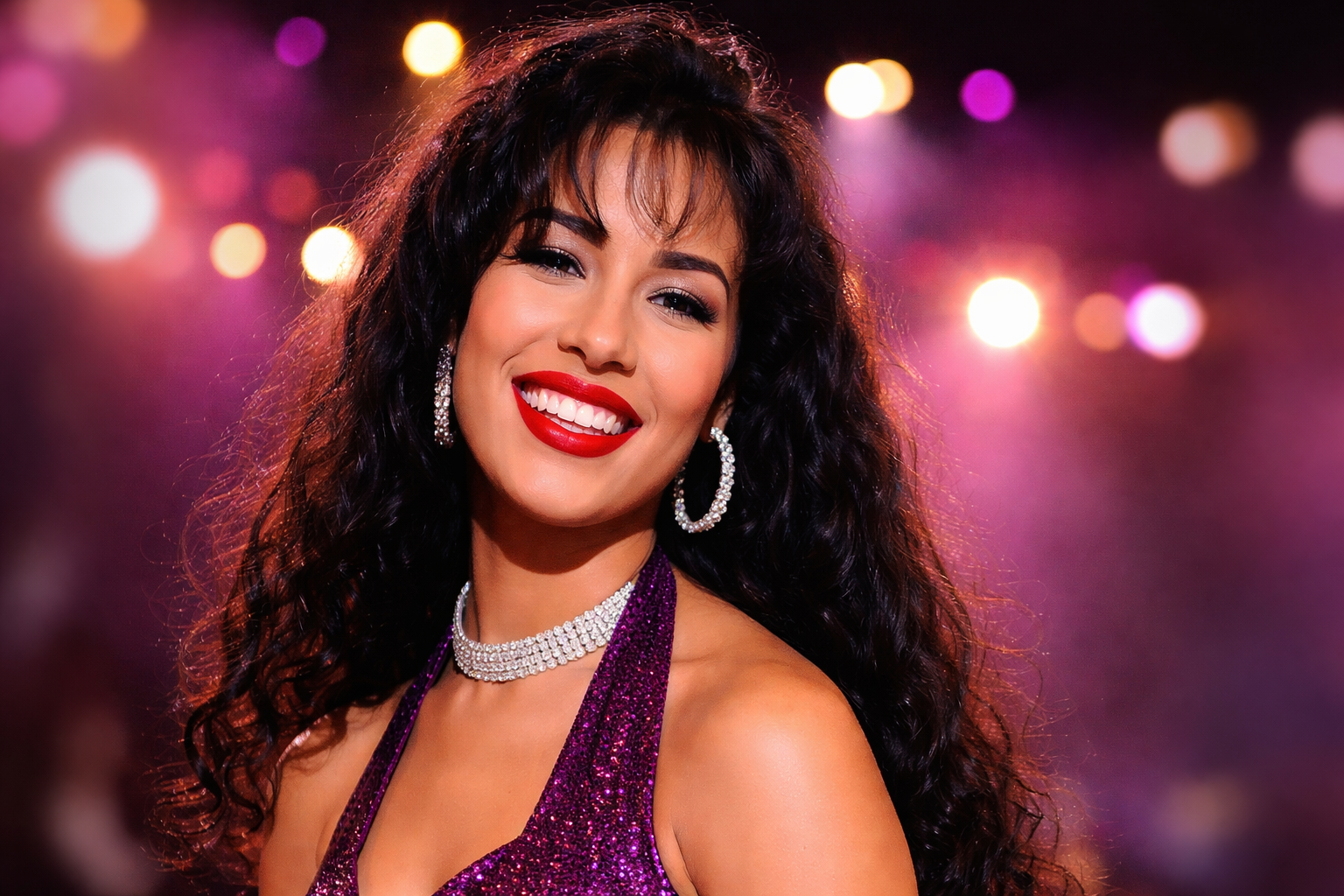
Some voices fade with time. Others echo. And then there are the rare few that never leave the air at all.
Selena Quintanilla-Perez belongs to that last category.
On what would have been her 55th birthday, radio isn’t simply revisiting a legacy artist. It is continuing an active relationship with a voice that never really signed off. Because what Selena built wasn’t just a catalog of songs—it was a structural shift in how radio understood audience, culture and crossover potential.
Born April 16, 1971, in Lake Jackson, Texas, Selena entered a format that, at the time, was still largely defined by geography and language. Tejano music had loyalty. It had heritage. It had a built-in audience. But it did not yet have the kind of mainstream elasticity that could stretch across formats, markets and demographics without losing its identity.
Selena changed that.
From a programming standpoint, what made her different wasn’t just her voice or stage presence. It was the way her music sat inside a log. Her records didn’t feel confined. They translated. Spanish-language titles carried rhythm sections and melodic structures that could sit comfortably next to rhythmic AC, early CHR influences and even adult contemporary textures depending on the cut. That kind of flexibility is what programmers spend years searching for—and in Selena’s case, it arrived naturally.
Stations that once lived strictly inside cultural lanes suddenly had a bridge.
Her rise through the late 1980s and early 1990s gave Tejano radio something it had never fully experienced before: appointment listening tied to personality, not just tradition. Selena was not background music. She was foreground energy. When her songs came on, listeners didn’t just hear them—they leaned in. That distinction matters in ratings. It matters in time spent listening. And it absolutely matters in advertiser confidence.
Because when an audience leans in, everything around that moment becomes more valuable.
By the early 1990s, Selena wasn’t just dominating within her core format. She was beginning to pressure the edges of English-language radio in a way that forced programmers to pay attention. Not because of a label push alone, but because of organic demand. Callout began to reflect something deeper than novelty. There was familiarity building among listeners who didn’t grow up with Tejano music—but recognized quality when they heard it.
That’s when the industry started to realize this wasn’t a moment.
It was a movement.
For radio clusters in Texas and the Southwest, Selena became more than a top-of-the-hour name. She became a daypart stabilizer. Morning shows leaned into her relatability. Midday programming benefited from her consistency. Nights captured the emotional connection that her ballads delivered. She worked across the clock, and that is one of the rarest things any artist can do.
Even more important was her connection to a rapidly growing Hispanic audience that radio, at the time, had not fully monetized or even fully understood. Selena wasn’t just serving that audience—she was expanding it. Younger listeners were coming in. Bilingual households were staying longer. Families were listening together.
That changes how stations sell.
That changes how formats evolve.
That changes how markets are defined.
Her 1995 crossover trajectory, which was just beginning to take shape before her life was cut short, represented something the industry had been chasing for decades: a seamless transition from Spanish-language dominance to English-language superstardom without losing authenticity. That balance is incredibly difficult to achieve. Most artists either shift too far and lose their base, or stay too narrow and limit their reach.
Selena was doing neither.
She was widening the lane.
And then, just as radio was beginning to fully understand what it had, everything stopped.
Her death in March 1995 didn’t just shock fans. It disrupted programming. Stations across multiple formats had to react in real time. Rotations shifted overnight. Tribute blocks expanded. Listener calls surged. What followed was one of the most immediate and emotional audience responses radio had seen in years.
But here’s what matters for today’s conversation.
The audience never left.
Decades later, Selena’s music continues to test, continues to perform and continues to generate reaction across formats that didn’t even exist during her lifetime. Spanish AC, Regional Mexican, Classic Hits hybrids, streaming-integrated playlists and even specialty weekend programming still rely on her catalog to deliver familiarity, energy and emotional recall.
That is not nostalgia.
That is utility.
For programmers, Selena remains one of the most dependable heritage artists in any bilingual or Latino-targeted format. Her songs still research. They still hold audience. They still create moments. And in an era where fragmentation has made it harder than ever to unify listeners, that kind of consistency is invaluable.
Younger audiences, many of whom were born years after her passing, continue to discover her through digital platforms and then bring that discovery back to radio. That reverse pipeline—streaming to broadcast—is something the industry talks about often. Selena is one of the clearest examples of it working at scale.
Her image, her voice and her brand have also maintained a level of cultural relevance that most artists never achieve. From biographical storytelling to fashion influence to ongoing media exposure, Selena has remained present in a way that keeps her catalog alive not just as music, but as identity.
And identity is what builds loyalty.
For advertisers looking to connect with Hispanic and bilingual audiences, Selena’s continued presence on playlists signals more than familiarity. It signals trust. It signals authenticity. It signals that the station understands its audience beyond surface-level programming.
That is a competitive advantage.
What Selena ultimately gave radio was proof.
Proof that cultural specificity does not limit reach—it enhances it.
Proof that language is not a barrier when emotion leads.
Proof that authenticity, when paired with talent and timing, can move an entire industry forward.
And proof that the right artist, at the right moment, can permanently expand the definition of a format.
Today, as stations across the country mark her birthday in their own ways—whether through dedicated segments, social engagement or subtle rotations that carry a little more weight—what’s really happening is something deeper.
Radio is acknowledging a signal that never signed off.
Because Selena Quintanilla-Perez is not just part of the past.
She is still part of the programming strategy.
-JPS