


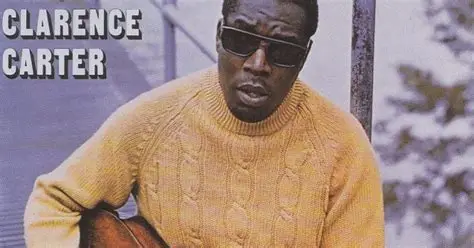
The radio world lost one of its most unforgettable voices this week as legendary soul singer Clarence Carter passed away at the age of 90. Reports of Carter’s death began circulating Thursday, bringing a wave of emotion across radio stations, music libraries, and air studios from Montgomery to Memphis, Detroit to Dallas.
For generations of radio programmers, Clarence Carter wasn’t just another catalog artist. He was a format bridge. He was one of those rare performers whose records could live comfortably on R&B stations, soul outlets, classic hits playlists, blues shows, old-school weekend features, and even mainstream FM radio rotations depending on the era and the market.
That’s a legacy very few artists ever achieve.
Born blind in Montgomery, Alabama in 1936, Carter built a career on grit, charisma, and one of the most recognizable voices in American music. Long before algorithms and streaming playlists tried to define musical lanes, Clarence Carter was already crossing them naturally.
And radio loved him for it.
Songs like “Slip Away,” “Patches,” “Back Door Santa,” and later “Strokin’” became staples not because consultants demanded them, but because listeners demanded them. DJs leaned on Clarence Carter records when they needed something that felt real. Something with personality. Something that instantly connected with working-class audiences riding home after a long day or turning up the kitchen radio on a Saturday afternoon.
“Patches” in particular became one of those records that radio people still talk about with reverence. It told a story. It painted a picture. It sounded lived in. And at a time when storytelling songs ruled the airwaves, Carter delivered one of the most emotionally powerful performances radio had ever aired.
Then there was “Strokin’.”
What started as a bluesy, unapologetically wild record eventually turned into a radio cult phenomenon that survived decades, format changes, ownership consolidations, and the disappearance of countless music trends. Whether played uncensored in bars, edited for specialty programming, or blasted during late-night request shows, “Strokin’” became part of radio folklore.
Truthfully, Clarence Carter represented something the industry desperately misses today: personality records.
Not manufactured. Not focus-grouped. Not sanitized beyond recognition.
Personality.
Program directors knew the moment a Clarence Carter song hit the speakers, people reacted. Phones rang. Listeners laughed. People sang along badly in their cars. And in radio, reaction has always mattered more than perfection.
His impact stretched beyond records themselves. Carter’s music became woven into the identity of Southern radio culture. Small-town AM stations, heritage FM soul outlets, jukebox diners, blues countdowns, and overnight request programs all carried his sound. Even decades later, younger air talent who may not have known every detail of his history still knew exactly who Clarence Carter was the second the intro started.
That says everything.
The music industry often celebrates chart positions and awards, but radio remembers something deeper: records that became companions to people’s lives. Clarence Carter created those kinds of records.
The kind that stayed.
The kind that survived format flips.
The kind that could still stop somebody in their tracks 40 years later.
In many ways, Clarence Carter belonged to an era when radio personalities and music artists built culture together. DJs broke records by believing in them. Artists toured markets because radio stations championed them. Music felt local. Human. Alive.
And Clarence Carter thrived in that environment.
As word of his passing spread Thursday, tributes immediately poured in from soul fans, musicians, and radio veterans who understood exactly what his music meant to the industry. For many broadcasters, this one feels personal. His records weren’t just played on the radio.
They were radio.
And somewhere tonight, on an oldies station, a blues show, or a late-night request program, there’s a very good chance Clarence Carter’s voice will still roll through the speakers one more time.
Honestly, it would only be fitting.
On The Dial covers breaking radio industry news, including layoffs, programming changes, talent moves, and broadcast trends across the United States.