


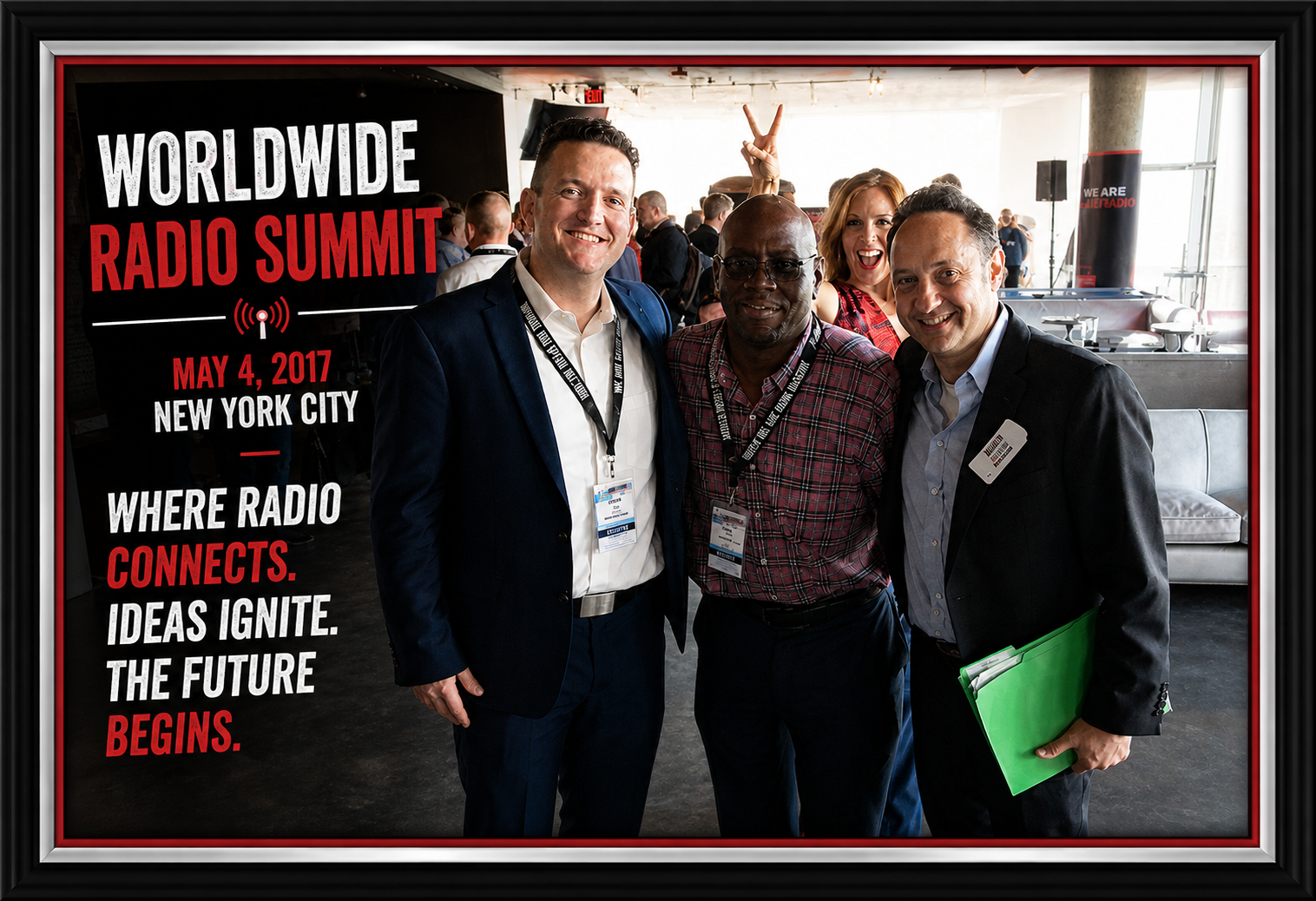
Nine years ago, we weren’t just attending an event—we were standing in the middle of something that mattered. The All Access Worldwide Radio Summit wasn’t another checkbox on the calendar. It was a gathering that felt alive. You could feel it the moment you walked in—the buzz in the hallways, the urgency in the conversations, the sense that whatever happened inside those rooms was going to ripple across the industry long after the lights went down.
This wasn’t surface-level networking. This was real engagement. Programmers challenged programmers. Talent sat shoulder-to-shoulder with executives. Labels listened. Broadcasters debated. Ideas weren’t just shared—they were sharpened. You didn’t leave the same way you walked in. And if you were paying attention, you left better.
That’s what made it special.
The Worldwide Radio Summit created an environment where radio could be honest with itself. It wasn’t about protecting territory or playing it safe. It was about pushing forward—together. It brought every corner of the business into one space and forced conversations that needed to happen. Not next month. Not next year. Right then.
And let’s talk about the intangible piece—the part you can’t replicate online.
The hallway conversations. The quick introductions that turned into long-term relationships. The moment when someone said something off-script that changed how you thought about your station, your show, your career. Those moments weren’t scheduled—but they were the ones that stuck.
There was a rhythm to it. Sessions that made you think. Panels that made you react. And then those in-between moments where everything clicked. You’d grab a coffee, sit down with someone you just met, and suddenly you’re talking strategy, philosophy, and survival in an industry that has never stood still.
That’s what the Summit was—it was radio, in its purest form.
Fast forward nine years, and the landscape looks different. The industry has shifted. Digital has accelerated. The way we communicate, collaborate, and consume information has changed dramatically. We’ve become faster. More efficient. More connected—on paper.
But something’s missing.
Because while we’ve gained speed, we’ve lost some depth. While we’ve gained access, we’ve lost some connection. And while we can gather information instantly, we don’t gather like we used to.
And that raises a bigger question than just nostalgia:
Have we moved past events like the Worldwide Radio Summit—or have we simply stopped building them the right way?
Because here’s the truth—radio still needs rooms like that.
We need spaces where the industry can come together without filters. Where talent can be developed in real time. Where programmers can hear what’s actually working—and what’s not. Where leadership can listen, not just speak. Where new voices can be discovered, and experienced voices can be challenged.
We need collision again.
Not curated panels that play it safe—but conversations that push boundaries. Not surface-level networking—but meaningful connection. Not just content—but experience.
The Worldwide Radio Summit proved that it can be done. It showed us what happens when you bring the right people together with the right intention. It raised the bar—not just for events, but for the industry itself.
So maybe the question isn’t whether those days are over.
Maybe the real question is—why aren’t we building the next version of it?
Because the need hasn’t gone away. If anything, it’s greater now than it’s ever been.
Radio is at a turning point. Platforms are expanding. Talent is evolving. Revenue models are being tested daily. And in the middle of all of it, the industry needs alignment, clarity, and honest conversation more than ever before.
That doesn’t happen in isolation.
It happens in rooms.
Nine years ago, we were in one of the best rooms radio has ever created.
Now it’s time to build the next one.
On The Dial covers breaking radio industry news, including layoffs, programming changes, talent moves, and broadcast trends across the United States.