

There is a question being asked in conference rooms, radio stations, sales meetings, podcast studios, and corporate headquarters across America:
What does the perfect radio station look like in 2026?
Not the highest-rated station.
Not the station with the biggest budget.
Not the station with the most signals.
The perfect station.
After more than three decades in this business, I think the answer is becoming clearer than ever.
The perfect radio station in 2026 doesn’t think of itself as a radio station.
It thinks of itself as a local media company.
That sounds simple.
It’s not.
Because for decades, radio companies believed the transmitter was the business.
Today, the transmitter is simply one of the ways the business reaches people.
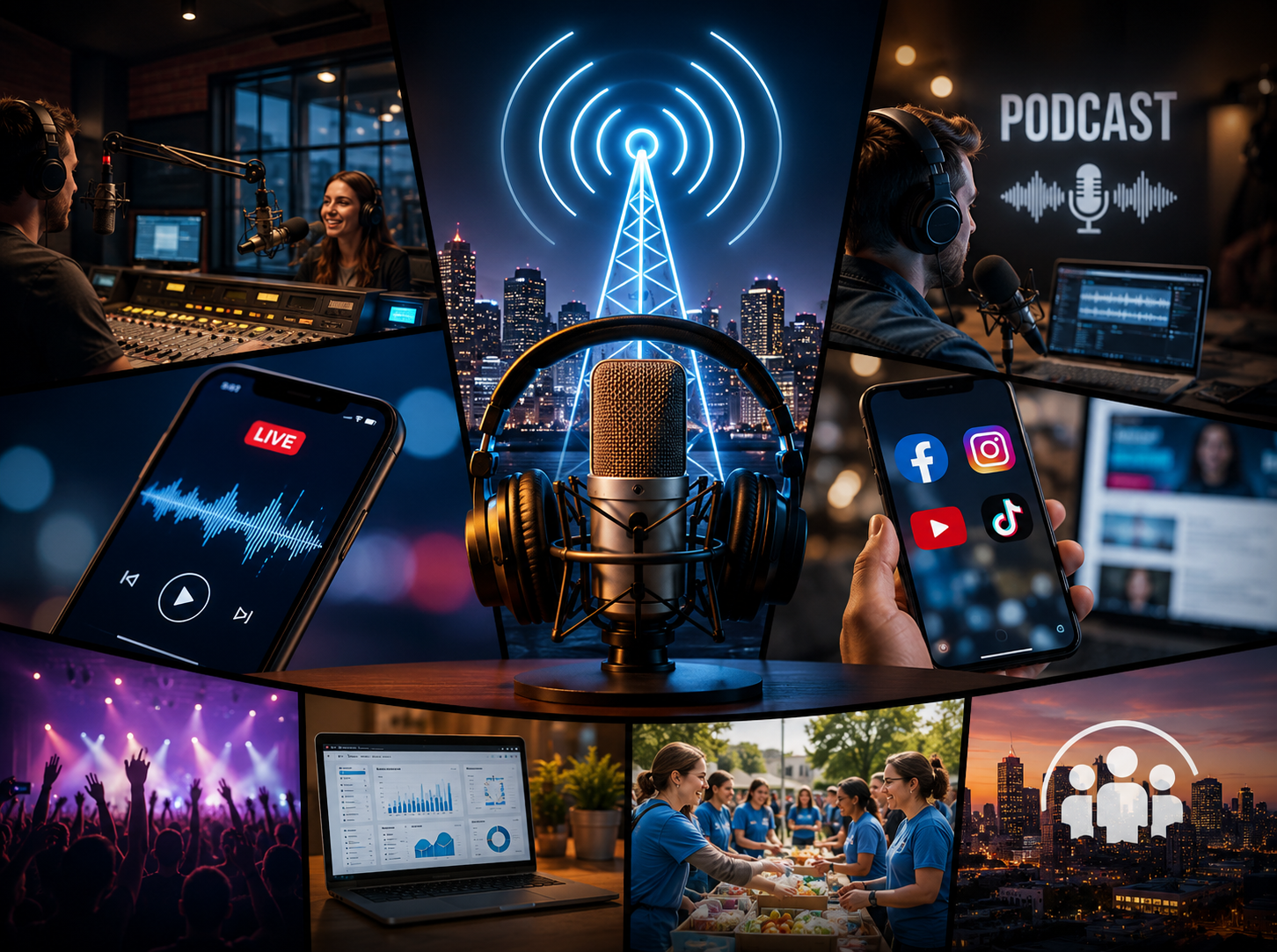
The listener doesn’t care whether they hear your morning show on FM, through an app, on Alexa, through a podcast, on YouTube, on Facebook, or inside their dashboard.
They just want your content.
And if you aren’t delivering it everywhere, someone else will.
That’s the first truth.
The second truth is even more important.
The perfect radio station understands that local still wins.
Despite all the predictions that streaming would destroy radio, radio continues to dominate ad-supported audio listening in America. Consumers still spend more time with radio than podcasts, streaming music services, or satellite radio combined in the ad-supported audio world. That should tell every broadcaster something important. Local companionship still matters. Local information still matters. Local personalities still matter. (via Edison Research)
The perfect morning show isn’t voice-tracked from three states away.
It’s sitting in traffic with the audience.
It’s talking about the high school football game.
It’s discussing the city council meeting.
It’s celebrating local victories.
It’s mourning local losses.
It’s part of the community conversation.
The perfect station knows something Spotify never will.
Algorithms don’t attend funerals.
Algorithms don’t emcee charity events.
Algorithms don’t show up at food drives.
Algorithms don’t sit beside listeners during their worst day and remind them they’re not alone.
People do.
And radio still has people.
That’s its superpower.
But companionship alone doesn’t pay the bills.
The perfect station also understands revenue.
Today’s best operators know that selling commercials is no longer enough.
Local businesses are demanding results.
They want digital campaigns.
Video campaigns.
Social media campaigns.
Podcast sponsorships.
Email marketing.
Streaming inventory.
Event sponsorships.
Website traffic.
Search visibility.
Lead generation.
The perfect account executive is no longer selling thirty-second spots.
They’re solving business problems.
That’s why digital revenue is becoming increasingly critical to radio’s future. Industry forecasts continue showing strong growth in digital advertising while traditional media alone faces increasing pressure. Stations that build digital extensions around their broadcast products are creating entirely new revenue opportunities. (via Marketron Broadcast Solutions)
The perfect general manager understands this.
The perfect general manager isn’t protecting the past.
They’re building the future.
They’re asking questions like:
How do we create more content?
How do we monetize more platforms?
How do we build deeper community engagement?
How do we become indispensable?
The answer isn’t fewer products.
It’s more.
The perfect station isn’t just broadcasting.
It’s streaming.
It’s podcasting.
It’s producing video.
It’s creating newsletters.
It’s hosting events.
It’s generating social content.
It’s operating multiple brands simultaneously.
Podcasting is a perfect example.
Podcast advertising continues to grow rapidly, outperforming many traditional media categories. Millions of listeners are consuming long-form audio content every day, creating opportunities for radio personalities and stations to build deeper relationships with audiences. The smartest broadcasters aren’t fighting podcasting.
They’re becoming podcasters. (via AudioGo)
The perfect Program Director understands something many programmers still struggle with.
Music is important.
But music is no longer enough.
Every song ever recorded is available everywhere.
What isn’t available everywhere is personality.
Perspective.
Humor.
Local relevance.
Authenticity.
Connection.
The perfect PD doesn’t ask, “What song should I play next?”
The perfect PD asks, “Why should somebody choose us over every other option available to them?”
That answer has very little to do with music scheduling.
It has everything to do with creating emotional ownership.
The perfect production director understands this too.
Commercials cannot sound like commercials anymore.
The best radio creative today sounds like content.
It tells stories.
Creates emotion.
Builds trust.
Moves people to act.
The perfect station understands that bad creative can destroy a great schedule.
Meanwhile, engineering has become more important than ever.
The perfect engineer isn’t just maintaining a transmitter.
They’re protecting the entire ecosystem.
The studio.
The stream.
The app.
The podcast feed.
The automation system.
The metadata.
The website.
The remote equipment.
The emergency systems.
Everything.
Because in 2026, dead air isn’t just silence on FM.
Dead air is a broken stream.
A failed app.
A podcast that won’t load.
A social channel that goes dark.
A listener touchpoint that disappears.
And perhaps the most misunderstood conversation in radio today is AI.
AI is coming.
It’s already here.
The perfect station embraces it without surrendering to it.
AI can help create efficiencies.
Generate ideas.
Assist research.
Improve workflows.
Speed up production.
Analyze data.
Automate repetitive tasks.
But the perfect station understands something technology companies often forget.
Listeners don’t form relationships with software.
They form relationships with people.
The future belongs to stations that use AI to empower talent—not replace it. Industry leaders increasingly view technology as a way to strengthen radio’s effectiveness, improve operations, enhance listener experiences, and increase advertiser ROI. (via Radio World)
The perfect station also understands culture.
Culture inside the building.
Because great radio isn’t built by exhausted people who feel disposable.
Great radio is built by teams that believe they matter.
Sales matters.
Programming matters.
Promotions matter.
Traffic matters.
Engineering matters.
Digital matters.
Part-timers matter.
Receptionists matter.
Board operators matter.
Everybody matters.
The audience can feel the difference.
And finally, the perfect station remembers why radio existed in the first place.
To serve.
Not simply to bill.
Not simply to survive.
To serve.
To inform.
To entertain.
To connect.
To inspire.
To help communities feel a little smaller and a little closer together.
The perfect radio station in 2026 isn’t trying to be everything to everyone.
It’s trying to become essential to somebody.
Because that’s where the future lives.
Radio is not dead.
What died was the idea that radio could stand still.
The stations that adapt will thrive.
The stations that innovate will grow.
The stations that invest in people will win.
And the stations that understand they are no longer simply radio stations—but local media companies with a radio signal attached—will own the next decade.
That’s not the future of radio.
That’s the present.
And the best operators already know it.
What do you think the perfect radio station looks like in 2026?
Join the conversation and follow us at Facebook.com/OnTheDial.
#Radio #RadioIndustry #Broadcasting #LocalRadio #RadioProgramming #ProgramDirector #RadioSales #Media #DigitalMedia #Podcasting #Audio #BroadcastEngineer #RadioTalent #RadioManagement #FutureOfRadio #Community #Leadership #Innovation #ContentCreation #Streaming #Podcasts #MediaStrategy #OnTheDial #RadioTalkTheWayItShouldBe
On The Dial covers breaking radio industry news, including layoffs, programming changes, talent moves, and broadcast trends across the United States.