


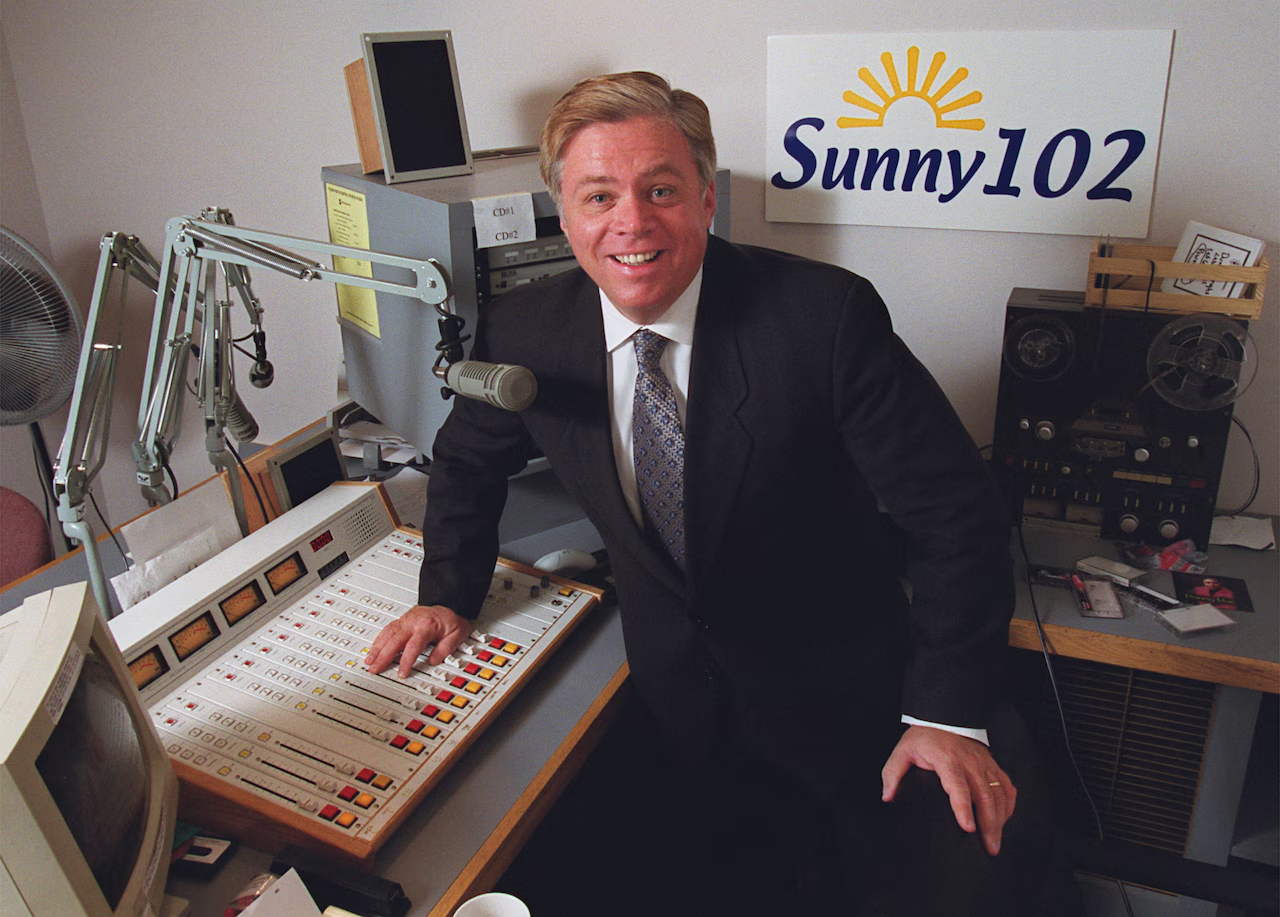
There are retirements in radio that mark the end of a job, and then there are retirements that cause an entire region to look around and realize just how much of its broadcasting history carries one person’s fingerprints. Ed Levine’s decision to retire later this year belongs firmly in the second category. After more than three decades building Galaxy Media into one of Upstate New York’s most recognizable independent media operations, Levine is preparing to step away from the company he created—and what he leaves behind is considerably bigger than a collection of frequencies on an FCC database.
This is the story of a broadcaster who built something.
Not inherited it.
Not managed it for a couple of ratings books.
Built it.
Levine’s relationship with radio stretches back to his days at Syracuse University and college station WAER. His early career eventually helped put him at the creation of 95X WAQX in Syracuse in the late 1970s, followed by professional stops that took him beyond Central New York to Albany, Houston and Washington.
But New York called him home.
And in 1990, Levine made the kind of move entrepreneurs make when they’re willing to bet on themselves.
He founded Galaxy Media Partners.
What started with 94.9 K Rock WKLL in the Utica area became something considerably larger. Over the following decades, Galaxy expanded into a substantial regional broadcasting company, at one point operating 15 radio stations and establishing footprints in Utica Rome, Syracuse and Albany.
That’s impressive by itself.
But counting transmitters doesn’t really explain Ed Levine’s career.
He Understood That Local Radio Could Be Bigger Than Radio
This may ultimately be Levine’s most important contribution to the business.
Long before seemingly every broadcast company began talking about becoming a “local media company,” Galaxy was demonstrating what that concept could actually look like.
Radio was part of the business.
Community was the business.
Galaxy expanded its presence beyond what came through the speakers and became deeply involved with major events across the region, including Taste of Syracuse, the Syracuse Nationals, Lights on the Lake and Wine and Chocolate Festivals.
Think about the strategy behind that.
Don’t simply tell listeners you’re part of their community.
Meet them there.
Don’t simply sell an advertiser thirty seconds.
Give that business another opportunity to interact directly with thousands of potential customers.
Don’t limit the definition of a radio company to towers, studios and transmitters.
Build experiences.
Create events.
Own relationships.
Put your brands in the middle of where people actually live.
Sound familiar?
It should.
Because much of what the radio industry now describes as diversification has been part of Galaxy’s playbook for years.
And He Did It Independently
That matters.
Radio’s last several decades have been dominated by consolidation, enormous transactions, corporate restructuring, bankruptcies, mergers and increasingly centralized operations.
Meanwhile, operators like Levine kept demonstrating another possibility.
Independent radio could still compete.
It could innovate.
It could create recognizable brands.
It could build meaningful local revenue.
It could develop events.
It could serve communities.
And it could survive in an environment increasingly dominated by companies with vastly greater scale.
Galaxy wasn’t trying to be everything to everybody across America.
It understood Upstate New York.
That distinction may sound simple, but in local broadcasting it can be everything.
From One Frequency To A Regional Media Company
There’s something beautifully radio about the fact that this story traces back to the launch of K Rock in 1990.
One station.
One opportunity.
One entrepreneur willing to take the chance.
Then another station.
Another market.
Another event.
Another relationship.
Another year.
Another decade.
Until eventually you look around and realize the thing you started has become an institution.
That doesn’t happen accidentally.
Broadcasting has buried enough companies that once appeared indestructible to understand just how difficult longevity really is.
Formats change.
Technology changes.
Advertisers change.
Listeners change.
Competitors appear that didn’t exist five years earlier.
The economy crashes.
The internet arrives.
Streaming arrives.
Social media arrives.
Podcasts arrive.
And somehow you’ve still got to open the doors tomorrow morning and make payroll.
Ed Levine did that for more than three decades.
That deserves considerably more than a retirement announcement.
It deserves respect.
Radio Needs To Celebrate Its Builders
We spend enormous amounts of time covering who’s leaving.
Who’s being fired.
Who’s being consolidated.
Who’s selling.
Who’s cutting.
Who’s flipping.
Who’s bankrupt.
Those stories matter.
But so do stories about people who actually built this business.
People who took chances when there wasn’t a guaranteed outcome.
People who signed loan documents.
People who hired talent.
People who developed salespeople.
People who created brands from nothing.
People who looked at a radio frequency and saw something that didn’t exist yet.
Ed Levine is one of those people.
And as he prepares to walk away from the day-to-day operation of the company he founded, perhaps the greatest compliment isn’t simply that Galaxy survived.
Galaxy mattered.
It mattered to employees whose careers were built inside those buildings.
It mattered to advertisers who grew businesses using those stations.
It mattered to listeners who made those personalities part of their lives.
And through its events, Galaxy became part of experiences and traditions that reached well beyond radio.
That’s legacy.
The Microphone Eventually Goes Quiet But The Echo Doesn’t
There will eventually be a final meeting.
A final decision.
A final walk through the building as CEO.
And then somebody else will sit in the chair.
That’s how this business works.
But every time one of those Galaxy stations fires up another morning show, every time thousands of people walk through another Galaxy-produced event, and every time a local advertiser sees customers walk through the door because of something that company created, a little piece of Ed Levine’s original bet on local media will still be there.
That’s the beautiful thing about building something.
Eventually you can leave it without it leaving you.
So from all of us at On The Dial, congratulations, Ed.
Congratulations on the stations.
Congratulations on the events.
Congratulations on the risks that worked—and probably a few that didn’t.
Congratulations on surviving an industry that has reinvented itself more times than anyone cares to count.
Most importantly, congratulations on creating something substantial enough that when its founder announces he’s leaving, the radio industry stops and notices.
There are broadcasters.
There are executives.
There are owners.
And then there are builders.
Ed Levine built.
And Upstate New York radio is different because he did.
On The Dial celebrates the people who built American broadcasting and the independent operators who continue proving that local radio can be innovative, entrepreneurial and deeply connected to the communities it serves. We congratulate Ed Levine on an extraordinary run and wish him nothing but happiness as he prepares for the next chapter.
#OnTheDial #EdLevine #GalaxyMedia #GalaxyMediaPartners #UpstateNewYork #SyracuseRadio #UticaRadio #CentralNewYork #LocalRadio #IndependentRadio #RadioIndustry #Broadcasting #RadioLeadership #RadioLegends #BroadcastLeadership #RadioHistory #MediaBusiness #LocalMedia #RadioStillMatters #ThankYouEd #NextChapter