


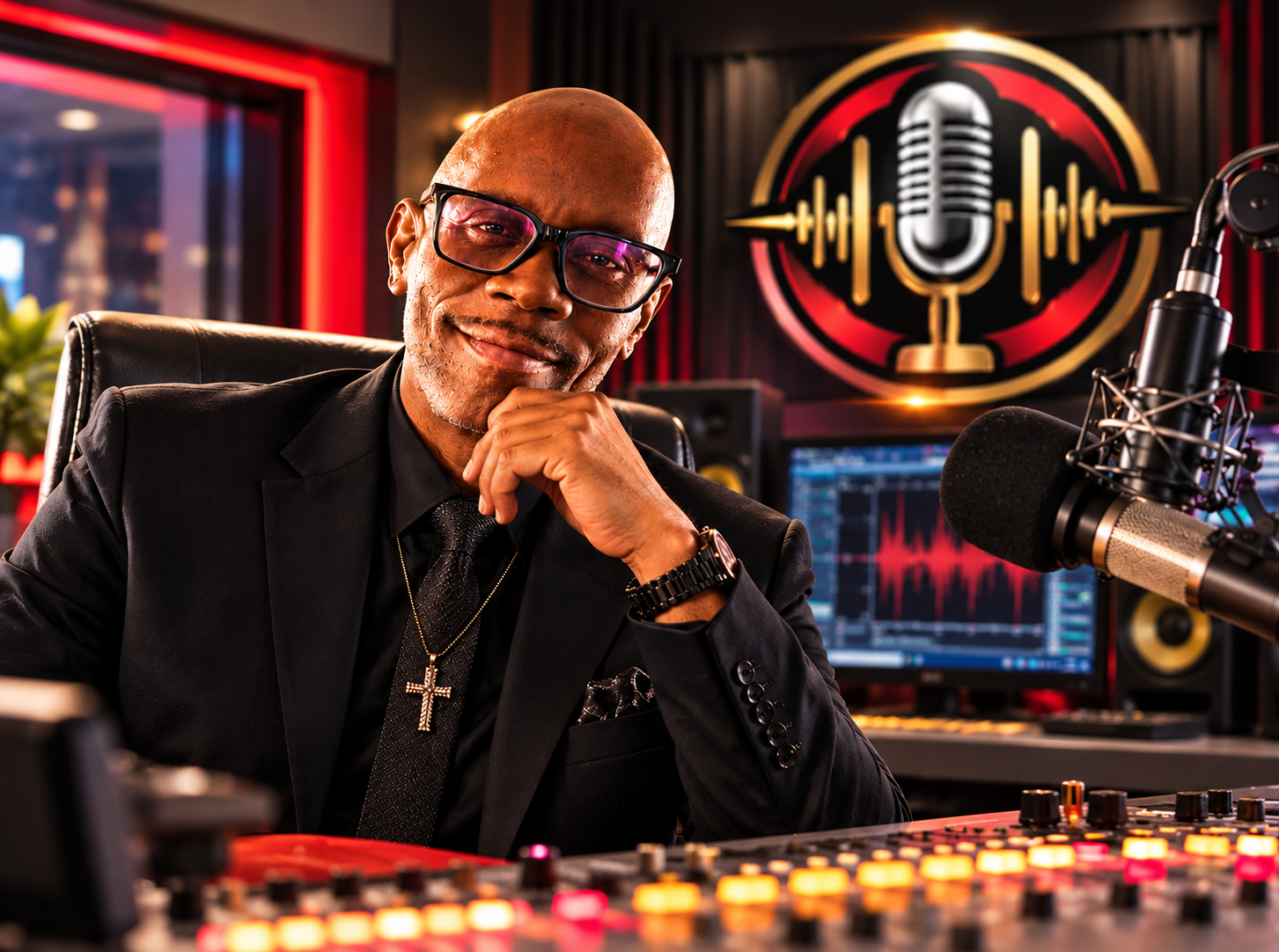
I’ve spent more than 30 years in radio, and I can tell you that some of the best education I ever received about running a successful operation never happened in a conference room. It happened in studios at two in the morning, in programming offices with ratings books scattered across the desk, in sales meetings where somebody promised a client something the station couldn’t possibly deliver, and in conversations with employees who had terrific ideas but didn’t believe anybody upstairs wanted to hear them. I’ve been a Program Director, launched radio stations, worked within major broadcast companies, and experienced the tremendous satisfaction of watching something we built connect with an audience. I’ve also watched perfectly good radio operations struggle because the people making the business decisions didn’t fully understand the product they were trying to sell.
That last part has always bothered me.
I’ve known General Managers who were outstanding leaders. They understood their communities, trusted their department heads, knew their advertisers, and could walk into a radio studio without making everybody wonder what they had done wrong. I’ve also encountered managers who could explain every line of a financial statement but couldn’t tell you why their afternoon drive personality mattered, what made their morning show different from the competition, or why a particular station was losing audience despite playing essentially the same music it had played for years.
Now, before somebody gets excited, this isn’t an indictment of every General Manager in broadcasting. There are some tremendously talented people leading radio operations today, including managers who are doing remarkable things with fewer resources than I ever would have imagined possible. But I believe the definition of a successful GM needs to change, and I think some of the industry’s current difficulties can be traced directly to our unwillingness to acknowledge that managing a radio station in 2026 requires a considerably broader set of skills than it did twenty years ago.
If somebody handed me the keys to a radio operation tomorrow, I wouldn’t walk through the door pretending I had all the answers. The first thing I’d do is listen, and I don’t mean spending an afternoon monitoring the competition while checking my email. I’d listen to every station in the building, every daypart, every personality, every piece of imaging, and enough commercial breaks to understand what our listeners were actually experiencing. I’d listen in the car, on a mobile device, through our streams, and on the same smart speakers and connected dashboards our audiences use. I’d want to know whether the promises we’re making in our promotions are being fulfilled by the programming we’re delivering.
Then I’d start talking to people.
Not just department heads, although those conversations would be important. I’d want to hear from the overnight board operator, the production director, the account executive who hasn’t made budget in three months, the promotions coordinator who knows our events could be better, and the receptionist who hears complaints from listeners before anybody else does. I’d want to know what frustrates them, what they believe the operation does well, and what they’d change if they were sitting in my chair.
And I’d make one thing clear from the beginning. I wouldn’t be there to establish myself as the smartest person in the building. I’d be there to make sure we were getting the very best out of the smart people already working in it.
There’s a tremendous difference between managing people and leading them. Radio has enough bosses. What it needs are leaders who understand how programming, sales, digital, engineering, marketing, and community involvement fit together, and who recognize that when one of those departments isn’t functioning properly, the entire operation suffers.
One of my first priorities would be to understand exactly how we make money, where we’re losing it, and which parts of the operation have a realistic opportunity to grow. That sounds obvious, but understanding revenue goes considerably deeper than reviewing last month’s billing and asking the sales manager why the numbers are short.
I’d want to know our actual market position. How much money are local advertisers spending across all media, how much of that money are we capturing, and which categories of businesses are growing while we’re still calling on the same accounts we’ve been calling on for twenty years? I’d examine revenue by station, by seller, by advertiser, by category, and by product. I’d study client retention, new-business development, pricing, inventory utilization, collection problems, and whether we’re depending too heavily on a handful of major accounts.
I’d also want an accurate understanding of profitability. Revenue without a sensible margin doesn’t accomplish very much, and a full commercial log doesn’t necessarily mean we’re maximizing the value of our inventory. Some managers get so focused on meeting monthly billing goals that they’ll discount inventory to the point where the station is practically giving away its audience. Then they wonder why rates are difficult to increase when demand improves.
I wouldn’t confuse activity with productivity, and I certainly wouldn’t confuse a crowded commercial break with financial success.
That brings me to something else I’d change. Our sales operation would stop treating broadcast radio as the only product worth discussing and digital as something we throw into a proposal because the client asked whether we have a website.
The numbers have already made that approach obsolete.
According to the Radio Advertising Bureau’s 2026 Digital Benchmarking Report, prepared by Borrell Associates, radio’s digital advertising revenue reached $2.3 billion in 2025, representing 24.4% of industry advertising revenue. The report projects that figure will reach approximately $2.5 billion this year. The average station generated roughly $512,000 in digital revenue in 2025, while the average market cluster generated approximately $2.26 million.
Those numbers tell me two things. Digital is already a significant part of radio’s business, and there is still an enormous opportunity for operators who understand how to sell it properly.
BIA Advisory Services’ September forecast projects $186.1 billion in total U.S. local advertising spending for 2026, with mobile accounting for approximately $45.3 billion of nonpolitical local spending. Think about that from the perspective of a General Manager responsible for a cluster of stations competing for local advertising dollars. There is a very large marketplace out there, and an increasing portion of it is being directed toward platforms that traditional radio sales departments historically haven’t sold particularly well.
If I were running the operation, I’d want a meaningful share of that business. But I wouldn’t achieve it by simply telling every account executive to start selling digital.
I’d build an actual digital advertising business.
That means having people who understand search advertising, paid social campaigns, streaming audio, connected television, display advertising, video production, audience targeting, campaign attribution, and the limitations of each product. I’d make sure we could explain the difference between generating impressions and generating actual business results. I’d also insist that every product we sold could be fulfilled competently, whether that fulfillment happened inside our own building or through a carefully vetted partner.
There’s nothing quite like selling a local advertiser an impressive digital package, failing to deliver what was promised, and then wondering why the client doesn’t renew.
I’d rather turn down a sale than take somebody’s money for a product we don’t know how to execute.
The sales department would also receive a serious education in marketing strategy. I wouldn’t expect every account executive to become a technical expert in every digital platform, but I would expect them to understand the client’s business well enough to ask intelligent questions.
Who are we trying to reach? What does the customer actually want someone to do? Is the goal immediate sales, appointments, store traffic, brand recognition, or repeat business? What is the customer’s acquisition cost? What are the economics of the product or service being advertised? How will we know whether the campaign accomplished anything?
Those are the conversations a professional marketing consultant should be having.
I’d want sellers who understand that a restaurant, an automobile dealership, a hospital, and a law firm aren’t purchasing advertising for the same reasons. Their customers make decisions differently, their sales cycles differ, and their advertising strategies should reflect those differences.
And I’d be willing to walk away from a client who wanted us to guarantee results that nobody could responsibly guarantee.
That’s how you build a reputation for being a reliable business partner rather than somebody who shows up every month with a rate card.
I’d also take a hard look at the way we compensate our salespeople. If we say digital is important but our commission structure rewards selling broadcast inventory far more generously, then we’re telling our employees one thing and paying them to do something else. I’d want compensation to encourage profitable, renewable business and reward sellers for developing relationships that grow over time.
At the same time, I wouldn’t allow digital growth to become an excuse for neglecting the radio stations themselves.
In fact, that’s where my programming background would probably become most noticeable.
I’ve never understood the logic of owning a radio station and failing to invest in the things that make people want to listen to it. We spend enormous amounts of money purchasing licenses, operating transmitters, paying for facilities, and maintaining the infrastructure necessary to reach an audience. Then some companies appear perfectly comfortable reducing the actual programming to the point where there’s very little separating one station from another.
That makes absolutely no sense to me.
If I were the GM, my Program Director would have a seat at the management table, and not simply because I once held that position myself. Programming determines the audience experience, and that experience is what the sales department ultimately takes into the marketplace.
I’d expect my PD to understand the competitive landscape, music research, audience composition, ratings methodology, format execution, talent development, and the station’s long-term position. I’d also expect that person to understand the digital platforms through which audiences discover and interact with our content.
But I wouldn’t hire an experienced Program Director and then spend every afternoon telling that person which songs to play.
I’d establish clear objectives, provide the necessary resources, ask difficult questions, and hold the department accountable for results. I would also listen when the programmer explained why a particular strategy needed more time or why an apparently attractive idea might damage the station’s relationship with its audience.
And if we disagreed, we’d discuss it like professionals.
Some General Managers believe their responsibility is to intervene whenever they don’t personally enjoy something they hear on the air. I’ve always thought that’s a dangerous way to manage programming. My personal musical preferences aren’t necessarily representative of the audience, and neither are the preferences of the sales manager, the receptionist, or the client’s spouse who called to complain about a particular record.
Programming decisions should be informed by audience research, competitive analysis, sound judgment, and the format’s strategic objectives. Opinions matter, but they need to be evaluated in context.
I would also want my stations to sound like they belong to the markets they’re licensed to serve.
I’ve worked in Tulsa, Omaha, Kansas City, Wichita, Topeka, and several other markets. I’ve experienced firsthand how different those communities can be. A station that understands Tulsa doesn’t automatically understand Omaha, and a successful approach in Kansas City isn’t necessarily the right answer for a station in Garden City.
That’s one of the things radio used to do exceptionally well. We understood our neighborhoods. We knew the restaurants, the high schools, the local celebrities, the community organizations, and the personalities who made a particular city distinctive.
I’d want that back.
Not because I think every locally produced program is superior to every syndicated program. It isn’t. I’ve worked with outstanding syndicated personalities, and there are national shows that deliver an enormous amount of entertainment and value. But a station needs a local identity even when some of its programming originates elsewhere.
I’d expect our personalities to know what’s happening in the community, participate in important local events, and have genuine relationships with the people listening. I’d also expect our programming to reflect what’s happening in the market rather than sounding like a generic product distributed to fifty cities.
A station should never have to explain why it matters to its hometown. People ought to experience that value every day.
And I’d pay particular attention to the morning show.
Morning drive remains one of radio’s most valuable opportunities to develop habitual listening, but I don’t believe every successful morning show needs a cast of six people, three producers, and a daily collection of elaborate comedy bits. Some of the best morning radio I’ve heard has been built around one or two personalities who understand how to connect with their audience.
Chemistry matters. Preparation matters. Relevance matters. And knowing when to stop talking matters every bit as much as knowing what to say.
I’d want a morning team that knows its audience, understands the musical and programming identity of the station, and brings something worthwhile to the microphone each day. I would also make sure the show has a serious digital strategy, because the morning program shouldn’t disappear from the audience’s life simply because the broadcast ended at ten o’clock.
A great interview can become a podcast segment. An entertaining exchange can become a short-form video. A meaningful community conversation can become content on the station’s website or social platforms. The material should be produced and distributed with a purpose, not simply uploaded somewhere because somebody in management decided we need more digital content.
The same principle applies to every major personality in the building.
I’d expect our broadcasters to understand that their responsibilities no longer begin and end when the microphone turns on and off. But I’d also make sure they were given the tools, training, time, and support necessary to succeed outside the broadcast studio.
You cannot tell an afternoon personality to produce daily video content, maintain multiple social accounts, record podcasts, attend promotional events, handle production work, and deliver an exceptional four-hour airshift without acknowledging the additional time and resources those responsibilities require.
At some point, you’re no longer developing a personality. You’re simply exhausting one.
And exhausted employees rarely produce their best work.
I’d approach social media with the same seriousness I would bring to a major format launch. Every station would have a defined digital identity, an understanding of the audience it wants to reach, and a content strategy that complements the broadcast product. I wouldn’t expect a Classic Hits station, an Urban Contemporary station, and a News/Talk operation to communicate with their audiences in exactly the same manner simply because they’re owned by the same company.
And I would stop celebrating follower counts as though they automatically mean we’re accomplishing something.
A station can have 100,000 Facebook followers and still do a miserable job turning those followers into listeners, event attendees, advertisers’ customers, or meaningful revenue. A video can generate hundreds of thousands of views without accomplishing anything particularly valuable for the business. I’m not suggesting that audience size is unimportant. I’m saying the size of an audience and the value of that audience aren’t necessarily the same thing.
I’d want to know what our social content accomplishes. Are people responding? Are they sharing it? Are they spending time with it? Are we reaching people who don’t already listen to our stations? Are those people discovering our personalities, visiting our websites, subscribing to our newsletters, listening to our streams, or participating in our events?
And just as importantly, are we learning anything about the audience from those interactions?
I’d insist that every station have a content strategy that serves its listeners rather than one that merely advertises itself. Nobody needs to see another generic graphic telling them it’s Tuesday. Give people something entertaining, useful, interesting, funny, surprising, or genuinely relevant to their community.
I’d establish a regular content meeting involving programming, promotions, sales, and digital personnel. We’d discuss the stories and conversations that matter to our audience, upcoming opportunities, local events, advertiser partnerships, and the content that performed well during the previous week. Those meetings wouldn’t become another excuse to spend an hour discussing yesterday’s Facebook post. They would produce assignments, deadlines, and actual ideas we could execute.
I’d also want our website to become a legitimate destination rather than a digital brochure for the radio station.
Too many station websites seem designed around everything except the needs of the audience. They’re crowded with advertisements, difficult to navigate, and filled with syndicated material that doesn’t distinguish one market from another. Sometimes finding the actual live stream requires more effort than it should.
I’d want a fast, mobile-friendly website with an easily accessible player, useful local information, meaningful personality content, event information, searchable audio, and advertising opportunities that don’t make the visitor regret clicking on the page.
We would measure what people actually do on the site, not simply how many page views we can report. I’d want to know which content brings people back, which pages lead to streaming, which promotions produce registrations, and whether we’re building an audience we can communicate with directly.
That last point is important.
Facebook, Instagram, TikTok, YouTube, and every other major digital platform can be valuable distribution partners, but none of them belongs to us. Algorithms change, policies change, and the audience we reach today may not see the same content tomorrow.
I’d use those platforms aggressively while also building relationships through assets we control, including our websites, streaming applications, email newsletters, and permission-based text messaging programs.
I’d want a listener database that provides genuine value to the people who choose to participate. Birthday clubs, concert presales, community alerts, exclusive contests, artist information, local events, and station newsletters can all serve a purpose when they’re managed responsibly.
But I wouldn’t turn that database into a collection of people we bombard with advertisements until they unsubscribe. I’d protect their information, respect their preferences, and use the relationship in ways that make them glad they signed up.
As a GM, I’d make sure our digital strategy included the unglamorous parts of the business, too. Privacy practices, cybersecurity, account ownership, access controls, copyright and music licensing, advertising disclosures, and proper handling of listener information would be part of our operating standards. I’d want company-controlled administrative access to every station account, appropriate security on those accounts, and a clear process for what happens when employees leave.
I can assure you that discovering your morning-show Facebook page belongs to a former employee who refuses to surrender access is not the kind of management excitement anybody needs.
And I’d want our streaming operation to work.
Every time.
That may sound ridiculously simple, but I’ve encountered too many station streams with broken players, excessive buffering, incorrect metadata, badly inserted commercials, or audio levels that make the experience unpleasant. We put tremendous effort into making our over-the-air signal sound good. Why would we accept a second-rate experience on a platform where listeners have hundreds of alternatives one click away?
I’d regularly monitor our streams, applications, and digital platforms from the listener’s perspective. I’d look at listening sessions, repeat usage, listening duration, technical failures, and the revenue associated with the product. I would also make sure our digital audio advertising was properly managed so we weren’t creating an experience that drives listeners away.
And I wouldn’t overlook podcasting.
Not every radio show needs to become a podcast, and not every personality has something compelling enough to justify producing one. But where the content warrants it, I’d develop on-demand products with a recognizable purpose, professional execution, sensible distribution, and a realistic monetization strategy.
A recording of yesterday’s four-hour morning show isn’t automatically a great podcast. In many cases, a carefully edited twenty-minute program built around the show’s strongest material would be far more useful.
I’d also be willing to experiment with original digital programming that might never air on one of our broadcast stations. If there’s a talented local sports personality, comedian, musician, or community figure with the potential to attract an audience, I’d want to explore what we could build together.
We shouldn’t limit the creative potential of our people to the amount of broadcast inventory we have available.
And speaking of potential, I’d make talent development a serious management responsibility.
One of the biggest mistakes I believe the industry has made is allowing the traditional development path for young broadcasters to deteriorate. There was a time when somebody with talent and ambition could get a weekend shift, learn production, fill in during vacations, and gradually develop into a full-time personality or programmer. Many of the people leading radio today came through that system.
We’ve eliminated so many of those opportunities that we now find ourselves looking for experienced talent without always providing a place for inexperienced talent to become experienced.
If I were running a cluster, I’d develop relationships with colleges, high schools, broadcasting programs, and young creators in the community. I’d create internship and training opportunities that involve meaningful work and mentorship, with fair compensation where appropriate, rather than using students as an endless supply of free labor.
I’d identify people inside the company who want to grow and give them a path to do it.
A board operator who understands the music and shows an interest in programming might eventually become an outstanding Assistant Program Director. A promotions employee who demonstrates strong communication skills might have the makings of a terrific salesperson. A young digital producer might become one of the station’s most effective on-air personalities.
But somebody has to recognize that potential and help develop it.
And I’d want managers who understand that their success should be measured partly by the success of the people they lead.
This would extend into our sales department, too. I’d expect regular coaching, account planning, joint sales calls, and thoughtful performance reviews. When somebody struggles, the first question shouldn’t automatically be whether we need to replace that person. I’d want to know whether we hired correctly, trained adequately, provided realistic expectations, and gave the employee the resources necessary to succeed.
That doesn’t mean avoiding accountability. Quite the opposite.
I’d establish measurable expectations for every department, communicate them clearly, and review performance consistently. Employees deserve to know where they stand, what they’re doing well, and what needs improvement. They also deserve a manager who doesn’t change the definition of success every time the company misses a financial target.
I’d be particularly careful about creating a culture where people are afraid to bring bad news to management.
If the streaming platform is failing, I need to know. If a major advertiser is unhappy, I need to know. If the morning show’s chemistry isn’t working, I need to know. If somebody in engineering has identified a serious equipment problem, I certainly need to know.
The worst thing a GM can do is create an environment where employees spend more time figuring out how to hide problems than how to solve them.
And while we’re discussing engineering, let me address a department that too often gets overlooked until something breaks.
The engineering staff would be among the most important people in my operation.
A radio station without a dependable signal isn’t much of a radio station, regardless of how impressive the programming sounds in a conference room. I’d want regular reports on transmitter performance, coverage issues, backup systems, studio equipment, automation reliability, emergency procedures, and the condition of our physical facilities.
I’d insist on having a realistic capital plan rather than waiting until a transmitter fails and suddenly discovering that replacing it wasn’t included in the budget.
I’d want our studios, networks, computer systems, and transmission facilities maintained to professional standards. I’d have backup procedures for power failures, severe weather, internet outages, and equipment problems. And I would make sure people knew what to do when those systems failed.
A dependable backup plan is considerably less expensive than the combination of lost revenue, irritated advertisers, and damaged listener confidence that can follow a prolonged outage.
I’d also pay attention to something that doesn’t receive nearly enough discussion in management meetings: regulatory responsibility.
The FCC license comes with obligations, and I’d want a culture in which those obligations are understood rather than treated as paperwork somebody handles when there’s time. Public inspection files, political advertising records, EAS requirements, license renewals, ownership reports, applicable employment rules, sponsorship identification, and technical operating requirements would receive regular attention.
I’d have qualified people responsible for compliance, clear documentation, and routine reviews to catch problems before they become serious. And I’d make sure the people making programming and advertising decisions understood the rules that apply to their responsibilities.
Running a successful station means protecting the license that makes the entire operation possible.
But I wouldn’t allow compliance and technical concerns to become the only times management pays attention to the public-service responsibilities of broadcasting.
I’d want every station in our operation to make a measurable contribution to its community.
And I don’t mean simply collecting toys at Christmas or showing up for a charity walk wearing a station T-shirt, although there’s nothing wrong with either activity.
I’d want meaningful, ongoing relationships with community organizations, schools, nonprofit groups, first responders, and local leaders. I’d want our stations to be involved when the community celebrates and when it hurts.
If a major storm hits our market, I want people to know they can turn to our stations for reliable information. If a local family is facing an extraordinary hardship, I want us to consider whether we can responsibly help tell their story. If an important community issue deserves attention, I don’t want us to avoid it simply because it doesn’t fit neatly between two records.
That doesn’t mean turning every music station into a talk station. It means remembering that broadcasting carries a responsibility beyond selling advertising.
I would also expect the GM to be visible.
Not just at the Chamber of Commerce luncheon or the country club, and not only when a major advertiser requests a meeting. I’d want to be present at events, visit local businesses, support community initiatives, and understand what’s happening in the city.
How can a General Manager make intelligent decisions about serving a market if that person rarely spends time in it?
And I’d want the sales department to recognize that community involvement isn’t simply a way to get the station’s logo on a banner. Done properly, it strengthens relationships with listeners and businesses while creating opportunities for genuinely useful partnerships.
That brings me to promotions, which I believe deserves a much stronger role in many radio operations.
Too often, promotions departments are treated as the people who order T-shirts, set up tents, and make sure somebody remembers to bring the prize wheel. A successful promotions department should be involved in developing the station’s public identity, creating experiences that connect listeners with personalities, supporting advertisers, and helping the operation generate revenue.
I’d want promotions working closely with programming and sales, but I’d also want that department to bring original ideas to the table.
We’d evaluate promotions based on what they were intended to accomplish. Some would be designed to build audience, others to strengthen community relationships, others to support advertiser objectives, and still others to generate revenue directly.
Not every event has to turn an immediate profit, but every event should have a reason for existing.
And I’d insist on evaluating the results afterward. Did we accomplish the objective? Did the sponsor receive the promised exposure? Did listeners enjoy the experience? Did we collect useful feedback? Was the investment justified?
The point isn’t to drain all the fun out of promotions. It’s to make sure the fun is supported by good management.
I’d also be willing to create events and experiences that have value beyond the radio station itself. Concerts, community festivals, educational programs, business forums, charity partnerships, and local entertainment events can strengthen the station’s place in the community while creating additional business opportunities.
But I’d approach those opportunities carefully. Events can generate revenue, but they can also lose money quickly when attendance, sponsorship, production costs, insurance, and operational risks aren’t realistically evaluated.
I wouldn’t approve a major event simply because somebody promised it would be big.
I’d want to see the numbers, the plan, and a credible explanation of why it made sense for our operation.
There’s another element of the modern radio business that I’d be watching carefully, and that’s artificial intelligence.
I believe AI can become an extremely valuable management tool, but I also believe some companies are going to make expensive mistakes by confusing the ability to automate something with the wisdom of automating it.
I’d explore AI for research, data analysis, sales preparation, administrative tasks, audience insights, transcription, production assistance, and other functions where it could improve efficiency without compromising accuracy or the station’s identity. I’d want our salespeople using appropriate tools to understand prospective clients, our managers analyzing business trends more effectively, and our creative teams exploring ways to reduce the time spent on repetitive production work.
But I would establish clear policies about accuracy, confidentiality, copyright, employee use, and human oversight. Nobody should be putting confidential advertiser information into an unapproved system, publishing fabricated material, or using a synthetic voice to impersonate somebody without appropriate authorization.
And I would be very careful about using AI as a cheap replacement for personalities.
The ability to generate an artificial voice that sounds convincing doesn’t mean you’ve created a broadcaster capable of developing meaningful relationships with a community. A computer may be able to introduce a song, read a weather forecast, or deliver a promotional message. That doesn’t mean it understands why a particular community event matters or what listeners need to hear following a local tragedy.
Technology should help our people become more effective. It shouldn’t become an excuse to eliminate the human qualities that differentiate our stations from every other audio service.
I’d want our employees learning how to use these tools rather than fearing them, and I’d make training part of the investment. The companies that benefit most from new technology aren’t necessarily the ones that adopt it first. They’re the ones that understand how it fits into a larger strategy.
Which brings me to the financial management of the operation, because no discussion about being a successful GM would be complete without it.
I’d review our financial performance every month, but I wouldn’t wait until the end of the month to find out whether we’re in trouble. I’d expect accurate weekly revenue forecasts, regular updates on major accounts, realistic expense projections, and clear information about collections and cash flow.
I would want our business manager or controller involved in operating decisions, particularly when they affect capital spending, vendor agreements, major promotions, or staffing.
And I would be extremely careful about cutting expenses without understanding the consequences.
I’ve seen companies eliminate positions to achieve an immediate financial objective without adequately considering how the remaining employees will handle the workload. The savings may look attractive in the first quarter, but the consequences eventually show up in missed opportunities, damaged morale, weaker execution, and employees who finally decide they’ve had enough.
There are times when difficult expense reductions are unavoidable. I’ve been around long enough to understand that reality. But I would want every significant reduction evaluated against its effect on revenue, audience experience, operational risk, and the long-term health of the company.
I’d also question expenses that have survived for years simply because nobody has bothered to examine them. Vendor contracts, unused software subscriptions, duplicated services, poorly performing promotions, inefficient workflows, and outdated equipment arrangements can consume money that might be better invested elsewhere.
A good manager doesn’t save money merely by eliminating people. A good manager understands how the business operates well enough to identify waste without destroying the things that create value.
And here’s something else I wouldn’t do. I wouldn’t manage exclusively to whatever number corporate headquarters wanted to see at the end of the quarter.
I understand that ownership expects financial performance. Investors expect returns, lenders expect payments, and responsible management requires meeting obligations. But there’s a difference between delivering sustainable results and creating the appearance of success by sacrificing tomorrow to make today’s numbers look better.
If we were consistently falling short, I’d want to know why. Is the market declining? Are we losing share? Are our sellers ineffective? Have we priced our inventory poorly? Is the product failing to attract the audience we need? Are digital competitors taking business because they offer services we haven’t learned to provide?
Each of those problems requires a different response.
And I’d want the courage to tell ownership when the problem couldn’t be solved simply by cutting another position or adding another three units to the commercial log.
Speaking of commercial logs, I would pay a great deal of attention to the amount of advertising we’re asking listeners to tolerate.
The station has to generate revenue. Nobody who has ever managed a radio business should pretend otherwise. But there is a limit to how much commercial inventory an audience can reasonably absorb before the listening experience begins to suffer.
I’d examine commercial load, stop-set placement, unit length, advertiser separation, and the relationship between inventory and audience retention. I’d want to understand whether additional units are genuinely producing greater revenue or simply contributing to a less attractive product that becomes harder to sell at appropriate rates.
Sometimes the answer may be to protect rate integrity rather than increase inventory.
A station that maintains a more attractive listening environment, delivers a stronger audience, and demonstrates value to advertisers may have more long-term potential than one that fills every available minute at increasingly discounted prices.
I wouldn’t assume less inventory is always the answer, either. I’d make decisions based on the economics of the station and the behavior of its audience.
But at the very least, we’d be having the conversation.
I’d also make sure the relationship between programming and sales was healthy.
I’ve worked in buildings where the two departments operated almost as competing organizations. Sales believed programming was unnecessarily difficult, and programming believed sales would promise absolutely anything to close a deal. Sometimes both departments had legitimate complaints.
The GM’s job is to create a system where those conflicts are addressed before they become problems.
I’d establish clear policies about promotional commitments, sponsorships, endorsements, contesting, commercial production, and the use of station personalities. Sellers would understand what they could offer, programmers would understand the company’s revenue objectives, and neither department would be allowed to undermine the other simply because somebody wanted to win an argument.
I’d also protect the credibility of our personalities. A listener’s trust is valuable, and I wouldn’t want that trust damaged by careless endorsements or commercial arrangements that make the talent appear willing to recommend anything for a fee.
A broadcaster’s credibility takes years to establish and can disappear in a matter of minutes.
I’d want the same discipline applied to news and information.
If our operation included a newsroom, I’d protect its editorial integrity. Advertisers wouldn’t determine what stories received coverage, and station management wouldn’t expect journalists to ignore legitimate news because it might upset somebody with a large advertising account.
There would be clear distinctions between news, opinion, advertising, and sponsored content.
And even at stations without dedicated news departments, I’d expect responsible handling of information presented on the air or online. Social media rumors wouldn’t become broadcast facts simply because somebody wanted to be first.
The reputation of the entire operation depends on the audience believing it can trust what comes from our platforms.
Then I’d turn my attention to the thing I believe separates a merely competent General Manager from an exceptional one: the ability to develop a clear strategy and get everybody in the building moving toward it.
I’d establish a three-year operating plan, but I wouldn’t create one of those impressive-looking documents that gets discussed at a management retreat and then disappears into somebody’s desk.
I’d want the plan to answer a few fundamental questions. What do we want this operation to become? Which stations have genuine growth potential? Where are we competitively vulnerable? What new revenue can we realistically develop? Which audiences are we failing to serve? What people, equipment, training, and investments will we need to accomplish those goals?
And most importantly, how will we know whether we’re making progress?
The first ninety days would be about listening, evaluating, and establishing an accurate understanding of the business. I’d examine our financial performance, audience trends, market position, employee capabilities, technical condition, and digital operations. I’d meet advertisers, community leaders, and employees, and I’d want a clear picture of where the operation stands before making sweeping changes.
By the end of that period, I’d expect us to have identified the most immediate problems and opportunities. Some might be simple: a broken stream, an ineffective sales process, a neglected website, or programming elements that have become stale. Others might require significant investment or a longer-term plan.
Over the following months, I’d concentrate on building the systems necessary to create consistent improvement. That would include sales training, audience development, digital revenue growth, talent coaching, operational efficiency, and better coordination between departments.
I’d have regular management meetings, but they wouldn’t exist simply because the calendar says we’re supposed to meet. Every meeting would have a purpose, and every major decision would have somebody responsible for carrying it out.
And I’d measure progress with a balanced scorecard.
Revenue growth would matter, but so would profitability, new-client acquisition, advertiser retention, digital performance, audience trends, streaming engagement, employee turnover, technical reliability, and the effectiveness of our community initiatives.
Not every station would have the same goals. A heritage Classic Hits station with a strong established audience may require a different strategy from a struggling CHR station trying to rebuild its younger audience. A successful News/Talk operation would have different content opportunities from an Adult Contemporary station.
That’s where programming knowledge becomes a tremendous advantage for a GM.
I wouldn’t evaluate every station using the same assumptions simply because they share the same building.
And I’d make sure our employees understood the plan.
I don’t think people need to know every confidential detail of the company’s financial operation, but they should understand the direction we’re going and how their work contributes to the objectives we’re trying to accomplish.
People are more likely to take ownership of a strategy when they understand why it matters.
I would also make recognition part of the culture. When somebody develops a successful promotion, creates a great piece of content, saves a major account, fixes a serious technical problem, or goes above and beyond to help the community, I’d make sure that contribution was acknowledged.
That doesn’t require an expensive awards program.
Sometimes a sincere thank-you from management means more than we realize.
And when mistakes happen, because they certainly will, I’d expect managers to address them honestly without humiliating the people involved.
There’s no shortage of stress in radio. We don’t need to manufacture more of it simply to remind employees who’s in charge.
I’d want our operation to be a place where talented people want to work, where accountability is understood, where good ideas can come from anywhere in the building, and where employees believe management genuinely cares about their success.
That’s not softness. That’s good business.
One of the most expensive things a company can do is continually lose talented people because its management culture makes staying miserable.
After thirty years in this business, I’ve seen enough to know that a station’s internal reputation eventually becomes part of its external reputation. Advertisers notice when people constantly come and go. Listeners notice when familiar personalities disappear. Employees talk, and the business community develops opinions about which organizations are well managed and which ones aren’t.
A good GM should care about that.
I also believe a successful General Manager must be willing to say no.
No to a promotion that doesn’t make financial sense. No to an advertiser demanding editorial influence. No to a programming change based entirely on somebody’s personal preference. No to a digital product the station cannot properly deliver. No to a proposed expense reduction that creates more problems than it solves.
And sometimes, no to ownership when the requested strategy would cause lasting damage to the business.
That takes courage, particularly in an industry where management positions have become increasingly difficult and expectations are often enormous.
But leadership isn’t simply carrying out instructions. It involves exercising judgment and accepting responsibility for the results.
I’d want to be the kind of GM who could walk into a corporate meeting and explain not only what our numbers were, but why they were what they were, what we were doing about them, and how our strategy would improve the operation.
And I’d want to be able to walk back into the station afterward and look my employees in the eye.
There’s one more thing I would do, and perhaps it’s the most important.
I’d remember that we’re in the business of people.
Not transmitters. Not dashboards. Not ratings software. Not advertising impressions. Not social media algorithms.
People.
The people who turn on our stations because they want to laugh on the way to work. The people who listen because they’re lonely and a familiar voice makes the day a little easier. The business owner who trusts us with an advertising budget that represents hard-earned money. The employee who comes to work every morning hoping to build a career and support a family.
And the community that allows our station to become part of its daily life.
That’s the business we’re really managing.
I’ve never believed radio’s future would be secured by pretending the past hasn’t changed. I’ve also never believed the medium is beyond repair simply because the competitive environment has become more difficult.
The facts suggest something far more interesting. Radio still commands enormous listening, and research from Edison and the Radio Advertising Bureau shows that AM/FM accounts for a substantial majority of advertising-supported audio time. Meanwhile, local advertising spending continues to grow in areas where broadcasters have an opportunity to participate, and digital revenue has become a meaningful part of the radio business.
We’re not managing an industry without an audience or without commercial opportunity.
We’re managing an industry that has to become better at converting its remaining advantages into sustainable success.
And I believe that starts in the General Manager’s office.
A GM who understands programming but ignores revenue isn’t doing the job. A GM who understands sales but doesn’t appreciate the audience experience isn’t doing the job. A GM who talks about digital transformation but doesn’t understand the products, people, and systems necessary to accomplish it isn’t doing the job, either.
The successful radio executive of tomorrow has to understand all of it, even while surrounding themselves with people who know more about individual disciplines than they do.
That’s how I would approach the responsibility.
I’d respect the heritage of our stations without becoming trapped by it. I’d invest in our people while holding them accountable. I’d make digital a genuine business rather than a fashionable talking point. I’d protect the broadcast product, develop younger audiences, strengthen community relationships, and insist that advertisers receive real value for the money they spend.
I’d manage the finances with discipline, the programming with intelligence, the technology with curiosity, and the people with respect.
And I would never forget that being the General Manager doesn’t mean you have to come up with every good idea.
It means you have to recognize a good idea when somebody brings it to you, know how to turn it into something worthwhile, and have enough confidence in your team to let talented people do their jobs.
Somewhere in this industry right now, there’s a talented salesperson with a better approach to developing new business. There’s a young personality with an idea that could become the next great morning feature. There’s an engineer who knows how to improve an operation’s reliability, a digital producer who understands an audience management has barely begun to recognize, and a Program Director who knows exactly what the station needs but hasn’t been given the resources or freedom to make it happen.
A good General Manager finds those people, listens to them, and helps them succeed.
That’s what I’d do if somebody handed me the keys tomorrow.
And if we did those things well, I believe we could build radio operations that are more profitable, more competitive, more innovative, and considerably more valuable to the communities they serve.
Not because we found a clever way to make yesterday’s business model last another year.
Because we finally decided to run today’s radio business like it has a tomorrow.
After thirty years of programming stations, developing talent, and watching this industry evolve, I still believe it does.
#OnTheDial #RadioManagement #GeneralManager #RadioIndustry #RadioLeadership #BroadcastManagement #RadioProgramming #FutureOfRadio #RadioSales #DigitalAdvertising #LocalRadio #RadioPersonalities #Broadcasting #RadioIsNotDead