


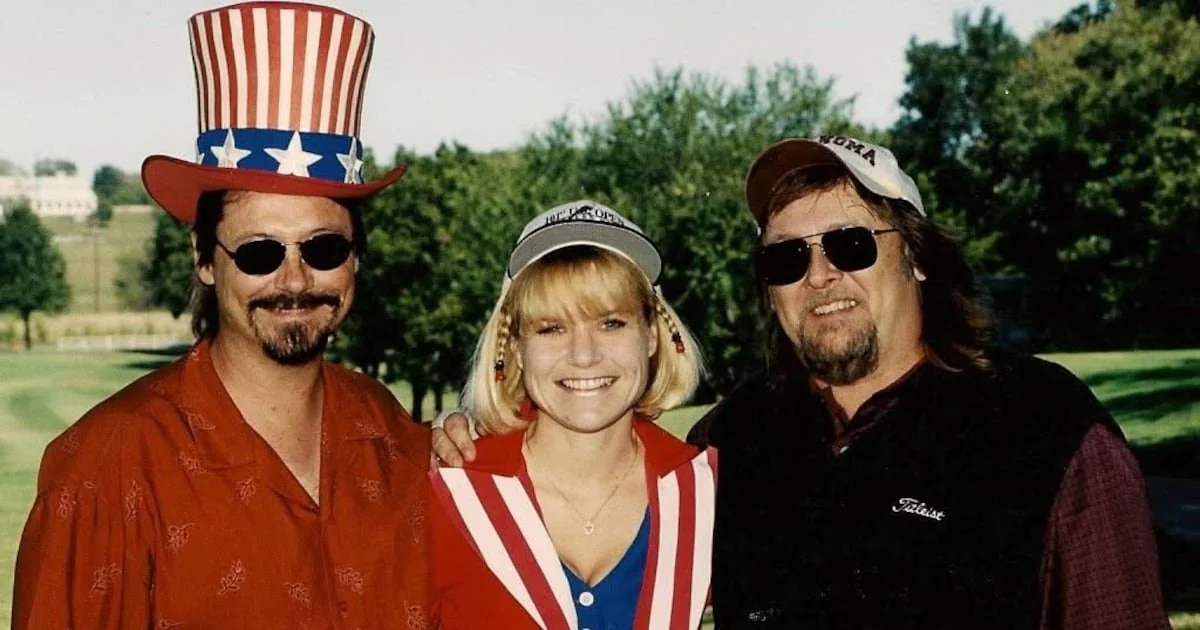
There are certain radio personalities whose names immediately take you back to a particular studio, a particular city, and a time when morning radio was about as much fun as you could legally have before 10 o’clock. For me, Phil Stone and Brent Douglas are two of those people. The legendary KMOD morning team that entertained Tulsa for nearly 27 years has been named to the Oklahoma Association of Broadcasters Hall of Fame Class of 2027, and I can’t think of two guys more deserving of the recognition. Their contributions to radio were enormous, their chemistry was something special, and the fictional character they created became one of the most recognizable voices in American radio comedy. If you’ve ever heard somebody ask how big a boy you are, chances are you already know exactly who I’m talking about.
The announcement is especially meaningful to me because I had the privilege of working in the same Tulsa radio building during part of their remarkable run. I arrived in 2002 and became the very first Program Director of KTBT-FM, 101.5 (now 92.1) The Beat, which we launched in 2003. KMOD was part of our Clear Channel cluster, and Phil and Brent were already established legends in the market. Their morning show wasn’t simply successful. It was one of those rare programs that had become part of the identity of an entire city.
And before anybody asks, yes, I have a confession to make.
Before I walked into that building in 2002, I actually thought Roy D. Mercer was a real person.
I’m serious. I knew the voice, knew the comedy, and certainly knew the reputation. Roy had become such a believable character that I had never really stopped to consider that there wasn’t an actual fellow somewhere in Oklahoma making those outrageous telephone calls. Then I got to Tulsa, learned the truth, and realized that the man responsible for that unmistakable voice was none other than Brent Douglas, sitting right there in the building.
I still laugh thinking about it. Here I was, a programmer who had worked in major markets, understood how radio was put together, and supposedly knew a thing or two about the business. Yet Phil and Brent had managed to fool me just as effectively as they entertained countless listeners across the country. Looking back, that’s one of the greatest compliments I could possibly pay them. They created something so believable that even another broadcaster bought into the character.
And Roy D. Mercer? Well, Roy D. Mercer was the ish!
Tulsa Had Something The Rest Of The Country Wanted
When Phil and Brent teamed up at KMOD in the mid-1980s, they helped establish a morning show that would eventually become one of the longest-running and most successful programs in Oklahoma radio history. Their nearly 27-year partnership was built around an understanding of what made their audience laugh, an ability to turn everyday situations into comedy, and a chemistry that simply couldn’t be manufactured in a conference room.
They didn’t need to sound like Los Angeles, New York, or Chicago. They sounded like Tulsa, and the audience loved them for it. Their humor was distinctly Oklahoma, sometimes outrageous, occasionally a little rough around the edges, and almost always delivered with the kind of timing that separates naturally funny people from those who are simply trying to be funny.
Anybody who has spent much time in radio knows how difficult it is to sustain a successful morning show. Personalities change, audiences evolve, ownership changes hands, and programming philosophies come and go. A show that lasts five years is an accomplishment. A show that lasts ten is something special. Phil and Brent lasted nearly three decades, building a following that reached well beyond KMOD’s traditional rock audience.
That kind of longevity doesn’t happen by accident. It happens because the personalities understand their listeners, the audience develops a genuine relationship with the show, and people make a conscious decision to turn on the radio each morning because they don’t want to miss whatever might happen next.
Phil and Brent had that connection, and they maintained it through an era when radio was changing rapidly around them.
Roy D Mercer Was A National Phenomenon Born In A Tulsa Radio Studio
The Roy D. Mercer character emerged in 1993, with Brent Douglas providing the voice and Phil Stone helping develop the comedy that surrounded him. Mercer was an easily aggravated, unmistakably Southern-sounding character who seemed forever convinced that somebody had done him wrong. Usually, the unfortunate person answering his telephone was about to discover that Roy intended to collect some money or settle the situation in a manner that was considerably less than peaceful.
The calls were ridiculous, the situations were wonderfully absurd, and the delivery was absolutely brilliant. Brent could turn an ordinary telephone conversation into an escalating argument with such convincing indignation that listeners sometimes found themselves wondering just how the person on the other end was going to respond. Phil’s contribution to the writing, setup, and execution helped transform those calls into an unmistakable part of the KMOD morning experience.
What started as a local radio bit eventually became a national comedy franchise. Recordings were released on compact disc, major Nashville labels became involved, and the Roy D. Mercer albums found audiences far beyond Oklahoma. Capitol Records and Virgin Records helped bring the character to listeners across the country, turning a Tulsa morning-show creation into something people could enjoy long after the original broadcasts ended.
By the time I arrived in Tulsa, Roy was already much bigger than a local radio character. He was part of the culture, and people who had never set foot in Oklahoma recognized that voice. His comedy recordings traveled through truck cabs, workplaces, living rooms, and car stereos across America, often reaching people who had no idea where KMOD was located.
Think about what that means from a broadcasting standpoint. Two personalities working on a rock station in Tulsa created something that developed its own identity, generated a successful recording business, and reached people who weren’t necessarily listeners to the radio station itself.
Today, broadcasters spend enormous amounts of money trying to create content that can reach audiences across multiple platforms. Phil and Brent were accomplishing a version of that long before social media, podcasts, and digital content strategies became everyday parts of the industry’s vocabulary.
They had an idea, knew how to execute it, and made people laugh. The audience did the rest.
My Years In That Building Made The Story Even Better
When I think back to my time in Tulsa, I remember the tremendous amount of energy surrounding our radio operation. I had come there to help build something new, serving as the first Program Director of KTBT-FM, and there was plenty of excitement and responsibility associated with launching 92.1 The Beat. Building a station from the ground up requires an enormous amount of work, and you’re constantly thinking about music, presentation, talent, imaging, promotions, and how to establish a place in an already competitive market.
Meanwhile, just down the hall, KMOD had something I couldn’t create overnight, regardless of how good our launch strategy might have been. They had years of trust, established personalities, loyal listeners, and a morning show whose reputation extended well beyond the Tulsa market.
As programmers, we spend so much time discussing the mechanics of successful radio that it’s easy to overlook the things that can’t be measured by a music test or fixed by changing a clock. Phil and Brent had the kind of personality chemistry that programmers dream about. The audience knew who they were, knew what to expect, and genuinely wanted to spend time with them.
I learned a great deal during my years in that building, and one of the most valuable lessons was the importance of allowing talented personalities to be themselves. You can provide direction, establish expectations, and work to improve a show, but there are certain combinations of talent that simply cannot be duplicated.
Phil and Brent were one of those combinations.
And I have to tell you, the fact that I once believed Roy D. Mercer was an actual person still tickles me. I don’t know whether that says more about Brent’s extraordinary ability to bring a character to life or my own willingness to believe there really was somebody running around Oklahoma threatening to settle every disagreement with a good old-fashioned whooping.
Probably a little of both.
An Ending That Came Much Too Soon
The Phil and Brent era at KMOD ended in October 2012 after the station and the personalities were unable to reach an agreement on a new contract. After nearly 27 years together, the show that had become part of Tulsa’s morning routine was suddenly over. For listeners who had grown up with them, the departure represented the end of something much larger than a radio program.
Tragically, Phil Stone died on November 21, 2012, just weeks after the show concluded. He was 57 years old, and his passing meant that the partnership responsible for so many years of laughter would never return to the airwaves.
Brent Douglas continued to be remembered for his work and eventually explored other opportunities in comedy, but he made it clear that Roy D. Mercer had effectively ended with Phil’s death. The character might have been voiced by Brent, but the magic behind Roy belonged to both men. Without Phil, it simply wouldn’t have been the same.
Brent passed away on February 8, 2025, at the age of 69, bringing another sad moment for the generations of listeners and broadcasters who remembered the unmistakable humor of the KMOD Morning Zoo.
There is something particularly emotional about seeing their induction announced now, knowing that neither man is here to walk onto that stage and accept the honor. Both deserved to hear that applause in person, and I have no doubt there would have been plenty of laughter if either of them had been given a microphone for an acceptance speech.
Still, this recognition ensures that their contributions will remain part of Oklahoma broadcasting history, where they unquestionably belong.
Radio Could Learn A Lot From Phil And Brent
There is a larger lesson in this Hall of Fame announcement, and it deserves attention at a time when radio continues to wrestle with questions about personality, localism, and the future of morning programming.
Phil and Brent succeeded because they were distinctive. Their show belonged to Tulsa, even when their comedy reached listeners across the country. They understood the people who listened, developed characters that became part of the audience’s everyday conversations, and created moments that listeners wanted to share with somebody else.
Their success wasn’t built around sounding like every other morning show. It came from doing something nobody else could do quite the same way.
That’s worth remembering in an industry where programming decisions sometimes favor familiarity of format over individuality of talent. Technology has made it easier than ever to distribute content, but it hasn’t made it any easier to create the kind of relationship Phil and Brent developed with their listeners.
A successful personality can become a permanent part of somebody’s memories. A great morning show can become associated with an entire chapter of a person’s life. And a truly extraordinary character can outlive the program that created him.
Roy D. Mercer is proof of that.
Years after the final KMOD broadcast, people still remember the voice, the outrageous telephone calls, and the laughter. More importantly, they remember the two men who made it happen.
For those of us who were fortunate enough to work in that building during their years on the air, this recognition brings back some wonderful memories. I certainly remember the excitement of launching KTBT, the people I worked alongside, and the opportunity to be part of a tremendous collection of Tulsa radio talent.
But I also remember being the new guy who discovered that one of Oklahoma’s most famous and intimidating characters didn’t actually exist.
And believe me, that was quite a discovery.
The Oklahoma Association of Broadcasters couldn’t have selected two more fitting names for its Hall of Fame Class of 2027. Phil Stone and Brent Douglas gave Tulsa nearly 27 years of laughter, created a character that became a national sensation, and demonstrated just how powerful local radio can become when extraordinary talent is allowed to do extraordinary things.
I’m proud to have shared some of those years in the same building, and I’m even prouder to see them receive the recognition they earned.
Congratulations to the families of Phil Stone and Brent Douglas, to everyone who helped make the KMOD Morning Zoo such an important part of Oklahoma radio, and to the countless listeners who kept coming back for another helping of Phil, Brent, and Roy D. Mercer.
And somewhere, I can almost hear that unmistakable voice getting ready to ask somebody how big a boy they are.
I sure do miss radio like that.
#PhilAndBrent #RoyDMercer #KMOD #TulsaRadio #KTBT #TheBeat #OklahomaRadio #OABHallOfFame #RadioLegends #MorningRadio #OnTheDial