


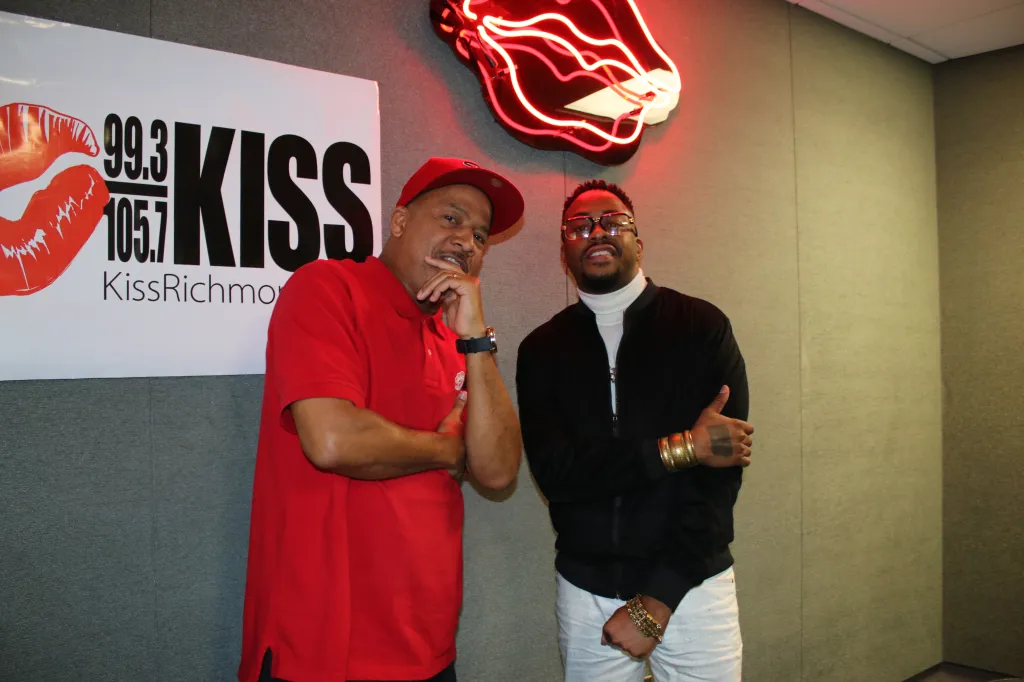
There’s something about nighttime R&B radio that has always been different from anything else we do in this business. During the day, we’re concerned about getting listeners to work, keeping them entertained through the afternoon, and maintaining enough energy to compete for attention. But when the sun goes down, the atmosphere changes. The music becomes a little more personal, the conversations become a little more meaningful, and a great nighttime personality has an opportunity to develop a relationship with listeners that doesn’t necessarily exist in other dayparts. Radio One and Reach Media are betting that Grammy-nominated R&B singer, songwriter, and radio personality Raheem DeVaughn understands that relationship better than most, launching his new syndicated program, The Garden of Love, Monday, October 12, across five important Adult R&B markets.
And I think the decision is particularly interesting because DeVaughn isn’t simply another entertainer being handed a radio show because somebody recognizes his name.
He’s already spent time doing the work.
The program originates from Majic 102.3 WMMJ in Washington, D.C., and is also being carried by Majic 107.5/97.5 WAMJ/WUMJ in Atlanta, Magic 95.9 WWIN-FM in Baltimore, Classix 107.9 WPPZ in Philadelphia, and Kiss 99.3/105.7 WKJM/WKJS in Richmond.
Airing Sunday through Thursday from 7 p.m. until midnight, The Garden of Love combines classic slow jams, contemporary R&B, conversations about relationships, and DeVaughn’s unmistakable approach to music and romance.
But there’s an important operational detail that makes this launch worth examining from a programming perspective.
The syndicated program is being offered in a content-only configuration, allowing participating stations to maintain control of their own music programming rather than simply accepting a complete national playlist.
That’s an interesting decision.
And frankly, I think it’s a smart one.
I’ve spent enough years programming Urban and Rhythmic radio to understand that stations serving different communities can have very different expectations about the music they play, even when the format designation looks identical on paper.
An Adult R&B station in Washington isn’t necessarily going to approach its music the same way a station in Philadelphia does. Atlanta has its own musical history and cultural identity. Baltimore has traditions that are distinctly its own, and Richmond’s listeners have relationships with artists and records that may not always align with another market’s preferences.
Giving those stations the ability to retain local control over their music while incorporating a nationally recognizable personality provides an opportunity to preserve something important.
The station still sounds like the station.
That matters.
And it’s particularly relevant when we’re talking about nighttime R&B.
The program’s initial affiliate lineup includes several stations with substantial histories in African American broadcasting, each serving audiences that have developed long relationships with their favorite personalities and music.
Let’s begin in Washington, because that’s where this story becomes especially interesting.
DeVaughn’s connection to the Washington metropolitan area extends well beyond his recording career. Born in New Jersey and raised in Maryland, he developed much of his musical identity through the communities surrounding Washington, including Montgomery and Prince George’s counties.
His early career included performing at clubs, participating in open-mic events, and building relationships within the region’s independent music community. Long before national recognition arrived, he was developing his craft in the same neighborhoods and venues that have helped shape some of the country’s most influential R&B and Go-Go artists.
Washington has always had a particularly distinctive relationship with Black music.
The city’s Go-Go tradition, its history of community-oriented radio, and the cultural importance of its Urban stations have created an environment where local identity matters tremendously.
DeVaughn is part of that history.
His career began gaining momentum through the Washington music scene, and his eventual success as a recording artist never completely separated him from the community that helped establish his name.
That connection became particularly relevant in October 2024, when WHUR 96.3 selected him to host The Original Quiet Storm.
Now, anybody who understands Washington radio knows the significance of that assignment.
The Quiet Storm isn’t just another Adult R&B programming concept that somebody developed in a corporate conference room.
It’s part of radio history.
The legendary Melvin Lindsey helped establish the format at WHUR in the 1970s, developing a nighttime presentation built around soulful music, intimacy, and the unmistakable feeling that the person behind the microphone was speaking directly to the listener.
Over time, Quiet Storm programming spread throughout the country, influencing the sound of Adult R&B stations and creating a model that countless broadcasters would attempt to duplicate.
But the original program has a particularly important place in Washington.
And DeVaughn was entrusted with carrying that tradition forward.
Now, following his departure from WHUR, he is bringing his own nighttime concept to a competing Washington station while expanding the program through national syndication.
That’s not a minor development in the local radio landscape.
It places a familiar performer and former host of one of the market’s most recognizable nighttime programs on Majic 102.3, giving Radio One an opportunity to attract listeners who already associate his voice with evening R&B.
Whether those listeners follow him remains to be seen, and nobody should assume that his previous association with WHUR automatically translates into audience growth for WMMJ.
But from a competitive standpoint, there’s a legitimate opportunity here.
Radio One has acquired a personality who understands the Washington audience, possesses strong local musical connections, and already has experience presenting the kind of programming the company intends to offer.
That’s a considerably stronger foundation than simply placing a recognizable recording artist behind a microphone and hoping the audience responds.
And the connection becomes even more interesting when you consider his musical identity.
DeVaughn has spent much of his recording career exploring love, relationships, intimacy, and the emotional experiences that define contemporary soul music.
His catalog includes songs such as “You,” “Guess Who Loves You More,” “Woman,” “Customer,” and “I Don’t Care,” records that helped establish him as one of the recognizable voices in modern R&B.
His nickname, the Love King, didn’t emerge from an unrelated marketing campaign.
It reflects the musical identity he’s developed over years of recording and performing.
Now that identity becomes the foundation of a nightly radio show.
And there’s something rather natural about that transition.
But as I’ve said before, being able to sing a great love song doesn’t automatically make someone a great radio personality.
The microphone demands different skills.
A successful host has to listen, respond, prepare, manage timing, and understand how to make an audience feel included in the conversation.
That’s particularly important in a format where relationship discussions and listener interaction are central to the presentation.
DeVaughn has experience doing that work, and The Garden of Love is structured to make those conversations part of the daily programming.
The show’s features include Garden of Lovelines, Affirmation of the Week, In Full Bloom, and the Midnight in the Garden Mix.
Listeners are invited to participate through telephone calls, recorded messages, and social media interaction, creating opportunities for the program to incorporate real conversations rather than relying entirely on scripted entertainment segments.
The show also includes discussions about self-care, personal growth, entertainment, and the complicated business of human relationships.
And if you’ve ever worked on a nighttime love-song program, you know that last subject can provide enough content to keep a broadcaster busy for the rest of his career.
People have questions about relationships.
Lots of questions.
Some are serious. Some are heartbreaking. Some are funny enough to make you wonder how the situation developed in the first place.
But the best nighttime hosts understand that listeners aren’t always looking for perfect advice.
Sometimes they simply want to feel heard.
And that brings us to Baltimore.
Magic 95.9 introduced DeVaughn’s new show through an appearance with Ryan Da Lion, giving listeners an opportunity to hear directly from the artist before the program launched.
During that conversation, DeVaughn described the assignment as a dream opportunity and reflected on his long-term professional plans.
He also had an immediate connection to the Baltimore entertainment community, appearing with his Go-Go band, the Crank Crusaders, at the October 10 Crankin’ Crabs event at Pier Six Pavilion.
That connection matters because Baltimore isn’t simply another affiliate receiving programming from Washington.
The city has its own R&B identity, its own community traditions, and a radio audience that has supported locally recognizable personalities for generations.
Magic 95.9 has a responsibility to maintain that connection, even while incorporating syndicated programming into its nightly schedule.
The ability to preserve local music programming should help.
And I’d encourage the station to make sure DeVaughn’s presentation feels relevant to Baltimore rather than simply becoming another nationally distributed show that happens to occupy five hours of the broadcast day.
Then there’s Atlanta.
Majic 107.5/97.5 operates in one of the country’s most important markets for contemporary Black music, with an audience that has a particularly strong relationship with R&B, Hip-Hop, Gospel, and Southern musical traditions.
I’ve worked in Atlanta, and I know that it’s a market where musical identity carries considerable weight.
A record that becomes part of the city’s cultural conversation can develop a relationship with listeners that goes far beyond whatever position it occupies on a national chart.
For an Adult R&B station, that creates opportunities to blend contemporary music with familiar classics while reflecting the musical character of the market.
DeVaughn’s program could complement that approach, especially if the station takes full advantage of the flexibility offered through the content-only syndication arrangement.
The same principle applies in Philadelphia.
Classix 107.9 WPPZ serves a community with one of the richest musical histories in American R&B.
Philadelphia International Records, the Philadelphia soul movement, and generations of influential artists helped establish a musical identity that continues shaping the audience’s expectations.
A station built around familiar R&B classics has an opportunity to connect DeVaughn’s contemporary personality with that history, provided the presentation respects the music that defines the brand.
And because the program allows affiliates to provide their own musical selections, Philadelphia programmers can maintain the familiar sound of Classix while incorporating the show’s personality features.
That’s an important distinction.
Too often, syndicated programming requires stations to sacrifice control over significant parts of their music presentation.
Sometimes that’s an acceptable trade-off.
Other times, it creates unnecessary conflicts between the network’s national programming assumptions and the local station’s audience expectations.
A content-only option gives programmers additional flexibility.
Of course, flexibility also introduces responsibility.
Stations have to manage music scheduling, programming clocks, transitions, and the relationship between syndicated segments and local presentation.
A poorly executed integration can make even an entertaining national program sound awkward.
A well-executed one can create a seamless listening experience.
And that’s where good programming still matters.
Richmond rounds out the initial lineup, with Kiss 99.3/105.7 bringing The Garden of Love to Central Virginia.
That market has a strong Adult R&B tradition and a connection to the music that reflects both the region’s history and its contemporary cultural identity.
DeVaughn’s addition gives the station another recognizable personality during nighttime hours, but the challenge will be the same as in the other markets.
The show needs to complement the station’s established identity rather than overwhelm it.
And that brings us to another part of this story that shouldn’t be overlooked.
The Garden of Love is entering a daypart already served by an established syndicated program within the Reach Media family.
Love and R&B, hosted by KG Smooth, remains part of the company’s programming lineup and continues serving other markets.
That distinction is important because the launch of DeVaughn’s show should not be interpreted as the cancellation of KG Smooth’s program.
Reach Media now has two recognizable nighttime R&B personalities available within its portfolio, giving stations different options for developing their evening programming.
From a syndication perspective, that makes sense if the company believes the two programs can serve different station strategies or audience expectations.
But it also creates an interesting challenge.
What makes one program the better fit for a particular market?
Is it the host’s recognition? The amount of music flexibility? The style of relationship content? The pacing? The demographic profile of the station’s audience?
Those are the questions programmers should be asking.
I wouldn’t choose a syndicated show solely because the host happens to be a successful recording artist.
I’d want to know how the program sounds, how the audience responds, and whether the content helps strengthen the station’s competitive position.
There’s also the matter of how DeVaughn balances his various professional responsibilities.
He’s an active recording artist, songwriter, performer, and advocate whose activities extend beyond broadcasting.
His LoveLife Foundation has supported efforts involving health awareness and underserved communities, and his career has included recognition for that community involvement.
Those experiences could provide worthwhile material for the show, particularly when conversations turn toward personal development, relationships, and the challenges people face in everyday life.
But the program still has to function as radio.
That means preparation, consistency, and the ability to create a compelling experience five nights a week.
And that isn’t something that can be accomplished through name recognition alone.
I’ve always believed that the difference between a celebrity who happens to host a radio show and a genuine radio personality becomes apparent once the novelty wears off.
Can that person make listeners feel connected to the program?
Can the host create moments that people remember?
Can the show become part of somebody’s routine rather than simply another entertainment option?
Those are the measurements that will matter over time.
And DeVaughn has an opportunity to answer those questions across five major markets.
From Radio One’s perspective, there’s another strategic advantage worth considering.
Urban One has spent decades building brands around the cultural importance of African American music, entertainment, and community connection.
Its stations have often served as important platforms for personalities who understand the audiences they reach.
Bringing DeVaughn into the company’s syndicated lineup creates an opportunity to combine those established station relationships with a performer whose music already resonates within the format.
That’s a logical programming combination.
But the actual success will depend on the execution.
The company has selected Washington as the program’s originating market, a particularly appropriate choice given DeVaughn’s history and the city’s relationship with Quiet Storm radio.
From there, the show reaches Atlanta, Baltimore, Philadelphia, and Richmond, markets that share an appreciation for R&B while maintaining very different local identities.
That distribution pattern creates a foundation for additional expansion if the program develops the audience response and affiliate interest necessary to support it.
No additional stations have been confirmed in the information available for this launch.
And there’s no reason to assume the show will automatically expand simply because the host is recognizable.
National syndication is a competitive business.
Stations have choices, and programmers need compelling reasons to give up an established evening presentation.
That said, DeVaughn brings legitimate credentials to the opportunity.
He’s a successful recording artist with a recognizable musical identity, experience hosting nighttime R&B programming, strong connections throughout the Washington region, and an established audience familiar with his approach to music and relationships.
Those qualities give The Garden of Love a foundation that deserves serious consideration.
And perhaps most importantly, the program is entering a daypart where the relationship between a personality and the listener can still be extraordinarily powerful.
I remember working in radio when nighttime love-song programs were among the most personal experiences a station could offer.
People called to dedicate songs, celebrate anniversaries, apologize for mistakes, and occasionally explain relationship situations that probably should have remained private.
The music provided the atmosphere, but the host created the relationship.
Some of those programs became institutions within their markets because listeners developed a genuine emotional connection with the person behind the microphone.
That opportunity still exists.
It may look a little different now, with social media, digital audio, recorded messages, and listeners who have access to virtually every song ever recorded.
But the underlying human connection hasn’t disappeared.
People still enjoy music that makes them feel something.
They still appreciate a familiar voice.
And they still have plenty to say about love.
Raheem DeVaughn now has five major markets in which to build those relationships.
For Washington, the show represents a familiar local artist moving to a competing station and expanding his radio presence nationally.
For Baltimore, Atlanta, Philadelphia, and Richmond, it introduces a nationally recognizable R&B performer into established nighttime programming environments.
For Reach Media, it creates another offering within the Adult R&B syndication business while allowing Love and R&B with KG Smooth to continue in other markets.
And for programmers, it provides an interesting example of how a national personality show can be structured without requiring affiliates to surrender complete control of their music.
That last detail may turn out to be one of the smartest parts of the entire arrangement.
Congratulations to Raheem DeVaughn, Radio One, and Reach Media on the launch.
The initial affiliate lineup is impressive, the musical connection is obvious, and the host has experience that should help him understand what nighttime listeners expect.
But as with any new syndicated program, the most important work begins after the launch announcement.
The personalities have to connect.
The programming has to flow.
And the audience has to develop a reason to come back tomorrow night.
If The Garden of Love can accomplish those things, Radio One may have something considerably more valuable than another celebrity-hosted syndicated program.
It may have the beginning of a new nighttime R&B tradition.
And in a business where we spend so much time trying to hold on to listeners, that’s an opportunity worth getting excited about.
#OnTheDial #RaheemDeVaughn #TheGardenOfLove #UrbanOne #RadioOne #ReachMedia #Majic1023 #Magic959 #Majic1075 #Classix1079 #KissRichmond #AdultRB #QuietStorm #WashingtonRadio #BaltimoreRadio #AtlantaRadio #PhiladelphiaRadio #RichmondRadio #RadioSyndication #RadioProgramming