


I’ve spent more than thirty years in radio, and if there’s one thing I’ve learned about this industry, it’s that you can tell an awful lot about people by what they do when there’s absolutely nothing in it for them. I’ve met some extraordinary broadcasters, worked alongside incredible talent, and watched people accomplish remarkable things with little more than a microphone and a desire to make a difference. But I’ve also seen the other side of the business, where ratings, revenue, egos, and corporate priorities sometimes make it difficult to remember that there’s a human being on the other end of the conversation. Today, October 14, 2026, a man named Edgar “Shoboy” Sotelo and the team behind the Shoboy Show reminded me why I fell in love with broadcasting in the first place. They didn’t offer me a record deal, a radio job, a big check, or a solution to every problem I’m facing. They offered something considerably more valuable. They offered their humanity.
And sometimes, when you’re fighting for your life, that’s everything.
I’ve been fortunate enough to speak with some remarkable broadcasters recently. TJ Taormina welcomed me onto his nationally syndicated TJ Show. Dave Ramsey allowed me to discuss the financial realities of my medical journey. Chris Plante opened his microphone and gave me an opportunity to tell listeners about my extraordinarily difficult search for a kidney.
I’ve appreciated every one of those opportunities, because I know what happens behind the scenes when somebody asks to appear on a major radio program.
There are producers.
There are schedules.
There are meetings.
There are decisions about which stories deserve airtime and which ones don’t.
And believe me, after thirty years in this business, I know that everybody thinks their story deserves to be heard.
But mine carries something that I can’t put into a ratings presentation.
I’m trying to stay alive.
That’s the reality behind the interviews, the videos, the social media posts, and the growing number of people who have become part of this extraordinary journey.
I’m trying to find a living kidney donor with a level of medical compatibility so rare that my physicians have described the challenge in terms approaching one in a million.
And every day that passes without a match is another day of dialysis, uncertainty, medical expenses, and physical exhaustion.
Today, however, I experienced something different.
I experienced a man who understood that sometimes the most powerful thing you can do for another human being is simply to care.
He Didn’t Treat Me Like an Interview He Treated Me Like Family
When Edgar “Shoboy” Sotelo first became involved in my journey, I hoped he’d be willing to provide another opportunity to introduce my story to people who might never have heard it.
That’s been the goal of every interview.
Reach another audience.
Tell another person.
Open another door.
Maybe somebody listening knows somebody who knows somebody who could ultimately help identify a compatible kidney donor.
That’s how this whole journey has unfolded.
But what happened during my conversation with Shoboy went well beyond the usual questions and answers.
He embraced me.
Not physically, of course. We were connected through the technology that makes modern broadcasting possible.
But emotionally, spiritually, and personally, he made me feel as though I wasn’t talking to another nationally syndicated radio personality.
I was talking to my brother.
Throughout the conversation, Shoboy repeatedly encouraged his listeners to help me. He directed people toward the information they needed, asked them to consider whether they might be able to make a difference, and made it clear that this wasn’t just another story passing through his studio.
He spoke about us as brothers.
As extended family.
And then he prayed with me.
I wish I could adequately explain what that meant.
Because when you’re dealing with something as frightening as this medical journey, there are moments when words of encouragement feel nice, and there are other moments when somebody’s genuine compassion reaches a place inside you that you didn’t even realize needed comforting.
That’s what happened today.
And I don’t mind telling you that it moved me.
I’ve survived cancer twice.
I’ve endured a bone marrow transplant.
I’ve watched serious illness consume years of my life and much of the financial security I’d worked decades to build.
I’ve dealt with kidney failure, dialysis, and the frightening reality of knowing that a suitable donor may be extraordinarily difficult to find.
Through all of that, I’ve tried to remain positive.
I’ve tried to keep smiling.
I’ve tried to continue pastoring, writing, serving my community, and being the husband and father my family needs.
But sometimes the weight becomes difficult to carry.
And sometimes it takes somebody who has no personal obligation to help you to remind you that you aren’t carrying it alone.
Today, that somebody was Shoboy.
What He Gave Me Didn’t Cost Him a Dime
There’s something about this experience that I desperately want people to understand.
It doesn’t cost anything to be kind.
It doesn’t cost anything to listen.
It doesn’t cost anything to ask somebody how they’re doing and genuinely care about the answer.
It doesn’t cost anything to send an encouraging message, offer a prayer, or introduce someone to a person who might be able to help.
And sometimes the smallest act of kindness can become the biggest moment in somebody else’s day.
Think about that for a minute.
Here I am, a guy in Garden City, Kansas, fighting for his life, trying to get the attention of people with enormous audiences and resources.
I’ve publicly challenged Elon Musk.
I’ve appealed to Mark Zuckerberg.
I’ve reached out to Joe Rogan, MrBeast, and technology journalists.
I’ve asked whether the incredible communication tools we’ve developed might help find my extraordinarily rare kidney match.
And I’ve wondered whether advances in biomedical engineering and artificial-organ research might someday give patients like me another option.
Those are big questions.
Important questions.
But today, a radio personality demonstrated something that requires no artificial intelligence, no engineering breakthrough, and no billion-dollar investment.
He demonstrated what happens when one human being decides another human being matters.
Shoboy didn’t need a committee to authorize compassion.
He didn’t need an algorithm to tell him whether my life was worth discussing.
He didn’t need somebody to calculate the advertising value of helping a man in Kansas.
He listened.
He cared.
He opened his microphone.
And he asked other people to care, too.
That’s humanity.
And I have to believe we still have room for a little more of it in this world.
To the Shoboy Show Family Thank You
I also want to recognize the people who help make the Shoboy Show what it is.
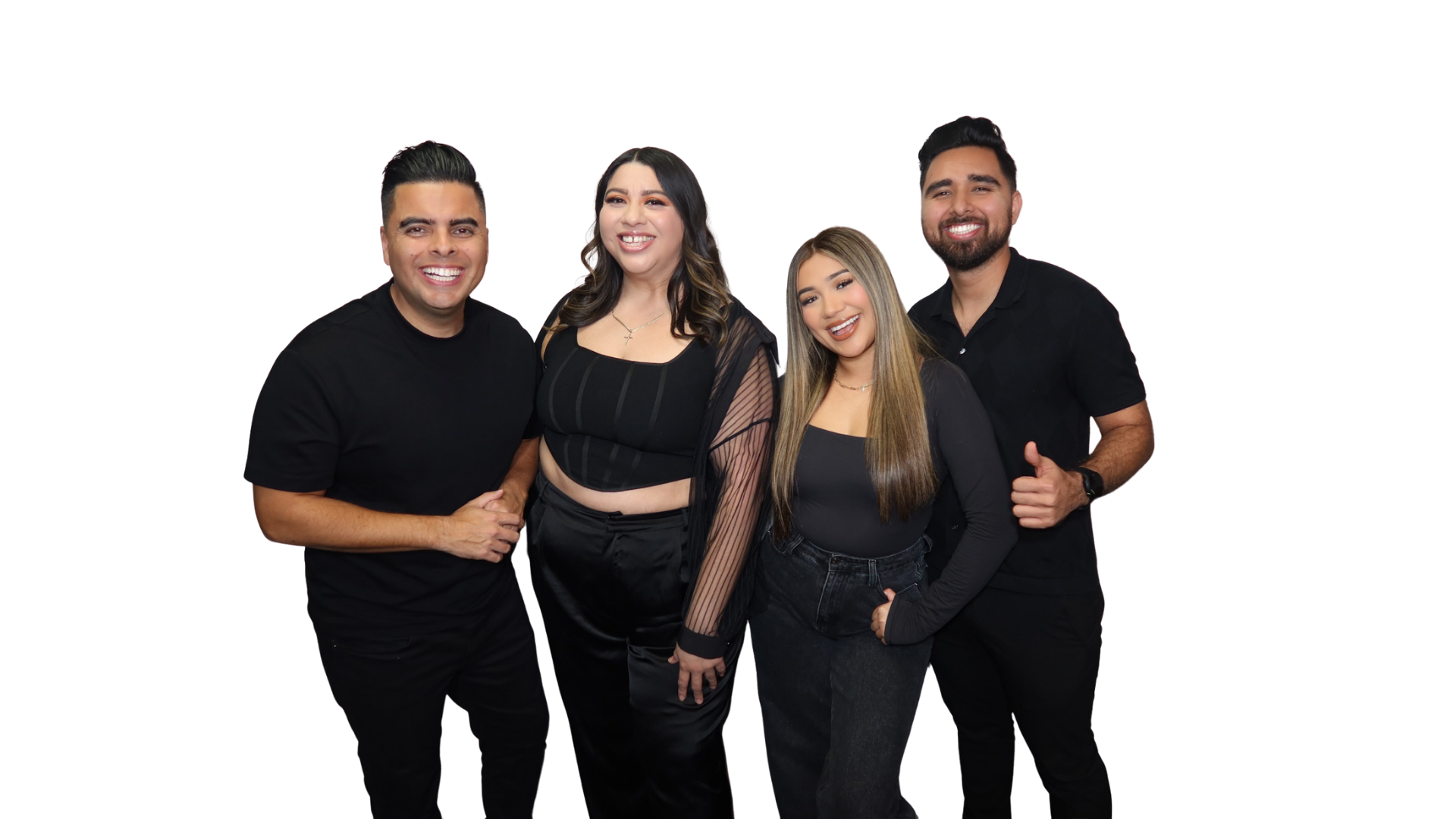
Shoboy is surrounded by a team that includes Vanessa Sida, Micho Rizzo, and Eddie The Virgin, part of a program built around laughter, relationships, family, and the kind of everyday conversations that make listeners feel like they belong.
And there’s something special about that.
The program has developed its identity around making people smile, bringing people together, and creating an atmosphere that feels less like a traditional radio production and more like a gathering of friends and family.
But today, the subject wasn’t particularly funny.
There wasn’t a clever punchline that could make my situation disappear.
There wasn’t a contest that could resolve the problem.
And there certainly wasn’t a prize waiting behind the studio door.
Unless somebody happened to have a medically compatible kidney sitting back there.
And believe me, if they did, I would have been the first person asking whether it came with overnight shipping.
I can still joke about these things.
I’ve learned that sometimes humor is the only way to make the difficult moments bearable.
But the reality remains serious.
And what touched me about the Shoboy Show was the willingness to make room for that seriousness while still being the kind of program listeners know and love.
That matters.
Radio doesn’t have to stop being entertaining to become meaningful.
Sometimes the most meaningful thing a broadcaster can do is recognize that the next conversation needs to be about something bigger than entertainment.
And today, Shoboy did exactly that.
To Shoboy, Vanessa, Micho, Eddie, and everyone behind the scenes who helped make this opportunity possible, thank you.
I hope you understand that what you offered me was more than publicity.
You offered me dignity.
You offered me encouragement.
You offered me another opportunity.
And perhaps most importantly, you demonstrated to everyone listening that compassion isn’t something we should reserve for people we already know.
Somewhere Along the Way We Forgot How to See Each Other
I’ve been thinking a great deal lately about the world we’re living in.
We have more ways to communicate than at any point in human history.
We can send messages around the world in seconds.
We can watch somebody’s life unfold through photographs and videos.
We can communicate across languages, cultures, and continents.
And yet, with all those extraordinary tools, I sometimes wonder whether we’ve forgotten how to see the actual people standing in front of us.
We’re quick to comment.
Quick to judge.
Quick to scroll past.
Quick to assume that somebody else will help.
And sometimes we’re so busy arguing about everything that’s wrong with the world that we forget how much good we could accomplish simply by doing something right.
I’ve experienced extraordinary kindness throughout this journey.
Josh Liljenquist and his team helped tell my story through a video that reached millions.
David Krissman invited me onto The Great Social Experiment and helped create FindMyOne.org so people could learn about my search.
Thousands of strangers have contributed to the fundraiser helping my family deal with overwhelming medical and living expenses.
Broadcasters have opened their microphones.
Journalists have told the story.
People have prayed, shared, written letters, made calls, and offered support in ways I will never forget.
And yet, I still occasionally hear people wondering what difference one small act of kindness can really make.
Let me tell you.
The person offering the kindness may forget it tomorrow. The person receiving it may remember it for the rest of their life.
I will remember today.
I will remember what Shoboy said.
I will remember the way he encouraged his listeners to help.
I will remember being treated like a brother rather than a stranger.
And I will remember the prayer.
Because there are some moments that remind you that God hasn’t abandoned you, even when the road ahead remains uncertain.
For me, today was one of those moments.
The Interview Is Over but the Need Is Not
The interview has now been released as a special episode of the Shoboy Show podcast.
Its title says something that I find incredibly moving.
Please Help Save Our Friend’s Life: Steven Mills.
Our friend.
Two words.
Two ordinary words.
But they mean a great deal to somebody in my situation.
I’m grateful that Shoboy didn’t simply introduce me as another person dealing with a serious illness.
He welcomed me into his circle.
And by doing that, he invited his listeners to see me differently, too.
Not as a medical statistic.
Not as another social media fundraiser.
Not as another sad story they’ll forget by tomorrow.
But as a fellow human being whose life is worth fighting for.
And here’s what I want everybody to understand.
I still haven’t found my kidney.
My cPRA remains 99.9999%.
I’m still doing dialysis.
I’m still managing the expenses, the appointments, the exhaustion, and the uncertainty that have become part of my daily life.
And as grateful as I am for every interview, the ultimate goal hasn’t changed.
I need a compatible living kidney donor.
There are people who may want to help but aren’t medically qualified to donate.
There are people who have never considered living donation.
And there may be someone who could be evaluated as a potential donor but has simply never heard my story.
That’s why every new audience matters.
And that’s why Shoboy’s willingness to use his platform means so much.
He may never know who heard the program.
He may never know whether somebody forwarded the episode to a friend.
He may never know whether a listener decided to contact a transplant program because of something said during our conversation.
But the possibility exists.
And when you’re searching for something this rare, possibility means a great deal.
My Challenge to the Rest of the World
I want to ask something of every broadcaster, entertainer, media executive, influencer, business owner, and person with the ability to reach others.
Would you consider doing what Shoboy did today?
Not necessarily giving me fourteen minutes of airtime.
Not necessarily conducting a full interview.
Just demonstrating that another person’s life matters.
Maybe you can share my story.
Maybe you can introduce me to somebody.
Maybe you can help educate people about living kidney donation.
Maybe you can send a note to someone with a larger audience.
Or maybe you’ll encounter a complete stranger tomorrow who is struggling with something you don’t understand.
What if you simply asked whether there was anything you could do to help?
What if we stopped calculating the value of kindness based on what it might bring back to us?
What if we started treating people as though their lives mattered before something terrible happened to them?
Imagine the difference that could make.
We don’t need a government program to authorize it.
We don’t need a billionaire to finance it.
And we certainly don’t need another piece of technology to tell us how to do it.
We already know.
Sometimes we just need somebody to remind us.
Today, Shoboy reminded me.
And I hope this story reminds somebody else.
There’s Something I Want Shoboy to Know
Edgar, I don’t know whether you’ll ever fully understand what you did for me today.
You have a family.
You have a career.
You have responsibilities, listeners, and people depending on you.
You could have filled those minutes with something funny, entertaining, or commercially convenient.
You could have politely wished me well and moved on with your day.
And frankly, I would have understood.
I’ve worked in this business long enough to know how complicated it can be.
But you chose something else.
You chose to give a man fighting for his life an opportunity to be heard.
You spoke about me as family.
You encouraged your audience to help.
And you prayed with me.
That prayer meant more than you know.
Because when someone is facing a life-threatening illness, sometimes the most meaningful words aren’t promises that everything will be okay.
Sometimes they’re simply words that tell you somebody cares enough to stand beside you while you face whatever comes next.
You did that today.
And I want to thank you publicly.
I also want to thank your entire team for helping create the kind of environment where kindness isn’t treated like an interruption to the program.
It’s part of what the program represents.
You reminded me that the most powerful thing about radio has never been the transmitter, the ratings, the station’s frequency, or even the person sitting behind the microphone.
It’s the relationship between human beings.
That’s what makes this medium extraordinary.
And that’s why I still love it after thirty years.
Today I Was Reminded That Love Is Still Out There
When this journey first began, I had no idea how many people would become part of it.
I didn’t know that complete strangers would send money to help my family.
I didn’t know that people across the country would share videos, call radio stations, or write messages of encouragement.
I didn’t know that I’d be talking with nationally syndicated personalities about my kidneys, medical expenses, and the frightening uncertainty surrounding my future.
And I certainly didn’t know that a man named Shoboy would one day make me feel like I’d gained another brother.
But that’s what happened.
And it’s reminded me of something I wish everybody would carry into tomorrow.
You don’t have to be wealthy to be generous. You don’t have to be famous to be influential. And you don’t have to know somebody personally to love them like family.
Sometimes love looks like a donation.
Sometimes it looks like a telephone call.
Sometimes it’s a prayer.
Sometimes it’s a friend offering to drive you to an appointment.
And sometimes it’s a nationally syndicated radio personality setting aside part of his program to help somebody he could have easily ignored.
None of those things requires a fortune.
They require a heart.
I don’t know what tomorrow will bring.
I don’t know whether a compatible donor will emerge next week, next month, or sometime farther down the road.
I don’t know how many more interviews I’ll have to conduct or how many more people I’ll have to ask for help.
But I know what happened today.
A stranger became a brother.
A radio show became a gathering of people who cared.
And a man in Kansas who has spent a great deal of time worrying about his future was reminded that there are still people willing to help him fight for it.
Shoboy, my brother, thank you.
Thank you for your time.
Thank you for your kindness.
Thank you for giving your listeners the opportunity to become part of this journey.
Thank you for praying with me.
And thank you for reminding me that in a world that sometimes seems more interested in being divided than being decent, humanity still has a place.
I hope every broadcaster and every person with an audience who reads this story understands something.
You may not be able to save everybody. But that should never stop you from trying to help somebody.
Today, Edgar “Shoboy” Sotelo tried to help me.
And whether or not the person who ultimately saves my life heard that interview, something beautiful happened in the process.
I was reminded that I’m not invisible.
I’m not just a number.
I’m not just a man on dialysis waiting for a phone call.
I’m somebody worth caring about.
We all are.
And if there’s one message I’d like the entire world to take from what happened today, it’s this:
Love doesn’t need a budget. Compassion doesn’t need permission. And humanity doesn’t cost a thing.
Thank you, Shoboy.
I love you, my brother.
And thank you to everyone who continues helping me find my one.
LISTEN TO THE INTERVIEW
Please Help Save Our Friend’s Life: Steven Mills
The Shoboy Show — October 14, 2026
HELP ME FIND MY ONE
Campaign information: https://findmyone.org
Established with the help of David Krissman through The Great Social Experiment.
Living Kidney Donor Program: https://www.hcamidwest.com/patient-resources/living-donor-program
Potential donor reference
Patient: Steven Mills
Date of Birth: December 23, 1977
Blood Type: O-positive
cPRA: 99.9999%
Josh Liljenquist’s GoFundMe
https://www.gofundme.com/f/help-pastor-steven-fight-for-his-life-p74hx
ONE DONOR. ONE LIFE. ONE MORE TOMORROW.
#OnTheDial #ShoboyShow #Shoboy #EdgarSotelo #VanessaSida #MichoRizzo #EddieTheVirgin #FindMyOne #DoYouSeeMe #LoveOutLoud #HumanityStillExists #KindnessCostsNothing #LoveDoesntCostAThing #KidneyDonorNeeded #LivingKidneyDonor #OneDonorOneLife #RadioFamily #FaithInAction #DontLetItStopWithYou