


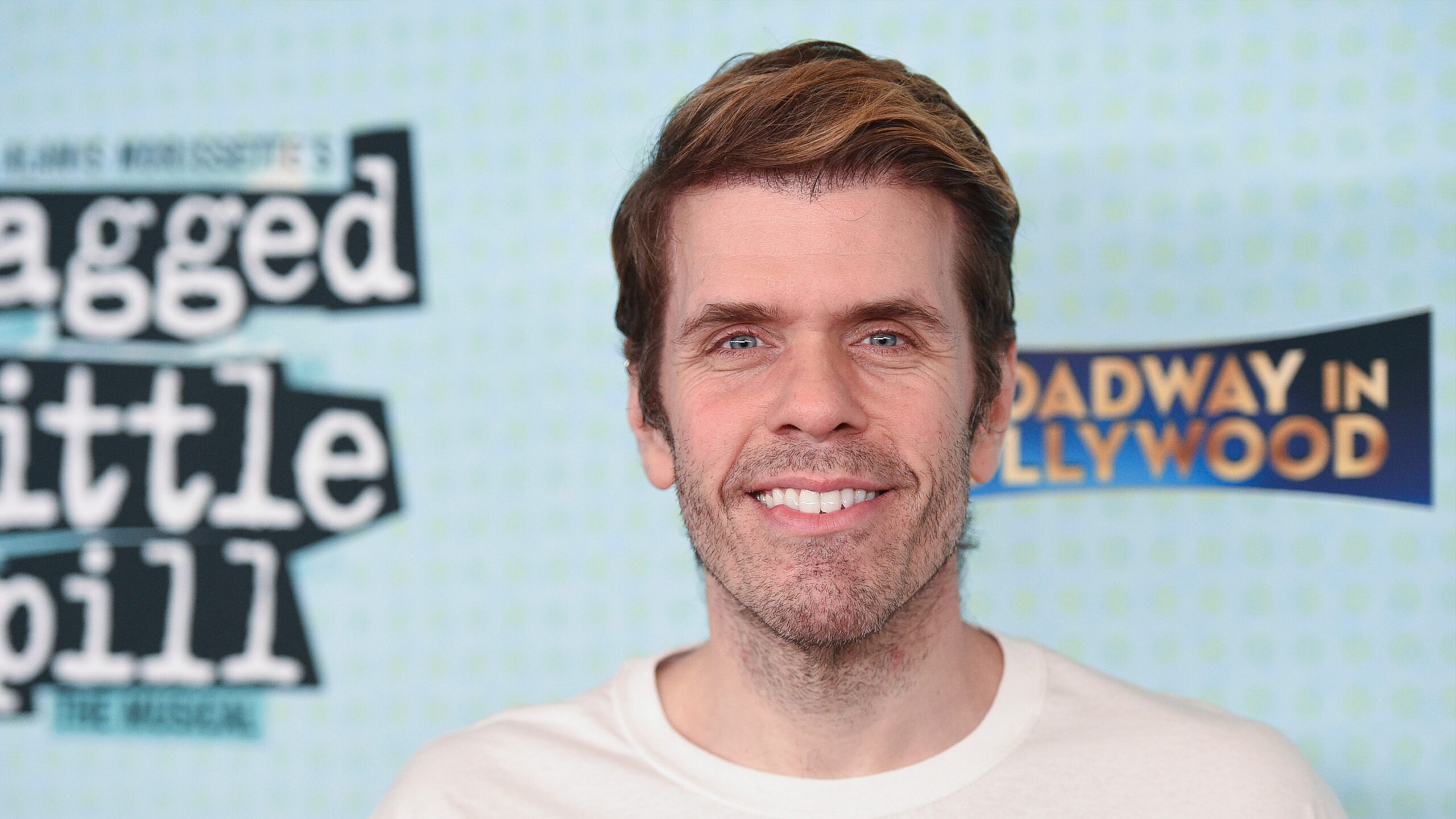
From the Publisher | Steven D. Mills | On The Dial
There is something about the story of Perez Hilton that has been bothering me, and I’ve gone back and forth about whether I should write about it. Not because I’m afraid of controversy, because anybody who knows me knows that has never been much of a problem. I’m struggling because there is a difference between holding someone accountable for their past and kicking them when life has already knocked them down. And when the person involved is someone you’ve had a friendly relationship with, someone you believed might actually show up for you when you needed help, the conversation becomes considerably more personal.
So here we are.
Perez Hilton.
The man who helped turn celebrity gossip into an internet blood sport.
The man who became famous, in part, by saying things about other people that many of us wouldn’t have had the nerve to say at the Thanksgiving dinner table.
The man who has publicly acknowledged that some of his behavior was cruel and hurtful.
And now, the man whose own family has asked the public to extend compassion during a difficult period in his life.
Let me establish something before the internet decides to hold a trial in the comments.
I wish Perez Hilton absolutely no harm. I hope he recovers, I hope his children have their father, and I hope his family finds peace.
But wishing somebody well doesn’t mean you have to pretend you don’t remember how they treated people.
And it certainly doesn’t mean you have to pretend that your own experiences with them were something they weren’t.
I have a few things to say.
And yes, Perez, if you happen to read this, I’m talking about you.
But I’m also talking about me.
And maybe, if we’re willing to be uncomfortable for a few minutes, I’m talking about all of us.
Before There Were Influencers There Was Perez Hilton
Some people who spend their days scrolling through TikTok and Instagram may not fully appreciate how enormous Perez Hilton’s influence became during the early days of internet celebrity culture.
Before everybody with a smartphone considered themselves a media company, Perez was already building an audience by turning Hollywood gossip into an attraction.
He wasn’t simply reporting that a celebrity had a difficult week.
He was often adding commentary, ridicule, provocative images, and personal insults that made the situation even more uncomfortable for the person on the receiving end.
And the public ate it up.
Click after click.
Headline after headline.
Celebrity after celebrity.
The internet was learning that humiliation could generate traffic, traffic could generate money, and money could make even the ugliest kind of attention seem like a brilliant business strategy.
Britney Spears became one of the most visible examples of the celebrity culture that thrived during that period.
Young entertainers were scrutinized for their bodies, relationships, appearances, sexuality, mistakes, and private struggles.
And Perez became one of the most recognizable faces of that environment.
Let’s not rewrite history.
His approach wasn’t always harmless fun.
It wasn’t always clever commentary.
And it wasn’t always journalism.
Sometimes it was simply mean.
He has since acknowledged wrongdoing in his earlier coverage and spoken about regrets and apologies.
I believe those acknowledgments deserve to be taken seriously.
But let’s also be serious about something else.
You cannot spend years helping normalize public humiliation and then expect everyone to forget what that culture did to people simply because you’ve decided to become a different person.
Change is possible.
Redemption is possible.
But history doesn’t disappear because somebody has written a new chapter.
Then the Headline Became His Own
Life has a way of reminding us that fame does not make anybody immune to suffering.
Perez has faced serious personal and health challenges, and his family has publicly asked for understanding and compassion.
That request should be respected.
There are children involved.
There are loved ones involved.
And there is a human being whose well-being should matter more than any celebrity controversy.
I have no interest in dissecting his private medical circumstances or turning a difficult period into entertainment.
That would make me part of the very culture I’m questioning.
But I cannot ignore the contrast.
For years, the public knew Perez as someone willing to discuss other people’s most painful and embarrassing moments.
Now the conversation includes the importance of protecting his dignity during his own struggles.
And you know what?
His dignity absolutely deserves protection.
But so did theirs.
The right to compassion shouldn’t begin on the day you become the person everybody is talking about.
It should have been there from the beginning.
That’s not a personal attack.
That’s a principle.
And if we’re going to talk about compassion, we ought to be willing to apply it consistently.
Now Let Me Tell You Why This Story Is Personal
I didn’t just discover Perez Hilton through a headline.
Perez and I developed what I understood to be a friendly connection.
We communicated.
I appreciated the relationship.
And because of his reach, I believed there might eventually be an opportunity for him to help bring attention to something important.
Not a celebrity party.
Not a publicity stunt.
Not an opportunity to make me famous.
Something that could actually make a difference in someone’s life.
Including mine.
At different points, I hoped Perez might help amplify circumstances that mattered deeply to me and to others I was trying to support.
That help did not come together.
And I was disappointed.
Now, here’s where I need everyone to pay attention, because I refuse to let a personal disappointment become an unfair accusation.
I don’t know everything that was happening in Perez’s life.
I don’t know what competing obligations he had.
I don’t know what conversations may have taken place behind the scenes.
And I am not claiming he deliberately misled me, exploited my situation, or intentionally withheld help.
What I know is that I had hoped for support from someone I considered a friend, and the support I hoped for never materialized.
That’s my experience.
That’s how I felt.
And I’m entitled to talk about it.
Sometimes the hardest disappointment isn’t when a stranger says no. It’s when you thought somebody you knew might say yes, and you eventually realize you need to keep knocking on other doors.
I don’t say that with hatred.
I say it with perspective.
Because life has taught me something important.
A friendly conversation isn’t a commitment.
A connection isn’t a guarantee.
And somebody having millions of followers doesn’t mean they’re obligated to use those followers for your cause.
But the disappointment can still be real.
Both things can be true.
A Million Followers Cannot Replace One Person Who Shows Up
There’s something almost absurd about the world we’ve created.
We measure influence in followers.
We measure success in views.
We measure importance in likes, shares, impressions, and engagement.
Somebody with a million followers can post a picture of a sandwich and attract more attention than an entire community fundraiser.
Somebody can make a sarcastic comment about a celebrity and generate millions of impressions before lunch.
And somewhere else, a family is trying to find the money for medical care.
A parent is trying to find a compatible organ donor.
A child is facing a devastating diagnosis.
A small business owner is trying to survive after a catastrophic injury.
Those stories don’t always receive the same attention.
Not because they matter less.
But because the internet doesn’t necessarily reward what matters most.
It rewards what captures attention.
And let’s be honest.
Sometimes outrage travels faster than compassion.
Sometimes a public embarrassment generates more engagement than a genuine emergency.
Sometimes a famous person sneezes and the internet produces fourteen articles, six reaction videos, and a podcast.
Meanwhile, somebody fighting for their life is still asking whether anyone can help get their story in front of the right person.
Now that’s a conversation worth having.
Not because every celebrity is required to support every cause.
They aren’t.
But because those of us with platforms should occasionally ask ourselves what our influence is actually accomplishing.
A platform can make you famous. What you choose to do with it helps define your impact.
And yes, I’m including myself in that conversation.
Perez Doesn’t Owe Me His Audience
I want to make this absolutely clear.
Perez Hilton does not owe me a post.
He does not owe me a donation.
He does not owe me a television appearance.
He does not owe me access to his celebrity contacts.
And he does not owe me an explanation for every opportunity that didn’t happen.
I am not sending him a bill for friendship.
I’m not collecting emotional interest on an unpaid favor.
And I’m certainly not asking the internet to punish him because he didn’t do what I had hoped.
That would be ridiculous.
But there’s another side to this.
I don’t owe anybody a fictional version of my experience, either.
I don’t have to pretend I wasn’t disappointed.
I don’t have to pretend I didn’t believe his reach might help.
And I don’t have to manufacture an emotional connection simply because his own circumstances have become difficult.
I can extend grace without pretending I feel a closeness that isn’t there.
That may be uncomfortable for some people to read.
But it is a truthful distinction.
And I suspect more people understand it than are willing to admit.
We’ve all had someone we believed would show up.
We’ve all had a friendship or relationship that didn’t turn out quite the way we expected.
We’ve all learned that the people with the biggest platforms aren’t necessarily the people who make the biggest difference in our lives.
Sometimes the person who changes everything is somebody nobody has ever heard of.
Somebody with forty-seven Facebook friends.
Somebody working two jobs.
Somebody who has never been on television.
Somebody who simply says, “I don’t have much, but here’s what I can do.”
And suddenly, the person who seemed least influential becomes the person whose kindness matters most.
That’s the kind of influence I respect.
Here’s the Part Where My Faith Gets Involved
I’m a pastor.
I believe in forgiveness.
I believe in redemption.
I believe people can change.
And I believe grace is one of the greatest gifts God has given humanity.
But I also believe we’ve confused forgiveness with pretending nothing happened.
Those aren’t the same thing.
You can forgive somebody and still acknowledge that they hurt you.
You can wish somebody well and still recognize that your relationship with them changed.
You can believe a person has grown and still believe their earlier actions deserve honest examination.
And you can pray for somebody without pretending you are their closest friend.
Romans 12:18 tells us, “If it is possible, as much as depends on you, live peaceably with all men.”
Notice that Scripture doesn’t tell us every relationship will become what we hoped it would be.
It calls us to pursue peace.
And peace doesn’t require dishonesty.
I don’t believe Perez deserves to suffer because of anything he said or did in the past.
I reject that idea completely.
Suffering is not a spectator sport.
Illness is not entertainment.
And somebody’s personal crisis should never become an opportunity for the rest of us to celebrate their pain.
But I also believe compassion and accountability can exist together.
Grace does not require amnesia. Accountability does not require cruelty.
That is the balance I’m trying to maintain.
The People Perez Hurt Deserve Room for Their Own Feelings
When someone with a controversial past begins speaking about regret, forgiveness, and personal transformation, the public often wants a simple ending.
The person apologizes.
Everybody forgives.
The music swells.
The credits roll.
Wonderful.
Except real life doesn’t always work that way.
People who were hurt may need time.
Some may accept an apology.
Some may appreciate the effort but choose not to rebuild a relationship.
Others may decide they want nothing further to do with the person.
Those decisions belong to them.
Nobody should be required to participate in someone else’s redemption story.
And nobody should be shamed for having complicated feelings.
That’s important when discussing Perez Hilton.
He has publicly acknowledged regrettable behavior.
That deserves recognition.
But the people who experienced the consequences of his earlier commentary have their own stories.
Their feelings matter, too.
We should be capable of respecting both realities.
And Yes I Am Going to Ask for Help
Now, this is where some people may accuse me of making the story about myself.
Well, I’m going to save them the trouble.
For a moment, I am.
Because I am fighting for my life.
And I’m not going to apologize for doing everything reasonably within my power to stay here.
I’ve survived cancer twice.
I’ve endured treatments that changed my life.
I’m now living with end-stage kidney failure and depend on dialysis.
My medical situation is extraordinarily complicated because I am extremely highly sensitized, making it exceptionally difficult to find a compatible kidney donor.
This isn’t a situation where I can simply wait for the next convenient opportunity.
Time matters.
Medical care matters.
Finding the right person matters.
And reaching enough people matters.
That’s why I’ve contacted celebrities.
That’s why I’ve contacted broadcasters.
That’s why I’ve contacted media companies, business leaders, influencers, entertainers, and people with audiences far larger than mine.
That’s why I’ve asked people to share my story even when they couldn’t donate a dollar.
And yes, that’s why I hoped someone like Perez Hilton might help.
Not because I believed I was entitled to his platform.
But because I knew what his platform might make possible.
One share could reach somebody I would never otherwise reach.
One conversation could open another door.
One person might know someone willing and medically eligible to be evaluated as a living donor.
And somewhere along the way, that chain of connections might lead to the person who can help save my life.
So let me say this without a trace of embarrassment.
I am not bashful about asking for help when the alternative is giving up on my future.
I’m not too proud to make another phone call.
I’m not too embarrassed to send another message.
I’m not too important to knock on another door.
And I’m certainly not going to stop trying because somebody with a large audience didn’t become the advocate I had hoped they would be.
I have a wife.
I have a family.
I have people I love.
I have ministry left to do.
I have stories left to tell.
And I have absolutely no intention of quietly disappearing because I was afraid somebody might think I asked for too much.
If that makes me persistent, fine.
If that makes me bold, absolutely.
If that makes somebody uncomfortable, I hope they’ll understand that I’m not asking for attention simply for the sake of attention.
I’m asking for the chance to live.
I Don’t Need Every Famous Person I Need the Right Person
And here’s something else I’ve learned.
For all the messages I’ve sent and all the people I’ve contacted, I cannot allow my hope to rest on whether one celebrity answers.
Not Perez Hilton.
Not Joe Rogan.
Not Mark Zuckerberg.
Not Elon Musk.
Not anybody.
Their audiences might help.
Their influence could be valuable.
And I will continue respectfully asking people with reach to consider sharing my story.
But none of them gets to become the gatekeeper of my hope.
Because the person who may ultimately help save my life might not have a verified account.
They might not have a podcast.
They might not have a publicist.
They might not even use social media.
They may be an ordinary person who hears my story because somebody else cared enough to pass it along.
And that’s why every share matters.
That’s why every conversation matters.
That’s why I refuse to confuse celebrity attention with human compassion.
Millions of people can know your name, but one person can change your life.
And that one person might be somebody the world has never heard of.
Perez If You Read Nothing Else Read This
I wish you well.
I hope you recover.
I hope your family finds strength.
I hope your children have many wonderful years with you.
And I hope the regrets you’ve spoken about continue to inspire meaningful changes in the way you live and treat others.
I am not asking your family to defend your past.
I am not inviting strangers to harass you.
And I am not asking anyone to withhold compassion from you because of things you did years ago.
But I won’t pretend that my own experience left me feeling something it didn’t.
I had hoped you might help.
That help didn’t happen.
I was disappointed.
And now I’ve chosen to keep moving forward.
That’s it.
No conspiracy.
No revenge.
No demand.
Just an experience that taught me not to place my future in the hands of any one influential person.
If anything, I hope this story encourages people to think about what they do with the opportunities they have to help others.
Not just celebrities.
All of us.
Because kindness isn’t measured by the number of people who follow you.
It’s measured, in part, by how you treat people when there’s nothing in it for you.
The Internet Can Keep Its Cruelty I’m Choosing Something Else
I could have written a much uglier story.
I could have made jokes at Perez’s expense.
I could have turned his personal struggles into a series of punchlines.
And I suspect that approach might have generated plenty of attention.
But what would it prove?
That I had learned absolutely nothing from the very behavior I was criticizing?
No, thank you.
I’ve spent too many years behind microphones and too much time in ministry to believe that the loudest voice is automatically the wisest one.
And I’ve lived through too much personally to celebrate another person’s pain.
So here’s where I land.
Perez Hilton deserves compassion.
The people he hurt deserve to have their experiences acknowledged.
His family deserves privacy and peace.
And I deserve to be truthful about my own disappointment without being accused of cruelty simply because I refuse to pretend it never happened.
All of those things can be true.
And maybe that’s the conversation we should be having.
Not whether Perez Hilton deserves to be forgiven.
Not whether every person who ever criticized him must suddenly become his supporter.
But whether we’re finally willing to create a culture where compassion isn’t something we discover only after tragedy strikes close to home.
The real test of compassion isn’t how loudly we ask for it when we’re hurting. It’s whether we extend it when someone else is hurting and we have the opportunity to help.
That’s a standard worth pursuing.
For Perez.
For me.
For the media.
For the internet.
And for everybody who has ever needed another human being to care.
Steven D. Mills
Publisher, On The Dial
A Personal Note From Steven
I don’t want this story to end without explaining why the subject of helping others is so personal to me.
I’m Steven Mills, a two-time cancer survivor, pastor, broadcaster, husband, and father currently living with end-stage kidney failure. I undergo dialysis at home while searching for an extraordinarily rare compatible kidney donor. Because of my medical history, I am extremely highly sensitized, making my search particularly difficult.
I’ve reached out to people with enormous platforms, including people I believed were friends. Some have helped. Some have encouraged me. Others haven’t been able to participate in the way I hoped.
But I am not angry at the world, and I am not waiting for permission to keep fighting.
I’m not too proud to ask for help. I’m fighting for the opportunity to live, and I will keep asking until the right person hears me.
If you can share my story, please do. If you’re interested in being evaluated as a potential living kidney donor, please visit my website for information about the donor process. And if you’re able to assist with the financial burdens associated with dialysis, medical care, and transplant-related travel, there are ways to help with that as well.
I’m not asking anyone to choose sides in a celebrity disagreement.
I’m asking you to help a family hold on to someone they love.
Millions have seen me. I’m looking for one.
ALL INFORMATION: https://FindMyOne.org
Fundraiser: https://www.gofundme.com/f/help-pastor-steven-fight-for-his-life-p74hx
And to everybody who has already shared, prayed, donated, called, written, or simply reminded me that I’m not alone, thank you.
You have demonstrated that the most powerful thing about a platform isn’t how many people can see you.
It’s how many people you can help.
#DoYouSeeMe #LoveOutLoud
Hashtags
#PerezHilton #OnTheDial #StevenMills #FindMyOne #DoYouSeeMe #LoveOutLoud #CompassionMatters #AccountabilityMatters #CelebrityCulture #MediaAccountability #KidneyDonorSearch #LivingKidneyDonor #OrganDonation #HumanityFirst #GraceAndTruth #ShareToSaveALife