


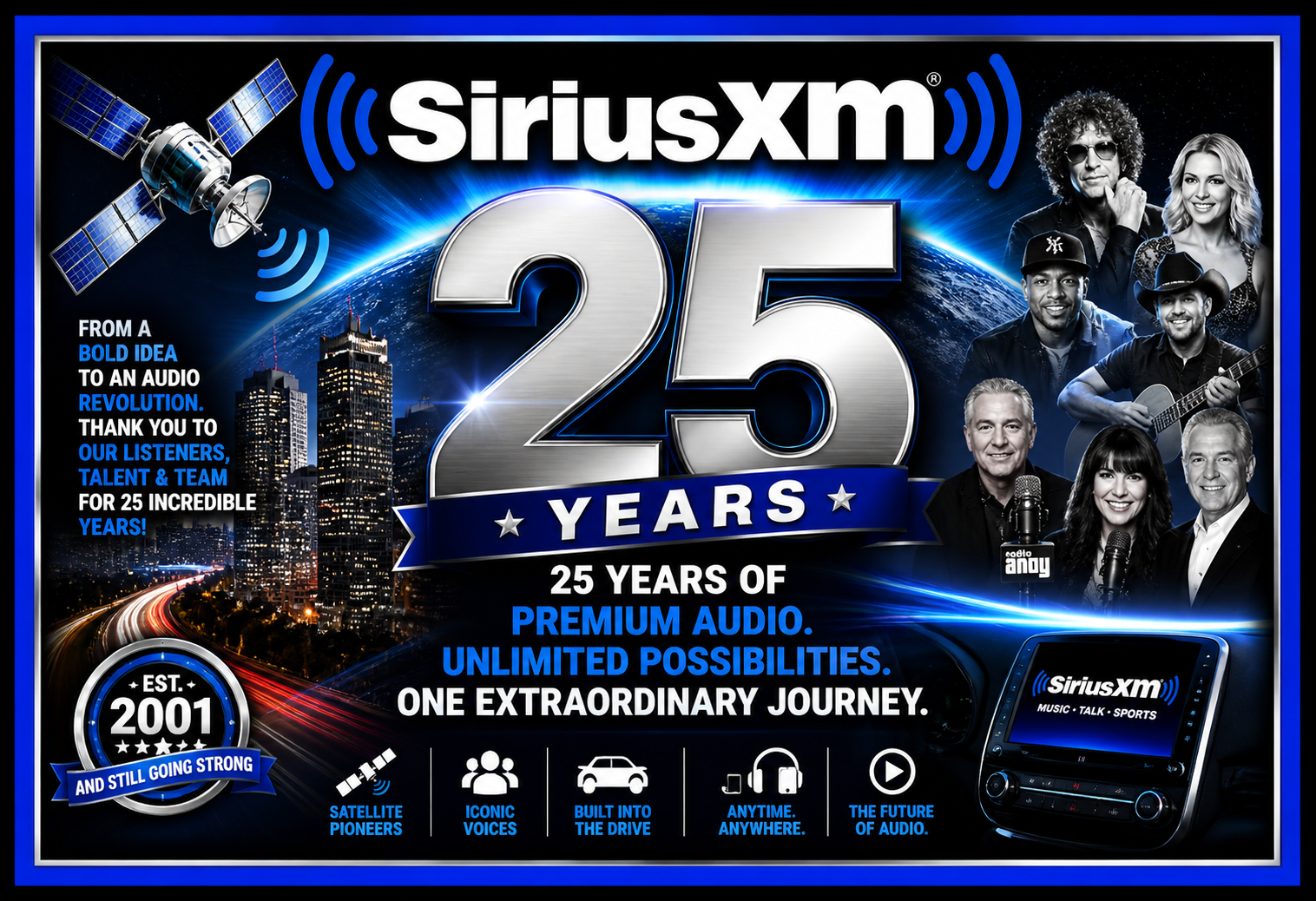
Twenty-five years ago, it sounded like a gamble. A subscription radio service, delivered by satellite, asking listeners to pay for something they had always gotten for free. Today, that same idea has evolved into SiriusXM—a content engine, a distribution platform, and one of the most influential forces in audio.
This isn’t just an anniversary. It’s a reminder of how bold ideas—when backed by vision, talent, and relentless execution—can reshape an entire industry.
When Sirius launched in 2001, it didn’t walk into a friendly environment. Terrestrial radio was dominant. Streaming wasn’t even a factor yet. And yet, Sirius leaned into something different: premium, curated, personality-driven audio with national reach and no geographic limits. It wasn’t about competing station by station—it was about building something bigger than the dial itself.
And then came the move that changed everything—recruiting.
Sirius didn’t just hire talent. It hunted it. It attracted voices that mattered, personalities who already had built-in audiences, and creators who wanted freedom from traditional constraints. The company brought in names that could move the needle instantly, turning channels into destinations instead of placeholders.
The strategy was simple, but powerful: if you build it with the right voices, the audience will follow.
That philosophy helped lay the groundwork for what would become the defining moment in its history—the merger with XM Satellite Radio in 2008. Two competitors became one, and in that moment, SiriusXM didn’t just survive—it scaled. The combined platform created a deeper content bench, broader distribution, and a stronger foothold in the automotive space, where satellite radio became embedded in the listening experience for millions of drivers.
But the story doesn’t stop there.
As streaming began to reshape how audiences consumed audio, SiriusXM didn’t sit still. It expanded. It adapted. It acquired. The purchase of Pandora brought a massive digital footprint and ad-supported scale. Investments in podcasting and on-demand content pushed the brand further into the evolving audio ecosystem. What started as a satellite play became a multi-platform powerhouse.
Through it all, one thing remained consistent—content first.
SiriusXM built its identity on exclusivity and access. Live sports. Talk. Music curated by artists themselves. Channels that felt less like frequencies and more like communities. It created an environment where listeners weren’t just tuning in—they were opting in. That distinction matters.
And let’s talk about the cars.
No other platform leveraged the dashboard like SiriusXM. Being pre-installed in vehicles turned discovery into habit. Drivers didn’t have to search for it—it was already there, waiting. That quiet advantage became a massive growth engine, locking in audience share mile after mile.
Now, 25 years in, SiriusXM sits in a different position than it did at launch—but the DNA is the same. Big swings. Big names. Big ideas.
The company that once asked, “Will people pay for radio?” is now asking, “What does audio become next?”
Because if history has proven anything, it’s this—SiriusXM doesn’t just follow the evolution of audio. It pushes it.
Twenty-five years later, the signal is still strong. Louder, broader, and more powerful than anyone could have imagined when it all began.
On The Dial covers breaking radio industry news, including layoffs, programming changes, talent moves, and broadcast trends across the United States.