


From the Publisher | Steven D. Mills | On The Dial | November 4, 2026
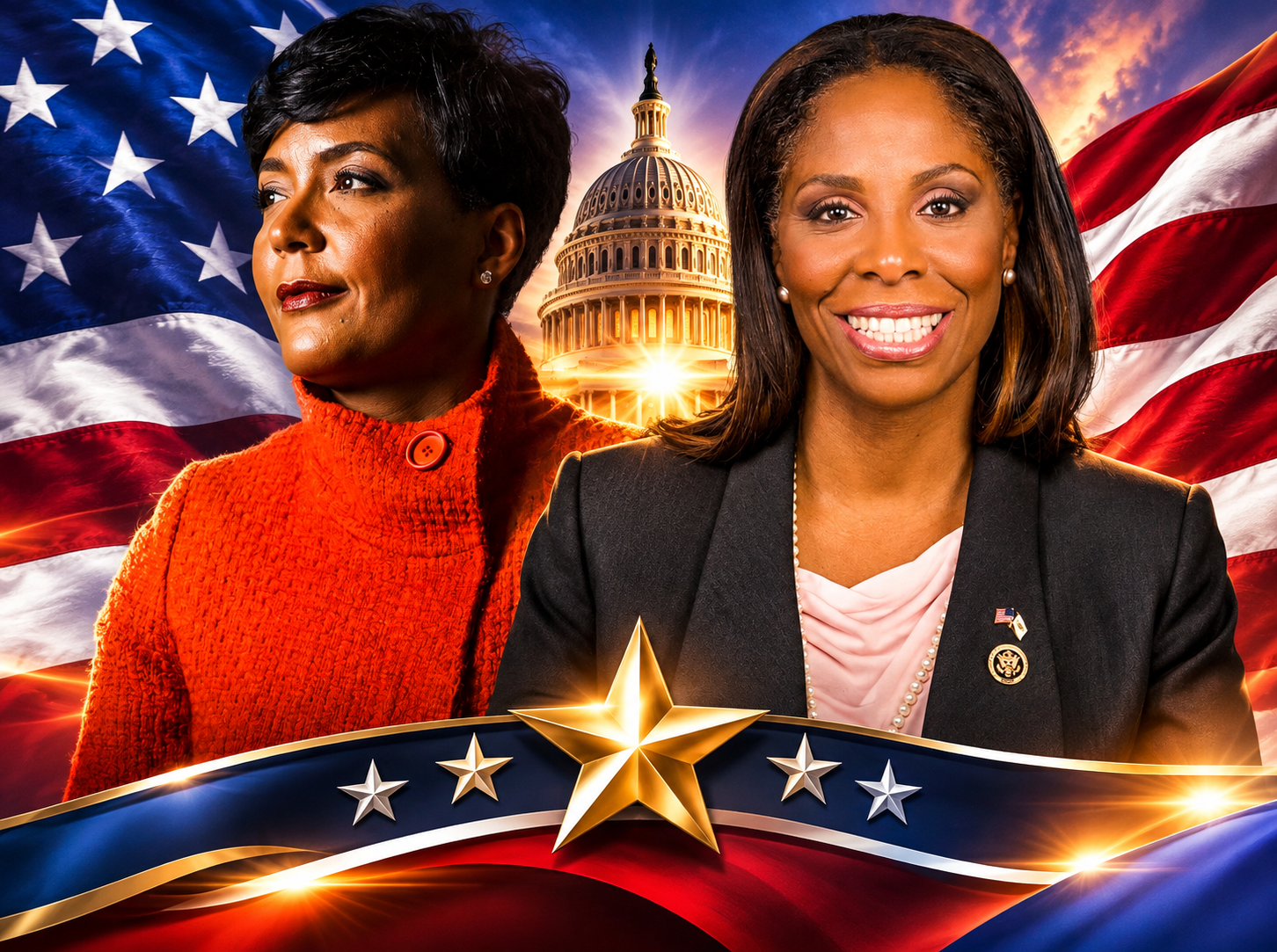
Election Night 2026 delivered a remarkable chapter in American political history, and by the time the television networks, radio stations, newspapers, and digital newsrooms finished celebrating the country’s first Black woman elected governor of a state, another historic victory deserved a much larger share of the spotlight. Keisha Lance Bottoms had won in Georgia, Stacey Plaskett had won in the U.S. Virgin Islands, and suddenly America had two groundbreaking political stories unfolding on the same night. The problem wasn’t that either woman lacked historical significance. It was that the headlines didn’t always explain why both victories mattered.
And somewhere in the middle of all that history, I found myself asking a question.
Did America just celebrate one historic first while overlooking another?
Because there’s a difference between being the first Black woman elected governor of a state and the first Black woman elected governor of a U.S. jurisdiction.
And that difference matters.
Especially if you happen to live in a place that America sometimes seems to remember only when a hurricane is approaching.
Two Women Two Victories Two Different Firsts
Let’s get the history right before somebody turns this into an argument about which woman deserves the bigger trophy.
Former Atlanta Mayor Keisha Lance Bottoms defeated Republican Rick Jackson in Georgia’s gubernatorial election.
Her victory made her the first Black woman elected governor of one of America’s fifty states.
That’s historic.
It’s significant.
And it deserves recognition.
But on that same Election Night, Stacey Plaskett won the gubernatorial election in the United States Virgin Islands.
Plaskett’s victory made her the first woman elected to lead the territory, and the first Black woman elected governor of a U.S. jurisdiction.
That is also historic.
And it deserves recognition.
Neither woman’s achievement needs to be diminished to recognize the other’s.
The distinction isn’t about which victory counts more. It’s about understanding what each woman accomplished.
Georgia is a state.
The U.S. Virgin Islands is an American territory.
Both are part of the American political story, but they occupy different constitutional and governmental positions.
And that distinction is precisely why the headlines need to be accurate.
The Virgin Islands Are Not Some Foreign Country
Here’s where I think we need to have a little conversation about how America talks about itself.
The U.S. Virgin Islands are an American territory.
People born there are generally United States citizens.
The territory has its own elected governor, legislature, and local government.
Its residents participate in American civic life, although they do not enjoy all the same federal voting rights as residents of the fifty states.
For example, residents of the territory cannot vote for president in the general election unless they establish voting residence in a state or the District of Columbia.
That’s an important difference.
But it doesn’t make their political achievements irrelevant.
And it certainly doesn’t make their history less American.
When Stacey Plaskett won the governor’s race, voters in the Virgin Islands made history.
Not imaginary history.
Not honorary history.
American history.
And if national media outlets are going to celebrate representation, they should be precise enough to recognize the achievements of Americans who live outside the fifty states.
You cannot tell the complete American story while leaving some Americans out of the headline.
And Radio Ought to Understand This Better Than Anybody
Now, here’s where my radio background comes into the conversation.
I’ve spent a substantial part of my professional life working in broadcasting, and one of the most important lessons this industry taught me is that geography does not determine whether a community’s story matters.
A station in Atlanta may serve millions of listeners.
A station in a smaller market may serve a fraction of that audience.
A broadcaster in the Caribbean may be thousands of miles from a major mainland newsroom.
But every one of those communities has people whose lives, concerns, accomplishments, and history deserve attention.
That’s why local radio matters.
And that’s why the broadcasting industry should care about the way national stories are framed.
Radio has always been more than a collection of frequencies and transmitters.
At its best, it connects people to the places they call home.
It gives communities a voice.
It recognizes accomplishments that might otherwise disappear beneath the weight of national headlines.
And sometimes, it reminds the rest of the country that an important story is happening somewhere other than New York, Washington, Los Angeles, or Atlanta.
The Virgin Islands have their own broadcasters, journalists, and media organizations covering their communities.
Their work matters.
And when a historic election occurs there, national broadcasters have an opportunity to help bring that story to a wider audience.
A great broadcaster doesn’t just repeat the biggest headline. A great broadcaster recognizes the story the biggest headline might have missed.
That’s the opportunity here.
Before Keisha and Stacey There Was a Much Longer History
And since we’re talking about firsts, let’s go back even further.
In 1872, P. B. S. Pinchback became acting governor of Louisiana during Reconstruction.
He is widely recognized as the first African American to serve as governor of a U.S. state, although his tenure was brief and he was not elected to the governorship itself.
More than a century later, L. Douglas Wilder of Virginia became the first Black American elected governor of a state.
He won in 1989 and took office in January 1990.
Those distinctions matter, too.
One was the first to serve.
The other was the first elected.
And now, in 2026, another set of historical distinctions has emerged.
Keisha Lance Bottoms broke a barrier in state government.
Stacey Plaskett broke a barrier in territorial government.
Different offices.
Different electorates.
Different historical firsts.
But part of a larger American story about political representation.
If we’re going to teach history, report history, and celebrate history, we ought to get the details right.
Because history is not improved by making it simpler than it actually was.
A Historic Election Doesn’t End the Political Debate
There is another point worth making.
These victories are historic regardless of whether a voter agrees with either woman’s political positions.
Bottoms, a Democrat, campaigned on issues including Medicaid expansion, affordability, and changes to Georgia’s tax policies.
Her Republican opponent, Rick Jackson, emphasized issues including taxes, public safety, and regulation.
Voters made their choice.
Now Bottoms faces the responsibility of governing, including working with lawmakers who may disagree with her proposals.
Plaskett will likewise face the practical responsibilities of governing the Virgin Islands.
Historic representation is one part of their stories.
Their records in office will become another.
Both deserve serious coverage.
And both deserve the same scrutiny, accountability, and factual reporting that journalists should apply to any governor.
Making history gets you into the history books. Governing determines what the next chapters will say.
So Who Was First
That depends on the precise question.
If you’re asking who became the first Black woman elected governor of one of the fifty U.S. states, the answer is Keisha Lance Bottoms.
If you’re asking who became the first Black woman elected governor of a U.S. jurisdiction, the answer is Stacey Plaskett.
Both victories occurred on November 3, 2026.
Without verified election-call timestamps establishing which result was determined first, it would be misleading to declare one woman the chronological winner of some imaginary race for historical recognition.
And frankly, why would we want to?
This isn’t a radio ratings war where somebody gets to claim they’re number one because they found a slightly different way to define the market.
We’re talking about history.
Two women broke significant barriers.
We can acknowledge both without turning either into a footnote.
Dear National Media There Is More to America Than Fifty States
The larger lesson for broadcasters and publishers is straightforward.
Words matter.
Geography matters.
Context matters.
And historical accuracy matters.
When we say someone is the first, we should explain the category.
First elected?
First to serve?
First woman?
First Black woman?
First governor of a state?
First governor of a U.S. territory?
Those aren’t interchangeable descriptions.
And when journalists fail to explain them, audiences can walk away with an incomplete understanding of what happened.
For a broadcasting industry that prides itself on connecting communities, that’s an especially important responsibility.
A newsroom doesn’t need to diminish Georgia’s achievement to recognize the Virgin Islands.
It simply needs to tell both stories.
So congratulations to Keisha Lance Bottoms.
Congratulations to Stacey Plaskett.
And congratulations to the voters whose decisions created these two chapters of American political history.
The election is over.
The responsibilities of governing are beginning.
And the historical record deserves to be written accurately from the start.
America didn’t have to choose which woman’s history mattered. It had room for both.
And so should the headlines.
At On The Dial, we believe broadcasters have a responsibility to tell the complete story, especially when communities outside the national spotlight are making history. The microphone is powerful, but accuracy is what gives it credibility.
Steven D. Mills
Publisher, On The Dial
A PERSONAL NOTE FROM THE PUBLISHER
I’m Pastor Steven D. Mills, publisher of On The Dial, a two-time cancer survivor, and a Kansas pastor now fighting end-stage kidney failure. Because of my previous cancer treatments, I’m extremely highly sensitized, making the search for a compatible kidney donor extraordinarily difficult. Millions have heard my story, but the ONE person who could save my life may not have seen it yet.
I’m fighting to be here for my wife, my daughter, my family, and the people I love. I’m not ashamed to ask for help, because I’m not finished living!
❤️ Could you be my ONE? Learn about living kidney donation and share my story at https://FindMyOne.org.
🙏 Want to help financially? Josh Liljenquist organized a GoFundMe to help with my dialysis, medical expenses, and the enormous costs associated with this fight.
Josh’s GoFundMe:
https://www.gofundme.com/f/help-pastor-steven-fight-for-his-life-p74hx
YOU DON’T HAVE TO BE MY ONE TO HELP ME FIND MY ONE!
Thank you for helping me fight for more tomorrows.
Pastor Steven D. Mills
Publisher, On The Dial
#DoYouSeeMe #LoveOutLoudHashtags
#OnTheDial #StevenMills #StaceyPlaskett #KeishaLanceBottoms #Election2026 #BlackHistory #BlackWomenInLeadership #USVirginIslands #GeorgiaPolitics #AmericanHistory #RadioNews #BroadcastJournalism #MediaAccountability #HistoryMatters