


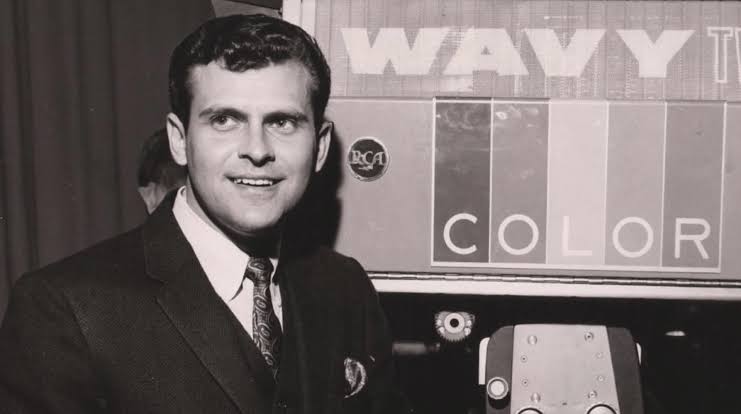
ON THE DIAL | REMEMBERING A BROADCASTING LEGEND
There was a time when a radio personality could become as familiar to a community as the neighbor across the street. Listeners knew the voice before they knew the face, recognized the laugh before the punchline, and trusted that the same person would be waiting for them when the alarm clock went off the following morning. In Hampton Roads, Virginia, Dick Lamb was one of those rare broadcasters who became part of the daily rhythm of an entire region. His career stretched across formats, ownership changes and generations of listeners, and his passing at 88 marks the loss of a remarkable figure in Virginia radio history.
Lamb was much more than a recognizable voice. He was a programmer, station owner, morning-show personality and broadcast executive whose influence helped shape the sound of Norfolk and the surrounding Hampton Roads communities for decades.
He belonged to a generation of radio professionals who didn’t simply work at stations.
They helped build the institutions that listeners came to love.
A Career That Began When Radio Was King
Lamb’s broadcasting journey in the Norfolk market began during the 1960s at WGH 1310, a Top 40 powerhouse during an era when AM radio was central to popular music and youth culture.
It was a different world.
There were no streaming playlists, social media algorithms or smartphones delivering an endless supply of entertainment.
The radio was often where people discovered their favorite records, heard the latest local happenings and developed relationships with personalities they might never meet in person.
Successful broadcasters had to understand more than music.
They had to understand people.
Timing mattered. Personality mattered. Local knowledge mattered.
And Lamb developed those qualities into a career that would extend far beyond the microphone.
His years at WGH helped establish his presence in the market, but his next major chapter would demonstrate that he had ambitions extending into station ownership and management.
Building a Station That Became Part of Hampton Roads
In 1978, Lamb and fellow broadcaster Gene Loving joined forces through Max Media to establish WWDE, known to listeners as 101.3 2WD.
The Adult Contemporary station would become an important part of the region’s radio landscape, and Lamb took on a particularly visible role as its morning personality.
This was the kind of arrangement that made radio fascinating.
Lamb wasn’t simply showing up for an airshift.
He had a direct interest in the operation’s success, its programming and its long-term relationship with the community.
He understood the business from both sides of the studio glass.
That combination of ownership experience and on-air credibility gave him a perspective that relatively few broadcasters possess.
For listeners, however, the business arrangements were secondary.
They heard Dick Lamb.
And for years, that familiar voice helped define their mornings.
The station eventually changed ownership when it was sold to Entercom in 1998, but Lamb continued hosting mornings.
That continuity says something important about the relationship between a broadcaster and an audience.
Formats can evolve.
Ownership can change.
Call letters can move.
But a personality who has earned the trust of listeners can remain one of a station’s most valuable assets.
The Voice Moved but the Relationship Continued
Lamb remained with WWDE until January 2005, when Max Media acquired its Norfolk-area cluster and brought him into the organization as Director of Operations.
The move placed him in another significant leadership role, overseeing station operations while drawing upon decades of experience in programming and broadcasting.
Following the expiration of his noncompete agreement, Lamb returned to the morning microphone at WVBW, 92.9 The Wave.
For Hampton Roads listeners, it meant another opportunity to begin their days with someone they had known through the radio for years.
For the industry, it demonstrated the staying power of an established local personality.
A broadcaster doesn’t remain relevant across multiple decades simply because of name recognition.
Audiences change.
Music changes.
Technology changes.
And the competitive environment can look completely different from one decade to the next.
Yet Lamb continued finding ways to connect.
He remained part of The Wave’s morning programming until stepping away from that role in January 2019.
By then, his career had already encompassed a remarkable span of radio history.
But he wasn’t finished.
One More Return to Familiar Call Letters
After leaving mornings at The Wave, Lamb spent time as Program Director and midday host at Oldies 1310 WGH.
There is something especially meaningful about that final chapter.
The same call letters associated with his early broadcasting years became part of his later professional life.
WGH represented a connection to the era when his Norfolk career began, and his return offered a fitting link between radio’s past and its present.
For someone who had worked through so many changes in broadcasting, returning to a familiar station identity carried a certain symmetry.
He had experienced radio as a young personality, an owner, a programmer, an executive and a veteran broadcaster.
Few careers encompass that much of the industry’s history.
And fewer still remain so closely connected to one region.
What Dick Lamb Represented
The significance of Lamb’s career extends beyond the number of stations where he worked.
He represented a tradition of local broadcasting in which personalities became deeply associated with the communities they served.
Listeners didn’t necessarily think about ownership groups or programming strategies.
They thought about the people who accompanied them to work.
The voices that played in kitchens while families prepared breakfast.
The personalities who provided familiar company during difficult mornings.
The broadcasters who helped make a city feel connected.
That kind of relationship cannot be manufactured overnight.
It requires consistency, credibility and years of showing up.
Lamb’s career also offers a reminder that some of broadcasting’s most influential people have worn several hats.
He knew the pressure of delivering an entertaining morning show.
He understood the responsibility of programming a station.
And he experienced the financial and operational realities of station ownership.
Those experiences helped make him a significant figure in the Hampton Roads broadcasting community.
An Industry That Should Remember Its Builders
Radio is moving through another period of enormous change.
Stations are experimenting with artificial intelligence, expanding digital platforms, restructuring operations and reconsidering the economics of local programming.
Those developments are important.
But as the industry looks toward its future, it should also remember the broadcasters who helped establish its foundations.
People like Dick Lamb demonstrated what local radio could become when a station developed a lasting relationship with its audience.
His career reminds us that broadcasting history isn’t written exclusively by national personalities or major corporate executives.
It’s also written by the men and women who spend decades serving individual communities.
They know the streets.
They know the neighborhoods.
They understand the people.
And eventually, their voices become part of a city’s collective memory.
That is an extraordinary achievement.
The Microphone Is Silent but the Memories Remain
For Hampton Roads, the passing of Dick Lamb represents the loss of a familiar broadcasting presence whose career touched multiple generations.
For colleagues, it marks the departure of someone who understood the industry from nearly every angle.
And for radio professionals everywhere, his life offers a meaningful reminder of what a long and consequential broadcasting career can look like.
There will be stories shared about his years at WGH.
Memories of the early days of 2WD.
Recollections of mornings on The Wave.
And undoubtedly countless personal moments that never made it onto the air.
Those memories belong to the people who worked beside him and the listeners who welcomed him into their homes.
They are also part of the history of Virginia broadcasting.
On The Dial extends its condolences to Lamb’s family, friends, former colleagues and the Hampton Roads radio community.
Dick Lamb spent decades helping Hampton Roads wake up, tune in and feel connected.
Today, the region remembers the man behind that familiar voice.
And somewhere in the memories of countless listeners, the radio is still playing.
Rest in peace, Dick Lamb. Thank you for everything you gave to radio.
On The Dial remembers the broadcasters, programmers, executives and personalities whose contributions helped shape the American radio industry.
Hashtags
#DickLamb #OnTheDial #NorfolkRadio #HamptonRoads #RadioLegend #WWDE #WGH #TheWave #BroadcastingHistory #RadioIndustry #RememberingRadio