


ON THE DIAL | SPECIAL COMMENTARY | NOVEMBER 10, 2026
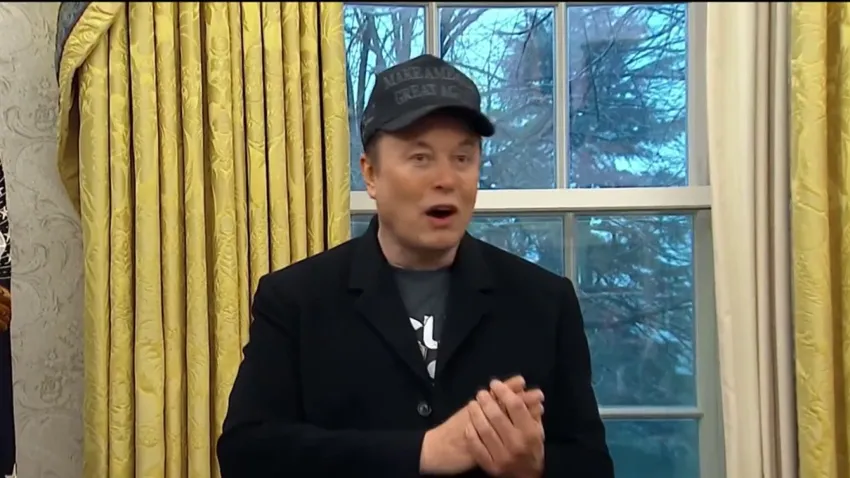
Elon Musk may soon find himself facing something considerably less exciting than a rocket launch, a technological breakthrough or another ambitious announcement about the future of artificial intelligence. Following the November midterm elections, congressional Democrats are preparing to investigate his activities involving the federal government, and several lawmakers have expressed interest in putting the billionaire entrepreneur under oath. The prospect is already generating political fireworks, but there’s a much larger conversation worth having about accountability, innovation and the extraordinary influence of one of the world’s most consequential technology executives.
And somewhere in the middle of all this, there’s a question that deserves consideration.
Can America demand accountability from its most powerful innovators without turning every disagreement into a political war?
That question is considerably more important than whichever political party gets the most applause during the next congressional hearing.
Washington Is Preparing to Turn Up the Heat
The political landscape changed dramatically following the 2026 midterm elections, and Democrats are preparing to exercise congressional investigative authority when the new Congress convenes in January.
Among their potential targets is Musk, whose involvement with the Department of Government Efficiency and whose companies’ relationships with the federal government have attracted substantial scrutiny.
Representative Robert Garcia of California, expected to lead the House Oversight Committee, has indicated that lawmakers want answers about Musk’s government activities.
Other Democrats have raised concerns involving federal contracts, potential conflicts of interest, government workforce reductions and the handling of sensitive information.
Those are legitimate subjects for congressional oversight.
Taxpayers deserve to know how public resources are being used, whether government officials are following the law and whether private business interests have improperly influenced public decisions.
Nobody should receive immunity from reasonable scrutiny simply because they’re wealthy, influential or technologically gifted.
Not Musk.
Not another corporate executive.
Not an elected official.
But accountability and political retaliation are not the same thing.
And Americans should expect their representatives to understand the difference.
Before We Reduce Elon Musk to Another Political Target
Consider what Musk’s companies have accomplished.
SpaceX has helped reshape the economics of spaceflight through reusable rocket technology.
Starlink has expanded satellite internet connectivity into areas where conventional infrastructure can be difficult to establish.
Tesla helped accelerate the commercial development and adoption of electric vehicles.
And Musk’s ventures in artificial intelligence, robotics and other emerging technologies continue to influence conversations about what the future might look like.
None of those accomplishments makes him infallible.
None establishes that every business decision has been wise or every government action appropriate.
But they do demonstrate that Musk is more than a political personality who occasionally generates controversy on social media.
He’s an entrepreneur whose companies operate in industries with enormous implications for American infrastructure, technological competition and national capabilities.
That deserves recognition, regardless of whether someone agrees with his politics.
America should be capable of examining Musk’s conduct without pretending his contributions to technological innovation are irrelevant.
And it should be equally capable of recognizing those contributions without dismissing legitimate concerns about his conduct.
Those principles are not mutually exclusive.
What Does Any of This Have to Do With Radio?
More than some broadcasters might initially realize.
Musk owns X, a platform where broadcasters, journalists, public officials and millions of Americans exchange information every day.
His companies also operate in communications technologies, including satellite connectivity, that are part of the broader infrastructure conversation affecting media distribution.
And perhaps most importantly, his position illustrates a challenge confronting the entire communications industry.
What happens when the people who control powerful technologies become central figures in political controversies?
Broadcasters understand the importance of public trust.
Radio operates within a regulatory environment shaped by Congress, the Federal Communications Commission and federal law.
Station owners have spent decades navigating the relationship between private enterprise and public responsibility.
That relationship becomes more complicated when government oversight and political disagreements begin to overlap.
For radio, the lesson isn’t that technology executives should be exempt from scrutiny.
It’s that media organizations must distinguish verified facts from political theater.
When lawmakers announce an investigation, broadcasters should explain what is actually being investigated.
When executives respond, their statements deserve accurate reporting.
When allegations are made, audiences should understand that allegations are not findings.
And when hearings occur, the questions and evidence should matter more than whichever exchange produces the most viral video clip.
Radio’s greatest contribution to this conversation may be something increasingly valuable in American public life: providing context instead of simply amplifying conflict.
That is a responsibility worth taking seriously.
The Danger of Turning Oversight Into Entertainment
Congressional hearings can serve an important public purpose.
They can uncover misconduct, establish facts and help lawmakers determine whether reforms are necessary.
But hearings can also become political spectacles.
An aggressive question generates a headline.
A dramatic exchange becomes a social media clip.
A witness’s reaction becomes more important than the substance of the testimony.
And suddenly, the public conversation shifts from discovering facts to deciding which side delivered the most memorable performance.
That’s a danger regardless of which political party controls Congress.
If lawmakers investigate Musk, they should pursue specific questions, examine credible evidence and provide him a fair opportunity to respond.
If wrongdoing is established, appropriate consequences should follow.
If allegations are unsupported, the public deserves to know that too.
What the country doesn’t need is an investigation designed primarily to entertain political audiences.
Because the purpose of congressional oversight should be to protect the public interest.
Not to produce the next great cable news shouting match.
The Future of Innovation Is Bigger Than One Man
There’s another reason this conversation deserves care.
America is entering a period when technological development could fundamentally change transportation, communications, manufacturing, medicine and the way people live.
Artificial intelligence is advancing rapidly.
Robotics is moving into new applications.
Space exploration continues to evolve.
And biomedical researchers are exploring possibilities that once sounded like science fiction.
The United States needs thoughtful policies that encourage responsible innovation while protecting public safety, competition and accountability.
Musk is one influential participant in that larger technological ecosystem.
His companies are important, but American innovation extends far beyond any single executive.
That is why congressional oversight and technological progress should not be treated as opposing objectives.
The country needs both.
And it needs leaders who can recognize the difference between challenging an executive’s decisions and undermining the broader scientific and technological work that benefits society.
And Now a Very Personal Request to Elon Musk
This is where the story becomes personal, and where the publisher of On The Dial is stepping away from the usual discussion of broadcasting and technology.
My name is Steven D. Mills.
I’ve spent much of my professional life in radio and television, and today I also serve as a pastor, husband and father.
I’ve survived cancer twice.
I underwent a bone marrow transplant during my fight against Hodgkin’s lymphoma, and the treatments that helped save my life contributed to the kidney failure I’m living with today.
I’m now on dialysis, searching for an extraordinarily rare compatible kidney.
My cPRA is 99.9999%, making finding a suitable donor exceptionally difficult.
And yes, I’ve been trying to reach Elon Musk.
Not because I want to talk politics.
Not because I’m looking for a photograph with a billionaire.
And certainly not because I have any interest in becoming part of another political controversy.
I want to live.
I’ve watched Musk’s companies tackle technological challenges that many people once considered impossible.
And I keep coming back to one question.
If we can develop reusable rockets, sophisticated artificial intelligence and machines capable of extraordinary precision, could some of that technological ingenuity eventually help people like me who are running out of options?
Could advanced biomedical engineering help produce a compatible kidney?
Could artificial intelligence help researchers identify solutions for patients with exceptionally difficult transplant compatibility?
Could the people developing tomorrow’s technologies help accelerate the medical breakthroughs patients need today?
I know that printing a fully functional human kidney suitable for transplantation is not an established clinical treatment. Researchers are still working toward that goal.
But the research is real.
In January 2026, the federal Advanced Research Projects Agency for Health announced awards through its PRINT program, which aims to develop personalized, bioprinted human organs. Among the funded efforts is work involving engineered kidney tissue.
That doesn’t mean a transplantable printed kidney is available today.
It means scientists are pursuing possibilities that could someday transform transplantation.
And when you’re living with kidney failure, someday is a word you desperately hope becomes sooner.
So, Elon, I’m asking.
Can you help me find a kidney?
And if you can’t help me find one, could you help connect me with the scientists, engineers, researchers or innovators working toward the day when one could be created?
I don’t know whether you’ve personally read my messages. I’ve seen replies and activity that have encouraged me to keep reaching out, but I haven’t received a direct response from you.
I understand you’re an extraordinarily busy man.
But I’m hoping this message reaches you.
Because while Washington is preparing to ask you some difficult questions, I’m asking you one that matters enormously to my family.
Can you help me stay alive?
My story and living donor information are available at:
America Needs Answers and It Needs Vision
The coming congressional investigations may reveal important information about Musk’s government involvement.
They may produce difficult questions.
They may result in policy changes.
Or they may establish that some concerns were overstated.
The evidence should determine the conclusions.
But as this process unfolds, Americans should resist the temptation to view every disagreement through the narrow lens of partisan victory or defeat.
A country that values accountability should investigate credible concerns.
A country that values innovation should recognize genuine achievement.
And a country that values its future should be able to do both without abandoning fairness.
As for broadcasting, this is an opportunity to demonstrate why thoughtful journalism still matters.
Report the facts.
Ask difficult questions.
Challenge unsupported claims.
Give audiences meaningful context.
And remember that behind every headline are decisions that can affect real people.
Including people who are hoping technology might someday save their lives.
Elon Musk may be preparing to answer questions under oath in Washington. I’m still hoping he’ll answer one very different question from a pastor in Kansas.
Elon, I need help finding—or one day printing—this kidney.
Can you help?
FindMyOne.org
On The Dial — Special Commentary
Hashtags
#ElonMusk #OnTheDial #Innovation #CongressionalOversight #FutureOfTechnology #FindMyOne #DoYouSeeMe #LoveOutLoud #KidneyTransplant #BroadcastJournalism