


FROM THE PUBLISHER | STEVEN D. MILLS | ON THE DIAL
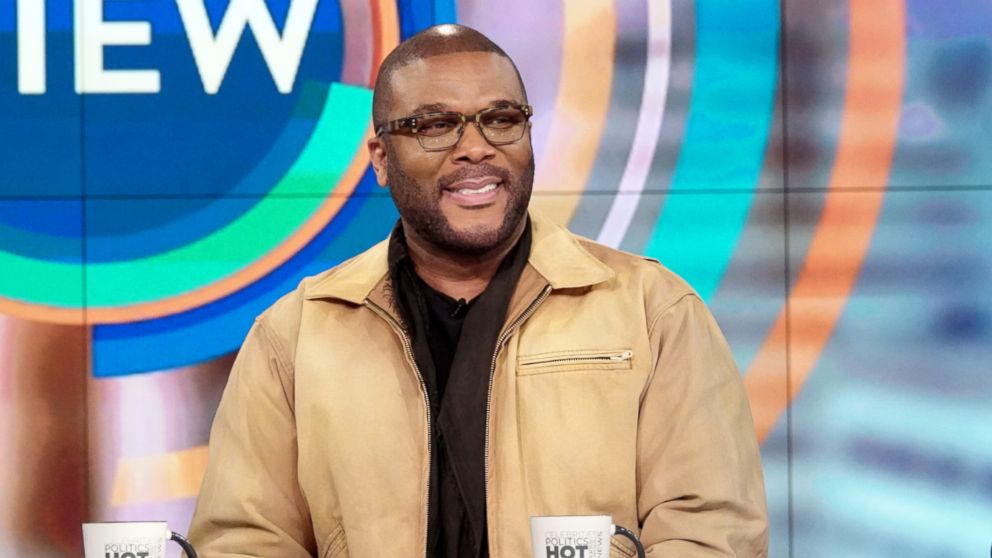
Somewhere between Hollywood, Atlanta and the Georgia State Capitol, Tyler Perry has managed to produce a political storyline that might be more fascinating than anything he’s ever put on television. The man who turned a handful of stage productions into a billion-dollar entertainment empire is now helping prepare the administration of Georgia’s next governor, Keisha Lance Bottoms. And while everybody else is busy celebrating another historic political moment, I’m sitting here looking at the bigger picture and asking a question that could launch a thousand radio talk shows: Could Tyler Perry eventually trade the director’s chair for the Oval Office?
Before somebody calls the Secret Service to reserve a parking space for Madea, understand something.
Tyler Perry has not announced that he’s running for president.
He hasn’t announced a campaign for governor, senator or dogcatcher, either.
In fact, back in 2016, Perry explicitly said he would never run for president.
But that was ten years ago.
And ten years ago, Tyler Perry wasn’t helping organize the transition of the first Black woman elected governor of an American state.
So perhaps the more interesting question isn’t whether Tyler Perry wants to become president. It’s whether his newest chapter might change the way he thinks about public service.
Wait a Minute Tyler Perry Is Actually Helping Run a Political Transition?
Yes. And this is where the story gets interesting.
On November 6, Governor-elect Keisha Lance Bottoms announced that Perry would serve as one of the co-chairs of Georgia’s Promise, the transition effort preparing her administration to take office in January.
He joins an impressive collection of business, civic and political leaders, including Arthur Blank, Rosalind Brewer, Jason Carter and Michelle Nunn.
That’s a serious room.
We’re talking about people with extensive experience in business, government, economic development and public leadership.
And sitting among them is the man who gave America Madea.
Somewhere, somebody is probably wondering whether the next Georgia budget meeting will begin with a script reading.
It won’t.
Because beneath the jokes is a serious development.
Perry has accepted a formal role in the preparation of an incoming state administration. Transition teams help identify leadership, evaluate priorities and prepare government operations.
This isn’t a cabinet appointment, and it doesn’t make Perry an elected official.
But it gives him a direct opportunity to observe how political leadership works from the inside.
And that is an experience no Hollywood soundstage can fully reproduce.
The Man Has Already Built Something Most Politicians Can Only Dream About
Let’s examine why Perry’s involvement deserves attention.
He didn’t inherit a major Hollywood studio.
He built an entertainment enterprise through an unusual combination of writing, producing, directing, ownership and audience development.
He recognized a market that traditional entertainment companies had often underestimated.
He understood how to speak directly to that audience.
He developed a recognizable brand, expanded it across multiple platforms and established a substantial production operation in Atlanta.
He has also engaged in philanthropic work, giving him experience with needs that extend beyond the entertainment business.
Those accomplishments don’t automatically qualify anyone to govern.
Running a business and running a government involve very different obligations, including constitutional limits, public accountability and competing interests.
But Perry’s experience raises worthwhile questions about how skills developed in entertainment might translate into public service.
Could he contribute to economic development?
Workforce training?
Film and television production policy?
Arts education?
Entrepreneurship?
Absolutely, those are plausible areas for an adviser with his background.
And if he eventually became interested in a more permanent government position, those would be reasonable places to begin a conversation.
But no permanent appointment has been announced, and there is no verified evidence that Perry is seeking one.
Now Let’s Talk About That White House Question
I can already hear the phones lighting up at talk radio stations across America.
“Steven, are you seriously suggesting Tyler Perry could run for president?”
I’m suggesting that America has reached a point where the old assumptions about who enters politics no longer explain every possibility.
Ronald Reagan was an actor before becoming governor of California and eventually president.
Donald Trump built a national identity through business and television before winning the presidency.
Those examples do not mean Perry would follow the same path or achieve the same results.
They simply demonstrate that a career outside government does not prevent someone from pursuing its highest office.
Perry’s age and American citizenship would not present an obvious constitutional obstacle to a future presidential candidacy.
He has national name recognition, experience managing a large organization and an established media platform.
But a serious presidential effort would require much more.
He would need to articulate positions on foreign policy, national security, taxes, health care, education and the federal government’s responsibilities.
He would need to demonstrate how his leadership approach would function in public office.
He would face questions about his business interests, finances, public record and past controversies.
And he would have to decide whether he actually wanted the job.
That last question is rather important.
Because in a 2016 interview reported by The Atlanta Journal-Constitution, Perry said he would never seek the presidency.
His involvement in Georgia’s transition is not proof that he has changed his mind.
Still, there’s nothing unreasonable about asking whether a new experience in government could influence what he wants to do in the future.
That’s not announcing a campaign.
That’s recognizing a genuinely interesting development in the career of a major public figure.
But There Is Something Even Bigger Happening in Georgia
Think about the circumstances.
Keisha Lance Bottoms has just made American history by becoming the first Black woman elected governor of a state.
Her incoming administration faces substantial questions about affordability, education, health care, economic development and the state’s budget.
And among the people she has asked to help prepare that administration is one of America’s best-known entertainment entrepreneurs.
Perry’s inclusion places the creative economy directly inside a broader conversation about Georgia’s future.
That’s significant because Georgia is not merely a place where television shows and movies happen to be filmed.
Entertainment production is part of its economic identity.
Studios employ people.
Productions purchase services.
Businesses provide equipment, transportation, construction, catering, security and countless other services.
And media businesses rely on the advertising, promotion and cultural attention that entertainment generates.
Perry understands that ecosystem from the ownership side.
What happens if that experience helps inform conversations about Georgia’s workforce and creative industries?
What happens if the incoming administration places greater emphasis on media production, local content development or entertainment entrepreneurship?
Those are questions worth investigating.
Not predictions.
Not promises.
Questions.
And they’re questions broadcasters should be asking right now.
Radio May Be the Most Interesting Part of This Entire Story
Now let me explain why this belongs in On The Dial.
Because Tyler Perry’s rise offers one of the most important lessons the radio business could learn.
He understood the audience before the establishment fully understood its value.
Think about that.
For decades, radio programmers have debated formats, demographics, music selection, syndication, research and the elusive question of what listeners actually want.
Perry built an entertainment brand around audiences who connected deeply with his storytelling.
He understood cultural relevance.
He understood loyalty.
He understood that people respond when they feel recognized.
Does any of that sound familiar?
It should.
Because that’s what great radio has always done.
From Atlanta’s influential urban stations to the legendary personalities who helped build American country, rock, R&B and talk radio, this industry became powerful because it understood communities.
Not just markets.
Communities.
And here’s where I believe the radio industry needs to pay especially close attention.
Perry’s transition appointment creates a fascinating intersection of media ownership, entertainment economics, government policy and public communication.
Atlanta stations such as V-103, Majic 107.5/97.5, Hot 107.9 and WSB Radio operate in a city where entertainment and civic affairs are closely connected.
Their audiences have a direct interest in Georgia’s economic future.
Radio has an opportunity to ask what Perry’s participation could mean for the creative workforce, independent producers, advertising, local employment and the broader media economy.
And talk radio has an opportunity to move beyond the predictable shouting matches and examine what happens when a major entertainment entrepreneur enters public service.
Here’s a question I would love to hear asked on a national broadcast:
If Tyler Perry can build a media empire by understanding audiences others underestimated, what lessons could government learn from the way he built that relationship?
And here’s the equally important follow-up:
What does Perry still need to learn about government before anyone should seriously consider him for elected office?
Those are conversations worth having.
There’s Another Side of This Story and We Cannot Ignore It
With greater public influence comes greater public scrutiny.
Perry has faced serious allegations of sexual misconduct in civil lawsuits brought by former actors. He has denied wrongdoing, and the allegations should not be confused with findings of liability.
Any consideration of his future in public office would necessarily include examination of those legal matters, his business relationships and potential conflicts of interest.
That’s not unfair treatment.
That’s accountability.
It is the same standard we should expect for any influential figure who moves closer to government.
The public deserves a full picture, not simply a Hollywood highlight reel.
And Perry deserves the same presumption against treating unproven allegations as established facts that anyone else would receive.
The Question I Want Tyler Perry to Answer
Mr. Perry, you’ve already accomplished something remarkable.
You built a business.
You created opportunities.
You developed a platform that reaches audiences around the world.
And now you’ve accepted an invitation to help prepare the next administration in Georgia.
So I have three questions.
First, is this a one-time commitment to help Governor-elect Bottoms, or has it awakened a deeper interest in public service?
Second, would you consider accepting a permanent role in Georgia government if an opportunity aligned with your experience?
And third, you said in 2016 that you would never run for president.
Does that answer remain the same in 2026?
That’s the question I would put directly to Perry.
Not because I believe he is secretly planning a presidential campaign.
But because a decade has passed, his influence has expanded and he has now accepted a formal responsibility in a historic political transition.
And people are allowed to reconsider their ambitions.
One Final Thought From the Publisher
I have watched this industry spend years debating the future of radio while some of the most interesting developments in media have occurred outside our own corporate offices.
Tyler Perry is a reminder that powerful media businesses can be built through cultural understanding, ownership, persistence and a direct connection with audiences.
His new role in Georgia offers an opportunity to examine what happens when that experience meets the responsibilities of government.
Could he become a permanent adviser?
Possibly.
Could he someday pursue elected office?
The opportunity exists if he chooses to pursue it.
Could that office be the presidency?
Constitutionally, a future candidacy is possible. Politically and personally, the evidence does not establish that he wants it.
And that’s what makes the question so intriguing.
Because this isn’t a presidential announcement.
It’s the beginning of a new public-service chapter whose eventual direction remains unknown.
For now, Tyler Perry has a seat at Georgia’s transition table. Whether he ever wants a seat behind the Resolute Desk is a question only he can answer.
But if the man who built an entertainment empire ever decides to make that announcement, one thing is certain.
There won’t be a shortage of microphones waiting for him.
And On The Dial will have one ready.
Mr. Perry, the question is yours. Is Georgia’s Promise the beginning and the end of your political involvement, or the first chapter of something much bigger?
— Steven D. Mills
President and Publisher, On The Dial
On The Dial covers breaking radio industry news, including layoffs, programming changes, talent moves, and broadcast trends across the United States.
A PERSONAL NOTE FROM THE PUBLISHER — I COULD USE A TRANSITION OF MY OWN!
Speaking of Tyler Perry and transition teams, I’ve got a transition I’d love to make myself: from kidney failure to kidney transplant recipient! And while Governor-elect Keisha Lance Bottoms has assembled an impressive team, I’m still trying to assemble the one team that could save my life. Mr. Perry, if you’re reading this, I promise I’m not asking for a role in your next movie. Although at this point, I’d gladly audition for Madea Finds a Kidney!
All humor aside, I’m Steven D. Mills, President and Publisher of On The Dial, a two-time cancer survivor now fighting end-stage kidney failure. I’m on dialysis, searching for an extraordinarily rare compatible kidney donor, and facing enormous medical expenses. Millions have seen my story, but I’m still looking for that ONE person who could help save my life.
If you’re interested in becoming a living kidney donor, please visit https://FindMyOne.org. If you’d like to help with my medical expenses, you can contribute at https://gofund.me/add089661.
And Tyler, since you’re helping make history in Georgia, perhaps you could help me make a little history of my own. I don’t need the White House. I just need a kidney that works!
Millions have seen me. I’m looking for ONE.
Steven D. Mills | President and Publisher, On The Dial
Hashtags
#OnTheDial #TylerPerry #KeishaLanceBottoms #GeorgiaPolitics #TylerPerryForPresident #AtlantaRadio #BlackMedia #RadioIndustry #GeorgiaPromise #MediaAndPolitics #TylerPerryStudios #Broadcasting