


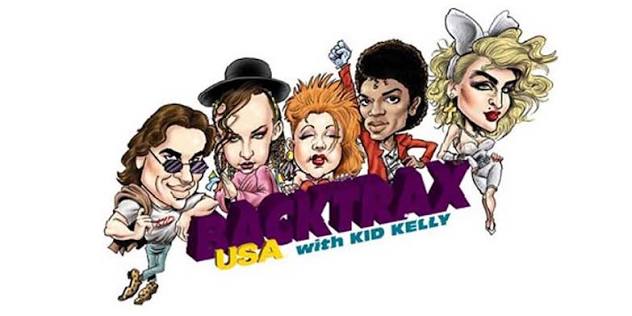
There are radio shows that fill a time slot, radio shows that build an audience, and then there are those rare programs that become part of the industry’s DNA. For nearly 34 years, Kid Kelly’s Backtrax USA has been a weekend institution, delivering the music, memories, energy and unmistakable personality of two extraordinary decades in pop culture. Now, with the final show scheduled for November 28, 2026, one of syndicated radio’s most recognizable brands is preparing to turn off the studio lights. And frankly, if this industry understands its own history, somebody ought to be arranging a standing ovation instead of simply searching for replacement programming.
Because this isn’t just another show ending.
This is the end of a program that helped teach American radio how to make yesterday sound exciting again.
Before Everybody Was Playing the 80s Kid Kelly Was Already There
Let’s travel back to December 1992.
Bill Clinton was preparing to enter the White House. CDs were king. MTV still played music videos. And radio programmers were busy trying to figure out what audiences wanted next.
Meanwhile, Kid Kelly had an idea.
What if somebody took the biggest hits of the 1980s, wrapped them in the energy of contemporary hit radio, added personality, production and memories, and turned the whole thing into a weekly national event?
That idea became Backtrax USA.
And it worked.
The original two-hour syndicated show launched in December 1992, featuring the decade’s biggest pop hits at a time when the 1980s were still relatively recent history.
Think about that.
Kelly wasn’t waiting for the music to become ancient enough to qualify for a museum exhibit.
He recognized that nostalgia could be exciting, contemporary and commercially valuable.
Madonna. Prince. Michael Jackson. Cyndi Lauper. Duran Duran. Whitney Houston. Bon Jovi.
The songs were familiar.
But the presentation made them feel alive.
And that was the genius of Backtrax.
Kid Kelly didn’t just play old records. He made listeners feel young again.
This Wasn’t Some Little Weekend Experiment
By 1998, Billboard reported that Backtrax USA was heard on more than 250 radio stations.
Two hundred and fifty.
At a time when programmers could be fiercely protective of their weekend schedules, Kelly had convinced stations across the country that an energetic, personality-driven nostalgia show deserved valuable airtime.
The program’s popularity even extended beyond terrestrial radio. A special version was produced for United Airlines aircraft, including Air Force One.
Imagine that.
While some radio personalities were trying to convince the program director to give them another weekend shift, Kid Kelly’s show was entertaining passengers at 35,000 feet.
Now that’s what I call market penetration.
In January 2003, Kelly expanded the concept with a 1990s edition, giving listeners another decade of memories and stations another programming option.
Suddenly, Backtrax wasn’t just about remembering the 1980s.
It was about preserving the soundtracks of entire generations.
Kid Kelly Was Never Just the Guy Hosting the Show
To appreciate the significance of this ending, you have to understand the man behind the microphone.
Kid Kelly built his career in an era when personality, production, timing and instinct could turn a good radio station into an extraordinary one.
His résumé includes influential years at New York’s legendary Z100, WHTZ, where he worked as an on-air personality and held programming leadership positions.
And anyone who understands the history of contemporary hit radio knows what that means.
Z100 wasn’t simply another set of call letters.
It was a laboratory for big personalities, enormous production values, memorable promotions and the kind of competitive radio that made other programmers listen nervously.
Kelly carried that understanding into Backtrax.
The show had energy.
It had movement.
It had identity.
It sounded like somebody cared about every second coming out of the speakers.
Later, Kelly became a major programming figure at Sirius Satellite Radio and SiriusXM, helping shape pop programming during an important period in satellite radio’s development.
His work included Sirius Hits 1 and other music channels.
In 2018, he was inducted into the National Radio Hall of Fame.
That honor recognized a career that had influenced radio far beyond one syndicated program.
Kid Kelly understood something that too many broadcasters have forgotten: music matters, but presentation is what turns a playlist into an experience.
Thirty Four Years Is Almost Unthinkable in Today’s Radio Business
Consider how much the industry has changed since Backtrax USA debuted.
We’ve watched the rise of the internet, satellite radio, streaming services, smartphones, podcasting, voice tracking and artificial intelligence.
We’ve seen stations change formats, ownership groups consolidate and countless familiar personalities disappear.
And through all those changes, Backtrax remained a recognizable brand.
There were listeners who grew up hearing the music on the original Top 40 stations and later rediscovered those same songs through Kelly’s program.
There were younger listeners who experienced the 1980s and 1990s through the show long after those decades had ended.
And there were programmers who knew they could place Backtrax on the weekend schedule and offer something that sounded polished, familiar and entertaining.
That kind of longevity doesn’t happen by accident.
It takes consistency.
It takes creativity.
And it takes understanding the emotional relationship people have with music.
You can research a playlist. You cannot research your way into 34 years of listener affection.
The Bigger Question Is Why Radio Doesn’t Build More Shows Like This
Now, here is where I want to challenge the industry.
We’ve spent years talking about efficiency.
How many stations can share one programming department?
How many air shifts can be voice-tracked?
How many positions can be consolidated?
How much content can be produced with fewer people?
And somewhere along the way, we started forgetting that the programs people remember most often came from broadcasters who were allowed to create something distinctive.
Backtrax USA was a brand.
Not merely a collection of songs.
Not an automated weekend playlist.
Not a computer-generated voice introducing the next record.
A brand built around an idea, a personality and a sound.
And that is something radio desperately needs to remember.
If an industry can spend millions acquiring stations, surely it can invest in creating programming people will still be talking about three decades later.
Because when the final Backtrax show airs, stations may be able to replace its music.
Replacing its history is another matter entirely.
Kid Kelly Deserves His Flowers While He Can Still Hear the Applause
I’ve spent my life in broadcasting, and I have enormous respect for the people who helped shape the sound of the industry.
Not just the people who occupied the biggest offices.
The people who created.
The people who took risks.
The people who understood what listeners wanted before a research report told everybody else.
Kid Kelly belongs in that conversation.
He helped establish an enduring model for personality-driven retro programming, built a nationally recognized syndicated brand and influenced the way radio presented music from previous decades.
And he did it while building a career that stretched from major-market Top 40 to national satellite radio.
That’s not just longevity.
That’s influence.
As President and Publisher of On The Dial, I believe our industry has an obligation to recognize people like Kelly while they’re still here to appreciate it.
Not twenty years from now.
Not during a memorial tribute.
Now.
Because if radio doesn’t celebrate the people who made it special, who exactly are we expecting to remember them?
One Final Request for Kid Kelly and the Stations That Carried Backtrax
Before November 28 arrives, I hope affiliates, former colleagues, programmers and listeners take a moment to recognize what this show represented.
Share the memories.
Tell the stories.
Remember the first time you heard Backtrax.
Remember the station where it became part of your weekend.
And if you worked with Kid Kelly, tell us what you learned from him.
I would also love to hear directly from Kelly about the decision to end the program, what he considers its greatest achievement and whether another creative chapter might be ahead.
Because ending Backtrax doesn’t erase the remarkable career behind it.
It simply closes one of its most memorable chapters.
And while the program is scheduled to conclude November 28, the influence of its approach to radio programming will remain.
Kid Kelly gave the industry nearly 34 years of memories.
He gave programmers a show that demonstrated the commercial and emotional appeal of great retro programming.
And he gave listeners a reason to turn up the radio and remember where they were when those songs first became hits.
So, Kid, from one broadcaster to another, thank you.
Thank you for the creativity.
Thank you for the energy.
Thank you for reminding us that radio should be entertaining.
And thank you for proving that yesterday’s music can become tomorrow’s most treasured memories.
The final Backtrax show may be November 28, but Kid Kelly’s contribution to radio deserves to be remembered long after the last song fades.
Now I have one question for everyone reading this.
What station introduced you to Backtrax USA, and what is your favorite Kid Kelly memory?
I want to hear from the programmers, personalities, former affiliates and listeners.
Because this is one radio story that deserves an encore.
— Steven D. Mills
President and Publisher, On The Dial
On The Dial covers breaking radio industry news, including layoffs, programming changes, talent moves, and broadcast trends across the United States.
Hashtags
#OnTheDial #KidKelly #BacktraxUSA #Backtrax #RadioLegends #RadioHistory #80sMusic #90sMusic #ClassicHits #SyndicatedRadio #Z100 #RadioHallOfFame #RadioIndustry