


ON THE DIAL | DETROIT RADIO | PERSONALITIES
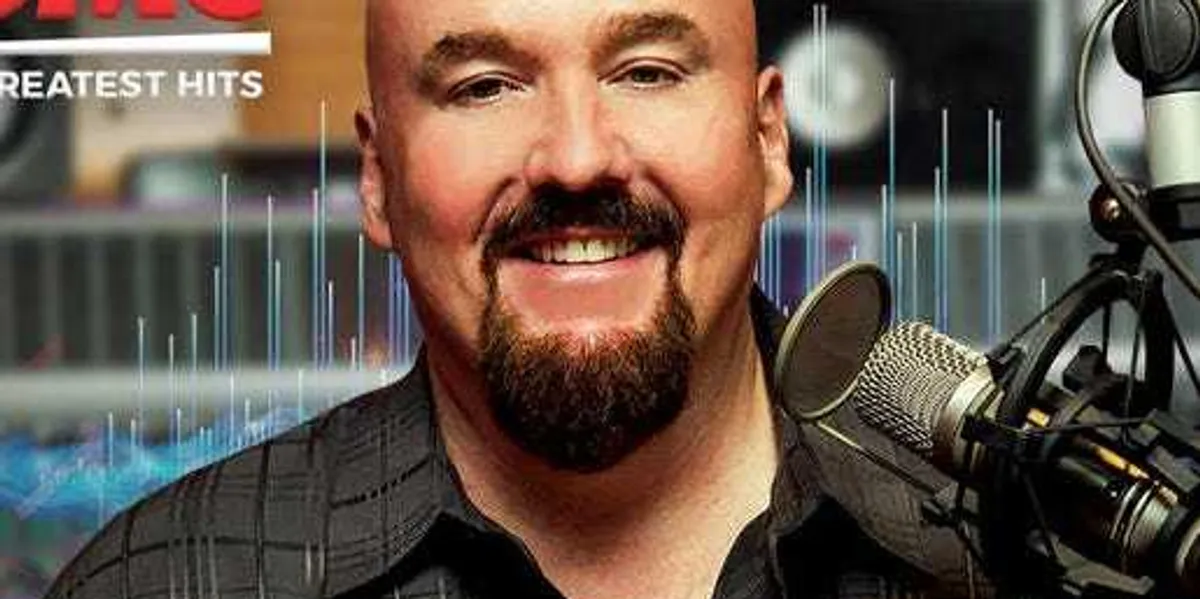
Detroit has never been a city that hands out respect simply because somebody has a microphone. This is Motown, a market built on extraordinary music, larger-than-life personalities and listeners who know the difference between somebody playing records and somebody who genuinely knows their city. Beau Daniels earned his place in that environment over nearly four decades, surviving changing formats, fierce competition, ownership transitions and an industry that seems increasingly determined to prove that recognizable local talent is optional.
Now, one of Detroit’s most enduring radio personalities is preparing to leave another familiar frequency.
Daniels is scheduled to conclude his afternoon show on Audacy’s Classic Hits 104.3 WOMC on Friday, November 13, ending a run at the station that began in 2011 and bringing another significant change to the Motor City’s radio landscape.
The departure raises a question worth asking well beyond Michigan.
How many familiar voices can radio afford to lose before listeners stop recognizing the stations they’ve loved for years?
Before There Was Beau Daniels, Detroit Had Beau the Jammer
To appreciate the significance of this departure, rewind to 1988.
Ronald Reagan was still president. George Michael, Whitney Houston and INXS were dominating the charts. Compact discs were gaining ground, MTV was a cultural powerhouse, and radio personalities could still become genuine local celebrities without needing a million followers on Instagram.
Into that environment came Beau Daniels, arriving at Detroit’s 96.3 WHYT as Beau the Jammer.
And what a time to be in radio.
The music was loud, the promotions were outrageous, the competition was relentless, and personality-driven Top 40 radio was still one of the most exciting forms of entertainment available.
Daniels remained at WHYT until 1997, establishing himself in a market that has never been particularly forgiving to broadcasters who fail to connect with their audiences.
He didn’t just survive Detroit radio.
He made it his professional home.
Following his WHYT years, Daniels spent time at Flint’s CK 105.5, WWCK-FM, before returning to Detroit for another major chapter.
In 2002, he joined Channel 95.5, WKQI, as music director and afternoon personality.
That combination is important.
Daniels wasn’t simply delivering liners between songs. As music director, he was involved in the programming decisions that helped shape what listeners heard.
He understood the mechanics of the format as well as the performance required to make it entertaining.
He remained at Channel 95.5 until 2011.
Once his contractual obligations allowed, Daniels made the move to WOMC, where he would spend the next 15 years.
Think about that for a moment.
A personality who helped define Detroit’s contemporary hit radio sound in the late 1980s eventually became a familiar voice delivering the music those same listeners grew up loving.
That’s not merely career longevity.
That’s an unusually strong connection between a broadcaster, an audience and the music that accompanied their lives.
A Career That Traveled Through the Music
Before Detroit claimed him, Daniels was already building his credentials in competitive radio markets.
He was among the original personalities at Charleston’s 95 SX, WSSX, and his résumé also included stops in Miami and Birmingham.
Those experiences helped establish a foundation that would serve him through multiple decades of radio’s evolution.
And evolution is the appropriate word.
Consider how much the business has changed since Daniels first arrived in Detroit.
Vinyl gave way to CDs.
CDs surrendered to digital music.
Digital music moved into streaming.
Request lines were joined by websites, text messages and social media.
The industry went through consolidation, restructuring, format changes and countless programming philosophies.
Through it all, Daniels continued doing something increasingly difficult.
He remained relevant.
That kind of durability doesn’t happen accidentally.
It requires understanding the audience, recognizing when entertainment habits change and knowing how to keep a show engaging without abandoning the personality that made listeners care in the first place.
Audacy’s own WOMC biography highlights Daniels’ commitment to continually developing fresh material, along with broadcasts from major entertainment events including MTV Spring Break and the MTV Video Music Awards.
His career has never been limited to sitting behind a microphone and reading whatever appeared on the studio computer.
He has lived the kind of radio career that once inspired young broadcasters to get into the business in the first place.
The Personality Was Part of the Product
Here is where the story becomes bigger than a single departure.
WOMC is a Classic Hits station.
Its format celebrates music that has already established a lasting connection with listeners.
The songs are familiar.
The artists are familiar.
The memories are familiar.
But familiarity isn’t confined to the music.
For many listeners, the person introducing those records is part of the experience.
A great Classic Hits personality provides the bridge between yesterday’s music and today’s audience.
That voice understands why a particular song mattered when it was released and why it still matters decades later.
It can bring humor, context, memories and a sense of companionship to records listeners may have heard hundreds of times.
Take away that connection, and the station may still have the same songs.
But it doesn’t necessarily have the same relationship.
And that’s a distinction the industry should be paying attention to.
A playlist can reproduce a song. It cannot reproduce a relationship.
Beau’s Contribution Went Beyond the Studio
Daniels’ work at WOMC also extended into community involvement.
In November 2025, he and fellow WOMC personality Val Berry helped anchor the station’s Turn Up the Miracles Radiothon benefiting Corewell Health Children’s.
The event raised more than $626,000 for pediatric programs, according to the Michigan Association of Broadcasters. <Cite ref=”turn119097search5″/>
That is a meaningful reminder of what local radio personalities can accomplish when their connection with an audience is put to work for something beyond entertainment.
The people who spend years building trust with listeners can help bring communities together when support is needed.
They can encourage generosity.
They can help make important causes personal.
And they can use the familiarity of their voices to remind listeners that radio remains connected to the communities it serves.
That kind of value is difficult to capture in a spreadsheet.
But it is very real.
What Happens Next?
As of this report, the circumstances surrounding Daniels’ departure have not been established in the information available to On The Dial.
There is no verified explanation here concerning whether the move was voluntary, part of a programming decision or connected to any broader staffing changes.
There is also no confirmed next destination for Daniels.
Those details matter, and speculation should not be mistaken for reporting.
What is clear is that Friday’s scheduled departure represents the conclusion of another substantial chapter in Detroit broadcasting.
It also arrives at a time when the industry continues debating the future of live and local personality radio.
Companies are exploring automation, centralized programming, digital distribution and new ways to control expenses.
Some of those changes may be necessary for the industry’s long-term financial health.
But broadcasters should be careful not to confuse efficiency with audience loyalty.
The two are not interchangeable.
Listeners don’t develop decades-long relationships with an operating expense.
They develop relationships with people.
And when those people leave, the impact cannot always be measured immediately.
Sometimes it becomes apparent only when a listener reaches for the radio and realizes the familiar voice is gone.
Detroit Radio Has a Long Memory
There are markets where personalities pass through without leaving much of a footprint.
Detroit isn’t one of them.
This is a city with a remarkable broadcasting heritage and an audience that has historically embraced personalities who understand its character.
Daniels has been part of that history since 1988.
WHYT.
WWCK.
WKQI.
WOMC.
Different stations. Different formats. Different eras.
One recognizable personality.
And while his departure from WOMC may mark the end of this particular assignment, it does not erase the decades he has spent entertaining Michigan listeners.
Nor should it be automatically interpreted as the end of his broadcasting career.
Radio has a way of bringing familiar voices back when audiences least expect them.
For now, the industry will be watching to see where Daniels goes next and how WOMC approaches its afternoon programming after November 13.
But there’s one thing worth remembering as this chapter closes.
Detroit didn’t spend nearly four decades listening to Beau Daniels because it couldn’t find another radio station. It listened because Beau Daniels gave people a reason to stay.
That is the kind of achievement every broadcaster should respect.
And it’s the kind of connection the radio industry should be working harder to preserve.
Beau, whatever comes next, you’ve earned the right to be proud of the journey.
From Beau the Jammer to Channel 95.5 to 104.3 WOMC, you’ve experienced more radio history than many broadcasters will ever have the opportunity to witness.
And you’ve helped create a fair amount of it yourself.
The microphone may be changing hands, but Detroit’s radio history will always have Beau Daniels written into it.
On The Dial covers the people, stations, decisions and developments shaping the broadcasting industry, with particular attention to the local personalities who make radio matter.
Hashtags
#BeauDaniels #DetroitRadio #WOMC #Audacy #OnTheDial #RadioPersonalities #MotorCityRadio #ClassicHits #RadioIndustry #LocalRadio #RadioLegend