


ON THE DIAL | BROADCASTING LEGENDS | KANSAS CITY
For generations of Kansas City residents, the morning commute came with a familiar voice from somewhere above the traffic, watching the highways, tracking approaching storms and helping people understand what was happening in the city they called home. Johnny Rowlands became something extraordinary in the process: a broadcaster who didn’t merely report on Kansas City but quite literally watched over it. Now, after a career that bridged radio, television, aviation and public service, one of the city’s most recognizable broadcasting figures is preparing to make his final regularly scheduled appearance on KMBC 9.
Rowlands will retire at the end of November, with his final on-air day scheduled for Wednesday, November 25, 2026, according to the retirement information provided to On The Dial.
For Kansas City television, it marks the departure of a longtime member of the news team.
For radio, it represents something equally significant.
Before Johnny Rowlands became the man Kansas City watched in the sky, he was one of the voices Kansas City heard on the radio.
And that part of his story deserves to be remembered.
His Career Took Flight Behind a Radio Microphone
Long before NewsChopper 9 became a familiar sight above the Kansas City skyline, Rowlands was building his career in radio.
He worked as a disc jockey during the 1970s, developing the broadcasting skills that would eventually distinguish him in television. His early interest in weather and broadcasting began even earlier, when he and a childhood friend created a makeshift neighborhood radio station using his father’s public-address equipment.
Years later, while attending Baker University, he became involved with college radio and eventually worked professionally as a DJ.
But Rowlands had another passion.
Flying.
And what makes his career so fascinating is that he found a way to combine two seemingly unrelated ambitions into one remarkable profession.
In 1984, Rowlands approached Kansas City’s KMBZ with an idea that would change his professional life: using an aircraft to deliver traffic reports.
The concept became a reality, allowing him to combine his broadcasting experience with his aviation skills.
That history was documented in a 2019 KMBZ feature about his career.
Think about what that means.
Before smartphone navigation, live traffic applications and digital maps became everyday conveniences, radio broadcasters were helping commuters navigate their cities with information gathered from aircraft.
Rowlands was part of that tradition.
He wasn’t merely reading traffic information from a screen.
He was gathering it firsthand.
And eventually, he would take that experience to an entirely different level.
The Man Who Changed How Kansas City Saw Its Mornings
Rowlands became part of KMBC’s original FirstNews team during the late 1980s, helping introduce airborne traffic reporting to Kansas City television.
Initially flying a Cessna above the morning commute, he brought viewers a perspective that had previously been more closely associated with radio traffic reporting.
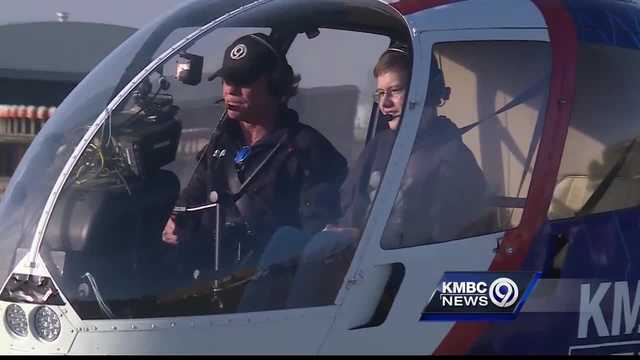
In 2003, he began piloting NewsChopper 9, expanding his responsibilities into breaking news, severe weather and aerial coverage of major events.
What followed was a career that would make him one of the region’s most recognizable television personalities.
But here’s what makes his story different from the traditional television success story.
Johnny Rowlands didn’t abandon radio to become a television personality. He brought radio’s immediacy, descriptive storytelling and live-reporting instincts into the cockpit.
A radio broadcaster must help listeners picture something they cannot see.
Rowlands developed that ability long before television audiences could watch the pictures accompanying his words.
When the helicopter camera began showing viewers what was happening below, those skills became even more powerful.
He could describe the developing situation while simultaneously helping the audience understand the images.
It was a combination of broadcasting disciplines that few people could execute as naturally.
When Broadcasting Became a Matter of Life and Death
The true measure of Rowlands’ career cannot be found in the number of morning traffic reports he delivered.
It can be found in moments when his work helped protect people.
On May 4, 2003, Rowlands provided live aerial coverage of dangerous tornadoes moving through the Kansas City region.
His reports and images gave meteorologists and emergency personnel valuable information about the storms’ locations and movements.
KMBC has credited his coverage with helping provide life-saving warnings, while contemporary aviation reporting documented his role in tracking tornadoes and communicating their movements to viewers.
Consider the responsibility involved.
You’re flying near a dangerous weather system.
You’re monitoring the aircraft.
You’re observing the storm.
You’re communicating with the television station.
And you’re describing what you’re seeing to an audience that may include people directly in the storm’s path.
There is no opportunity to casually stop and rewrite the report.
The information has to be accurate.
It has to be understandable.
And it has to arrive in time to matter.
That’s broadcasting at its most consequential.
Rowlands’ career also included helping emergency responders locate people in dangerous situations.
According to KMBC’s biography, he assisted firefighters searching for teenagers trapped on a burning apartment building and helped police locate an elderly couple threatened by rising floodwaters.
Those aren’t ordinary television assignments.
Those are examples of a broadcaster using his professional skills and equipment to serve the public in extraordinary circumstances.
A Kansas City Institution Who Never Forgot His Roots
There’s something deeply meaningful about a broadcaster remaining connected to one community for so many decades.
Rowlands witnessed Kansas City change from above.
He saw highways expand, neighborhoods develop, downtown transform and generations of residents come and go.
He covered frightening weather emergencies and unforgettable community celebrations.
In 2015, when Kansas City celebrated the Royals’ World Series championship, Rowlands provided aerial coverage of the enormous crowds gathered for the parade.
He also recalled having flown for radio stations during the Royals’ previous championship celebration in 1985.
That detail alone tells an extraordinary story.
He was there when Kansas City celebrated in 1985.
He was there again in 2015.
And he was still serving the region more than a decade later.
Few broadcasters can claim that kind of continuity.
Fewer can say they experienced those historic moments from thousands of feet above the city.
What Radio Should Learn From Johnny Rowlands
The broadcasting industry spends considerable time discussing technological innovation.
Artificial intelligence.
Automated programming.
Digital platforms.
Streaming.
Centralized news operations.
All of those subjects deserve attention.
But Rowlands’ career demonstrates something that technology alone cannot provide.
The greatest broadcasting innovation isn’t always a new piece of equipment. Sometimes it’s a person who discovers a better way to serve an audience.
He saw an opportunity to combine aviation and broadcasting.
He pursued it.
He developed the skills.
And he helped create a style of reporting that became part of Kansas City’s daily routine.
His career also illustrates why radio and television have historically been so closely connected.
The two industries share a foundation built on communication, immediacy, public service and trust.
Rowlands moved between those worlds without losing the instincts that made him effective.
He understood that the microphone wasn’t simply a tool for delivering information.
It was a responsibility.
And whether someone was listening in a car or watching from a living room, that responsibility remained the same.
The Legacy Isn’t Just in the Air
Rowlands has also shared his enthusiasm for aviation with younger generations.
KMBC documented his mentorship of a teenage aspiring helicopter pilot, Matthew Bettmeng, who pursued flight training after becoming fascinated with NewsChopper 9.
Rowlands helped turn that young man’s interest into practical experience.
It’s a wonderful reminder that a broadcaster’s influence can extend far beyond the audience.
Sometimes the greatest contribution is inspiring someone else to follow a dream.
A child watches a helicopter overhead.
A teenager becomes interested in aviation.
A young broadcaster discovers that radio and television can open doors to opportunities they never imagined.
And somewhere along the way, a career becomes a legacy.
That’s what makes Rowlands’ retirement more than a personnel announcement.
His influence reaches beyond the television screen.
It lives in the people he helped, the stories he covered, the broadcasters who worked beside him and the young people who saw what was possible because he showed them.
Kansas City Will Look Up and Remember
On November 25, Johnny Rowlands is scheduled to conclude an extraordinary chapter in Kansas City broadcasting.
The television station will continue.
The morning news will continue.
Traffic reports will continue.
And helicopters will still fly over the city.
But there will be something different about knowing that one of the region’s most familiar airborne broadcasters has completed his final regular assignment.
For decades, Rowlands helped people navigate traffic, understand dangerous weather and witness some of Kansas City’s most important moments.
He was a radio personality who became a television pioneer.
A pilot who became a trusted journalist.
And a familiar voice who turned an extraordinary vantage point into a public service.
Some broadcasters spend their careers trying to reach the top of their profession. Johnny Rowlands spent much of his career looking down from above, making sure the people below had the information they needed.
That’s a remarkable legacy.
On The Dial congratulates Johnny Rowlands on his retirement and recognizes his contributions to both radio and television.
Kansas City has been fortunate to have him.
And while his regular broadcasts may be ending, the memories of his work will remain part of the city’s broadcasting history.
Johnny, after all those years of watching over Kansas City, you’ve earned the opportunity to enjoy the view without having to report on it.
Thank you for the mornings.
Thank you for the warnings.
Thank you for the memories.
And most importantly, thank you for reminding generations of broadcasters that what we do matters.
Clear skies, Johnny. You’ve earned them.
On The Dial celebrates the broadcasters whose work connects communities, advances the industry and demonstrates the enduring value of local radio and television.
Hashtags
#JohnnyRowlands #KMBC9 #KansasCity #KansasCityRadio #OnTheDial #NewsChopper9 #BroadcastingLegends #LocalBroadcasting #RadioHistory #TelevisionNews #KMBZ #BroadcastJournalism