


The moves that matter in media are not always the loud ones.
Sometimes they happen in the finance office. Sometimes they happen far away from the microphones, the studios, the stage lights and the social clips. But make no mistake about it—those moves can shape just as much of a company’s future as anything that ever hits the air.
That is where this one lands.
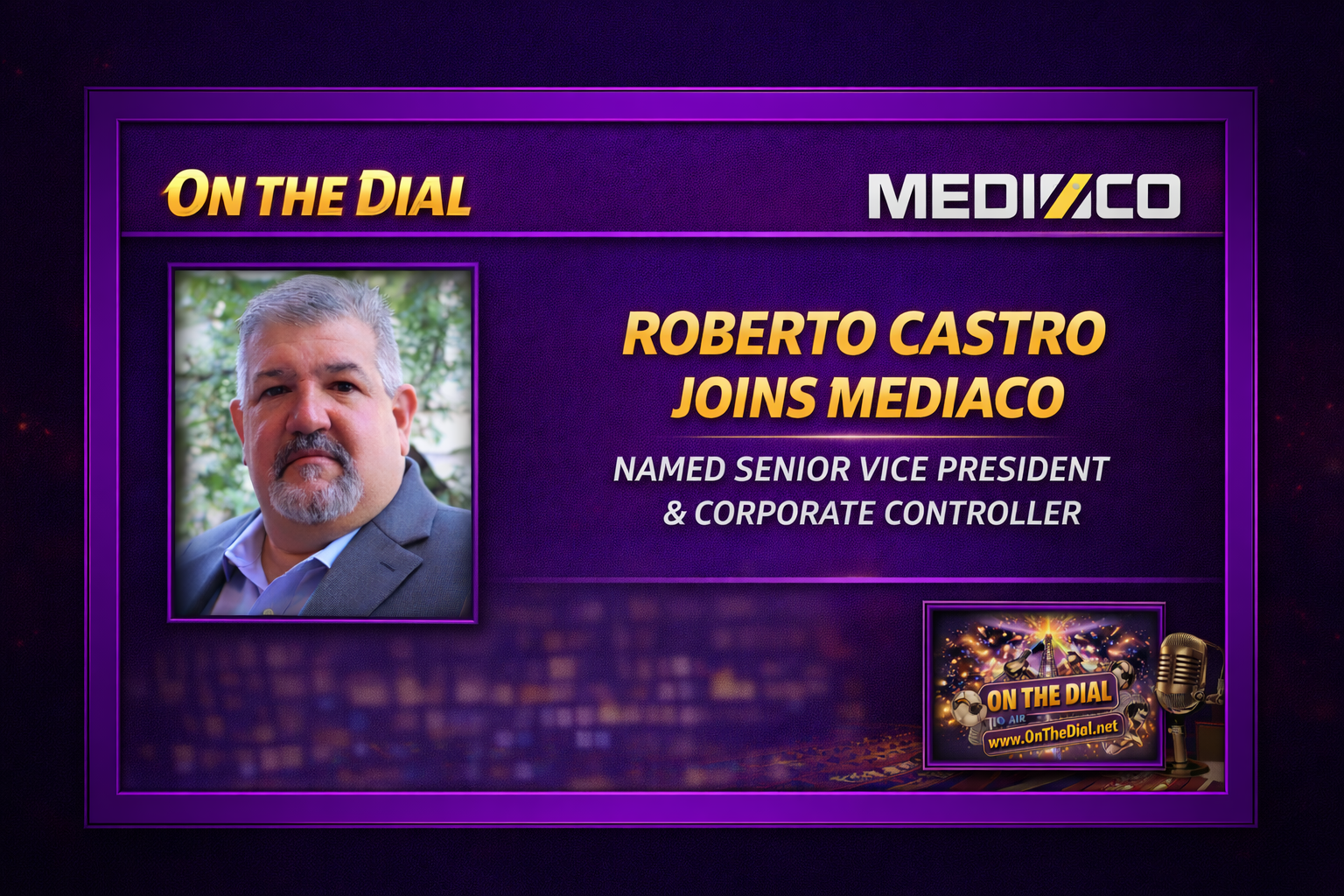
MediaCo Holding has added another experienced hand to its executive structure, naming Roberto Castro senior vice president and corporate controller, and while that title may not come with the flash of a major talent signing or a headline-grabbing format flip, it tells you something important about where the company believes it is headed and what it thinks it needs to get there.
This is not the kind of hire you make just to fill a chair.
This is the kind of hire you make when you are trying to tighten the machine, sharpen the numbers, steady the foundation and prepare for the next phase of growth with somebody who has already spent years working in the pressure points of media finance.
And in this business, that matters.
Castro arrives at MediaCo with a long runway behind him. His resume carries about three decades of experience across media and entertainment, with much of that time spent in roles that required not just financial discipline, but a working understanding of how complex media organizations really function. He comes over after nearly 24 years at Spanish Broadcasting System, where he worked his way through senior finance roles and most recently served as vice president of finance. Before that, he put in more than six years at DIRECTV Latin America in accounting and audit-related leadership positions. Go back even further and you find his time as an auditor at Coopers & Lybrand.
That is not a lightweight background.
That is a build.
That is years of seeing what works, what breaks, what scales, what doesn’t, and what it takes to keep a media company moving when the pressures start coming from every direction at once.
And let’s be honest—media companies are under pressure from every direction at once.
They are trying to build revenue in a fragmented environment. They are trying to grow digital while protecting core brands. They are trying to operate lean without looking weak. They are trying to show Wall Street progress while simultaneously proving to advertisers, investors and audiences that they still know exactly who they are.
So when a company like MediaCo makes a move like this, it is worth paying attention to the signal behind it.
The signal is structure.
The signal is accountability.
The signal is that leadership is still leaning into the idea that growth is not just about vision and content. Growth is also about internal control, financial credibility, disciplined reporting and having the right people in place before the next stretch of scaling begins.
That is where Castro appears to fit.
MediaCo CEO and President Albert Rodriguez made it clear that the company sees this addition as part of a larger strategic effort, saying, “As we progress in executing on our growth strategy and building on our momentum, we have continued to strengthen our organization with seasoned media industry executives who are aligned with our vision and strategic plan. We look forward to working with Roberto as we scale our multimedia platform and focus on improving upon our operating performance to the benefit of all our stakeholders.”
That quote says a lot.
First, it reinforces the idea that MediaCo does not view this as an isolated personnel move. It sees it as part of a broader organizational strengthening. Second, Rodriguez is putting the words growth strategy, momentum, scale and operating performance in the same thought. That means the company is trying to tell the market that this is not just about ambition. It is about execution.
And that is an important distinction.
Anybody can talk growth.
Anybody can throw out transformation language.
Anybody can make noise about the future.
But when the language starts turning toward operating performance, stakeholder benefit and executive alignment, that usually means leadership wants to send a very specific message: we are not just building for appearance, we are building for measurable results.
That is where finance leadership becomes a headline, even when it does not look like one at first glance.
MediaCo Executive Vice President and Chief Financial Officer Debra DeFelice took that point even deeper, saying, “Roberto’s appointment further strengthens the foundation of our finance organization as we scale our operations and deepen best practices across all financial functions. He brings valuable experience as we continue to ensure high-quality financial reporting, maintain strong internal controls and support disciplined financial management during a period of strong growth.”
Read that again and the focus becomes even clearer.
Foundation.
Best practices.
High-quality reporting.
Internal controls.
Disciplined management.
That is not casual language. That is language of a company trying to build credibility while it grows. That is language that says the back-end systems matter just as much as the front-end story. That is language designed to reassure people that expansion is being paired with control rather than chaos.
And in today’s media climate, that reassurance is worth something.
Because there are too many examples across the broader industry of companies chasing scale before they have the financial structure to support it. Too many organizations have tried to sell growth while the internal plumbing was leaking. Too many executives have wanted the appearance of acceleration without the discipline needed to sustain it.
MediaCo clearly does not want to be seen that way.
This appointment says the company wants finance leadership with scar tissue, perspective and industry-specific seasoning. It wants somebody who has been inside media companies long enough to understand that numbers in this business are not abstract. They are attached to ad trends, audience shifts, operational costs, regulatory realities, platform strategy and investor patience.
That is why Castro’s background at SBS jumps off the page.
A nearly 24-year run at Spanish Broadcasting System is not just an item on a resume. That is time spent inside a company with deep roots in radio, multicultural media and the balancing act required to navigate legacy media and modern audience behavior at the same time. That kind of experience brings more than technical skill. It brings context. It brings pattern recognition. It brings understanding of how media organizations evolve and where they can get into trouble if they are not careful.
And for MediaCo, which continues trying to sharpen its positioning around content, distribution and multicultural audience reach, that matters even more.
Castro himself leaned into that part of the company’s identity in his statement, saying, “I am thrilled to join MediaCo at this exciting time in the company’s growth trajectory. MediaCo has developed a unique set of content and distribution assets, including media brands that resonate with multicultural audiences nationally due to their cultural relevance, authenticity and multiplatform accessibility. I look forward to working with the team and contributing to building on the company’s success.”
That quote gives you a sense of how MediaCo wants this move framed.
Not just finance for finance’s sake.
Not just accounting strength.
Not just another executive headshot and title.
This is being positioned as part of a company that sees itself sitting on a culturally relevant portfolio with real potential across multiple platforms. Castro’s statement emphasizes the value of MediaCo’s assets and their connection to multicultural audiences on a national scale. That suggests he is not coming in as a pure numbers guy disconnected from the mission. The company wants him viewed as someone who understands the strategic value of what MediaCo owns and where it may still be able to go.
That is important in this environment, because the media companies that survive and strengthen are usually the ones that stop thinking of finance and content as living in separate buildings.
They are not separate.
Not anymore.
Content strategy affects revenue strategy.
Distribution affects cost structure.
Audience relevance affects investor confidence.
Authenticity affects monetization.
And multiplatform accessibility is not just a programming phrase. It is a financial reality.
If audiences engage in more places, the opportunity grows—but so does the need for operational discipline. More platforms mean more moving pieces. More moving pieces mean more reporting demands, more compliance, more control challenges and more opportunities to either tighten the system or lose control of it.
That is why a hire like this lands heavier than it may look on first read.
It is easy in radio and media coverage to get seduced by the visible. New morning show. New format. New logo. New launch. New viral clip. All of that has its place. But underneath every one of those moves is a financial infrastructure that either supports the ambition or quietly undermines it.
MediaCo seems to be trying to strengthen that infrastructure before the next major turn.
And from a broader industry standpoint, this also reflects a continuing truth: seasoned financial leadership is becoming more valuable, not less, as media companies fight through a period where every strategic decision has more consequences attached to it.
There is less margin for sloppiness now.
Less margin for weak controls.
Less margin for fuzzy reporting.
Less margin for executives who know the story but cannot manage the system around it.
Companies need people who understand the business, understand the numbers and understand the pace at which modern media now moves.
Castro’s path through SBS, DIRECTV Latin America and public-accounting audit work suggests MediaCo believes it is getting exactly that.
And that is why this announcement deserves more than a quick read-and-scroll.
Because in a season where media companies keep talking about transformation, the real question is always the same: who is inside the building making sure the transformation can actually hold?
This hire looks like an answer to that question.
MediaCo is saying it wants experience.
It is saying it wants structure.
It is saying it wants people who know how to support growth without letting the foundation crack underneath it.
And whether you are in radio, television, digital or the broader multimedia world, you already know that part of the story is never boring to the people who understand what is really at stake.
The audience may hear the talent.
The advertisers may see the campaign.
The investors may study the quarterly report.
But the people building the internal engine? They help decide whether the whole thing keeps moving.
That is why Roberto Castro’s arrival at MediaCo matters.
It may not come with a flashy promo package.
It may not trend on the consumer side of the business.
But inside a company trying to grow, scale and prove it can deliver, this is exactly the kind of move that can carry real weight.
And in a media world that keeps demanding more while forgiving less, those are the moves that tend to show their value over time.
-WW