

The calendar turns to mid-April and, once again, the broadcast industry makes its annual migration to the desert. But for radio, the 2026 edition of the NAB Show 2026 feels a little different this time.
This year, radio is not just attending. It is being seen.
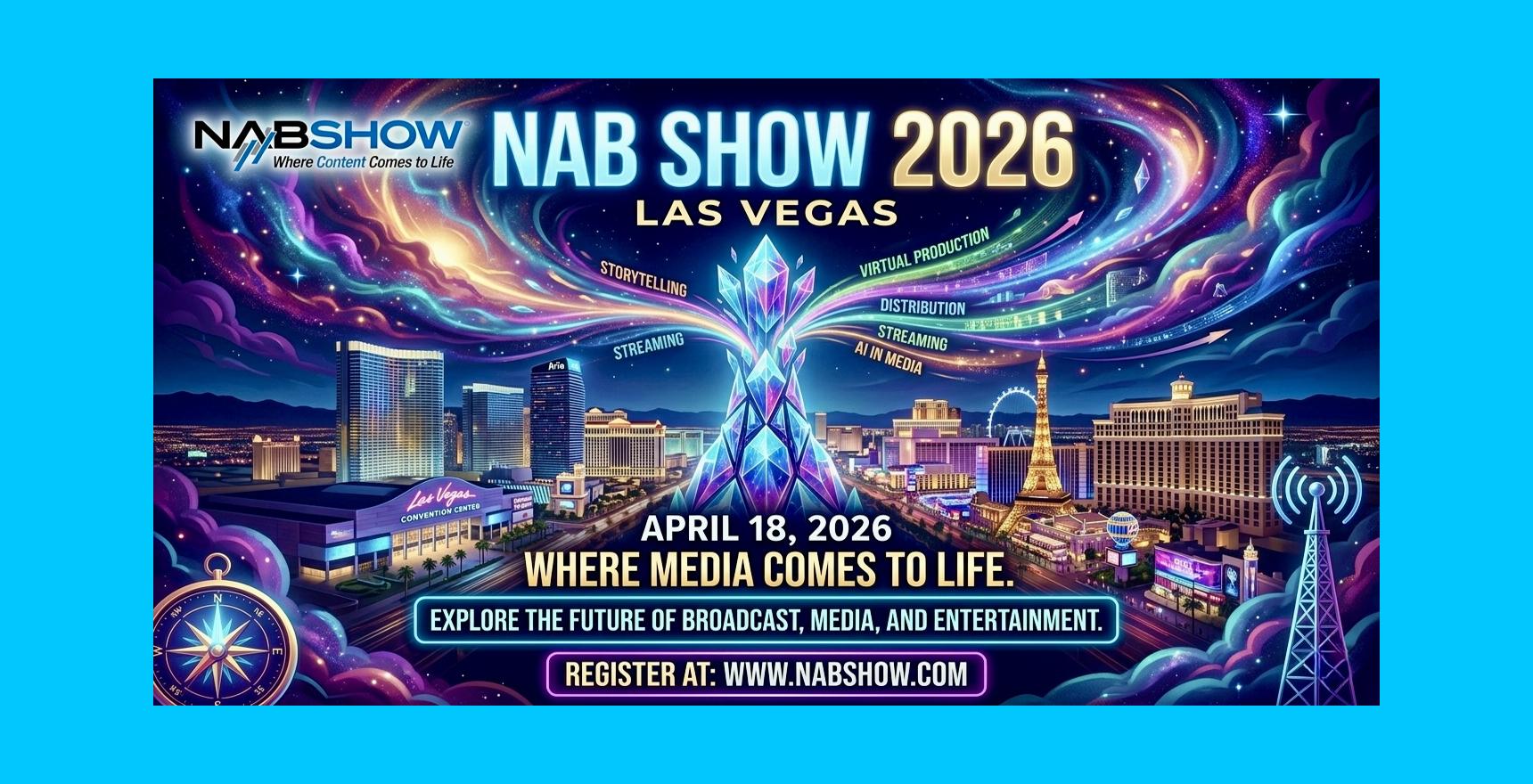
From April 18 through April 22 at the Las Vegas Convention Center, the NAB Show will bring together thousands of broadcasters, engineers, programmers, executives and creators from across the globe. For radio professionals walking into the building, the difference will be noticeable almost immediately. The industry has a clearer footprint, a louder voice and a full slate of sessions that speak directly to the realities stations are facing right now.
At the center of that shift is the reimagined TV and Radio HQ in Central Hall, a move that places radio back into the main traffic flow of the convention rather than on the fringes. It serves as a hub for conversation, connection and, just as importantly, visibility. Inside, a steady flow of programming, informal meetings and networking will unfold throughout the week.
Sunday sets the tone with the Small and Medium Market Radio Forum, a three-hour block focused on programming, digital revenue, audience growth and operational strategy, followed by a built-in reception that effectively doubles as one of the first true radio mixers of the week. It is the kind of event that brings together the people actually running stations day-to-day, not just talking about them.
Across the schedule, sessions touch on everything from talent development and mentorship to political advertising strategy ahead of the 2026 midterms. There is a clear emphasis on workforce challenges, with multiple discussions centered on how to recruit, retain and develop talent in an industry that has been stretched thin in recent years.
At the same time, technology continues to shape nearly every conversation. Panels on artificial intelligence, digital distribution and audience measurement reflect a business that is still adapting in real time. The dashboard remains a critical battleground, with connected car platforms and measurement tools drawing attention from broadcasters looking to maintain relevance where listening habits are shifting the fastest.
Tuesday’s lineup leans heavily into practical concerns. A session on music licensing for internet radio aims to demystify the rules that govern streaming, while another focuses on improving AM coverage and pushing forward digital radio adoption. For engineers and operators, the Broadcast Engineering and IT Conference runs alongside the show, offering a deeper dive into the infrastructure that keeps stations on the air.
Beyond the sessions, NAB week is defined just as much by what happens outside the meeting rooms.
Networking is constant. It starts on the show floor, continues in the TV and Radio HQ lounge and spills into receptions, meetups and after-hours gatherings across the city. The NAB Leadership Foundation’s student career mixer on April 18 connects the next generation of technical talent with hiring broadcasters. The Society of Broadcast Engineers hosts its own reception, bringing together the technical backbone of the industry. The Streaming Summit adds another layer, blending radio, television and digital conversations and closing one of its days with a large-scale happy hour that draws attendees from across disciplines.
And then there are the unofficial events — the vendor parties, the hotel suite meetings, the late-night conversations that have always been part of NAB’s DNA. Those moments, often away from the convention center lights, are where relationships are built, deals are discussed and the future direction of companies quietly takes shape.
All of it adds up to a week where radio is not isolated from the broader media landscape but embedded within it. Streaming, podcasting, AI and traditional broadcasting are no longer separate lanes. At NAB, they share the same space, the same conversations and, increasingly, the same challenges.
Amid that backdrop, another milestone will unfold.
April 18 will also mark the official launch of On The Dial, adding a new voice to the industry at a time when information, perspective and connection are more valuable than ever.
On The Dial President and Publisher Steve Mills said the timing is intentional, aligning the debut of the platform with one of the most historically significant gatherings in broadcasting.
Mills described the NAB Show as a cornerstone of the industry, a place where generations of broadcasters have come together to learn, connect and move the business forward. He said launching On The Dial during that week is both symbolic and deeply personal.
He called the project a labor of love that has been a long time coming, built out of a passion for radio and a desire to contribute to its ongoing story. Mills said the industry has always had room for new voices and fresh perspectives, and he believes On The Dial is stepping into that space at the right moment.
He added that the goal is simple: to serve broadcasters by delivering news, insight and information that keeps the industry informed and connected, while honoring the legacy that brought it to where it is today.
That sentiment fits neatly into the larger mood surrounding NAB 2026.
Radio arrives in Las Vegas carrying its challenges — evolving technology, shifting revenue models, workforce concerns — but also a renewed sense of presence. It has a place on the floor, a voice in the conversation and a week full of opportunities to reconnect with what has always made the business work: people talking to people.
For a few days in April, the noise of the industry quiets just enough for those conversations to happen.
And for radio, that might be the most important event of all.
-WW