


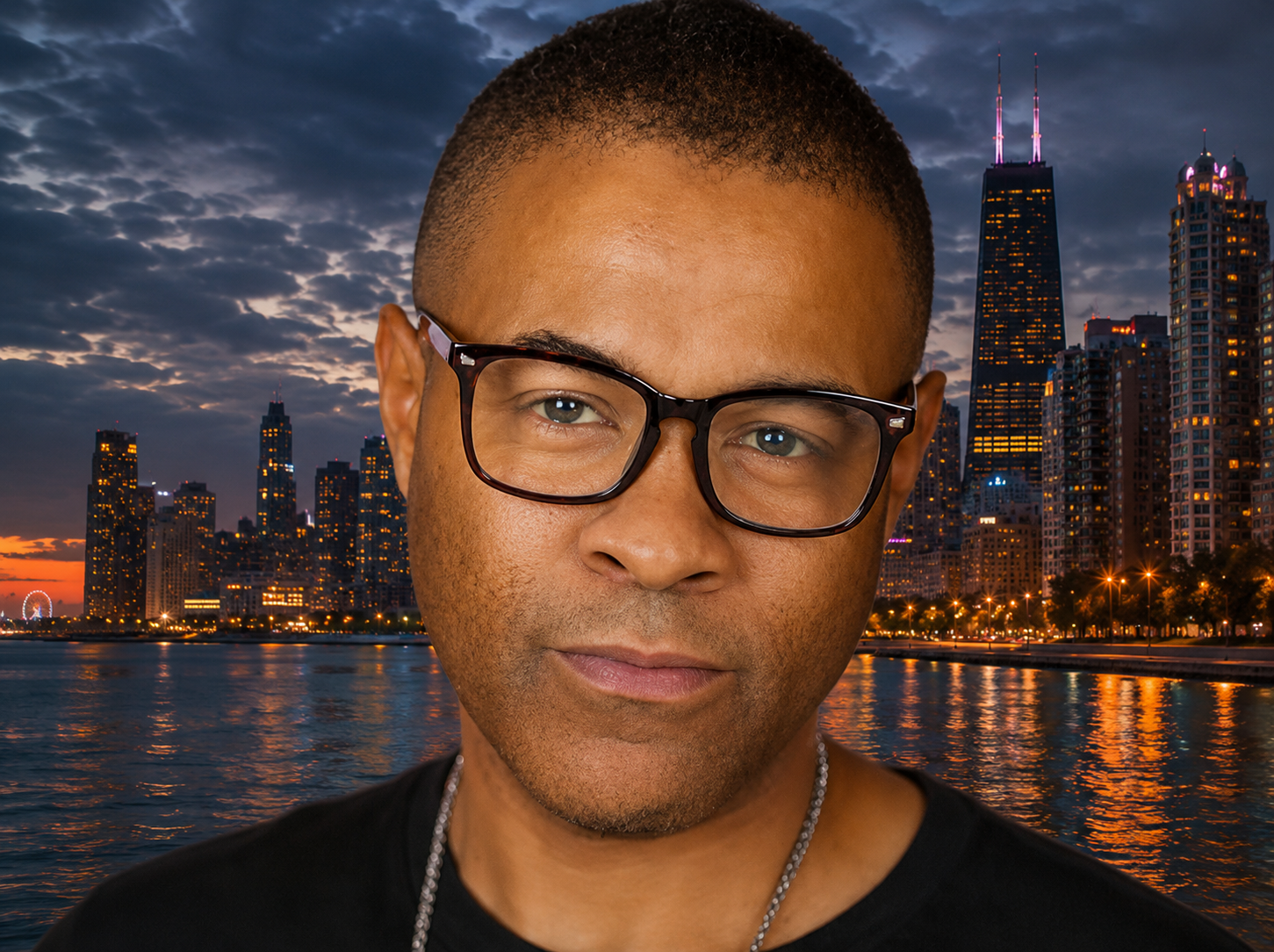
There are broadcasters whose careers can be reconstructed from old playlists, ratings books and station histories, and then there are personalities whose real legacy lives in the people who remember exactly what it felt like when that voice came through the speakers. Buda Quan belongs in that second category. News of the Chicago-born radio personality’s death is beginning to move through the broadcasting community, bringing with it the kind of sadness that makes people stop scrolling and start remembering. Buda wasn’t simply somebody who once worked at WGCI or Power 92. He was part of an era when Chicago Hip Hop radio was exploding with personality, attitude and unmistakable hometown energy, and his career eventually carried that sound and talent far beyond the city that raised him.
This one hurts.
Because when radio loses somebody from an earlier generation of personalities, we aren’t only losing a broadcaster
We are losing another living piece of the history.
Chicago Was Home
Buda Quan was raised on Chicago’s South Side, and his radio journey stretches back to a fascinating period in the development of Hip Hop radio in the city.
His professional biography traces his on-air beginnings to Thanksgiving Day 1994, when he appeared under the name Spank Boogie Buda on 106 Jamz, an early Chicago Hip Hop outlet.
Think about where Hip Hop was in 1994.
This wasn’t a format every corporate group had neatly packaged into a research presentation.
Hip Hop was still fighting for space.
Fighting for respect.
Fighting for advertising dollars.
Fighting for programmers to understand that this wasn’t some temporary musical trend that would eventually disappear.
And personalities like Buda were there.
Behind the microphone while the culture was becoming the format
Then Came WGCI
For generations of Chicago listeners, those four letters mean something.
WGCI
Buda became part of that world at 107.5 WGCI, and his own professional biography credits him with hosting an all-Hip-Hop program on the station. His career would also include time with Power 92 Chicago and 103.5 The Beat Chicago, giving him a place in the history of multiple Urban and Hip Hop brands that helped define different chapters of Chicago radio.
That’s not just a résumé.
That’s a front-row seat to an extraordinary period in the evolution of the format.
Chicago wasn’t merely consuming Hip Hop.
Chicago was helping create it.
The DJs mattered.
The clubs mattered.
The streets mattered.
The mix shows mattered.
The personalities mattered.
Radio could break a record.
A DJ could put an artist in front of an entire city.
And the relationship between the station and the culture wasn’t something manufactured during a quarterly strategy meeting.
They were growing up together
Buda was part of that.
But Chicago Was Only the Beginning
Here’s where his career becomes even more remarkable.
Buda didn’t stay inside one market.
His broadcasting journey took him around the country.
Milwaukee.
Anchorage.
Columbia.
Killeen.
Hartford.
Jacksonville.
Detroit.
His documented radio stops included V100 Milwaukee, KGOT Anchorage, 100.3 The Beat Columbia, Z92.3 Killeen, Power 104 Hartford, 97.9 KISS Jacksonville and Channel 955 Detroit, in addition to his Chicago work.
That’s a broadcaster.
Different cities.
Different stations.
Different audiences.
Different competitive environments.
Same fundamental assignment every time
Turn on the microphone and make somebody care
People outside radio sometimes underestimate what it takes to do that.
A personality doesn’t simply move somewhere and start talking.
You learn the city.
You learn the audience.
You learn what people care about.
You learn what they laugh at.
You learn what they’re talking about.
You learn which neighborhoods matter.
You learn which artists matter.
Then eventually
If you’re good
The city starts learning you
Buda Was Never Just a DJ
That’s another part of his story worth remembering.
His work extended into club appearances, event hosting, production, imaging and voice work. He pursued music as a recording artist and eventually expanded into acting after relocating to Los Angeles in 2011. His credits include appearances in film and television, while his professional biography also describes entrepreneurial work through an entertainment company he developed with his sister.
That sounds remarkably familiar in 2026.
Creator.
Broadcaster.
Actor.
Artist.
Entrepreneur.
Personality.
Except Buda was building across those lanes before everybody started calling it a personal brand.
Radio personalities figured this out long before social media did.
When audiences connect with you, the relationship doesn’t necessarily belong to one frequency.
It can travel.
Buda traveled.
This Is Why Radio History Needs to Be Preserved
We lose too much of it.
A station flips formats and suddenly twenty years of webpages disappear.
A company gets sold and photographs vanish.
Old airchecks sit on cassette tapes in somebody’s basement.
Personalities retire.
People pass away.
And slowly an entire generation of broadcasting becomes something younger radio people know only through scattered stories.
We cannot allow that to happen.
Especially with Black radio.
Because the history of Black radio is inseparable from the history of American broadcasting.
These personalities weren’t merely introducing songs.
They were creating community.
They were giving artists exposure.
They were giving neighborhoods a voice.
They were carrying conversations mainstream media wasn’t always interested in having.
They were tastemakers before anybody used the word influencer.
They were social media before social media existed.
The microphone was the platform
Younger Personalities Should Know Who Came Before Them
If you’re opening a microphone on a Hip Hop station today, somebody helped create the road you’re traveling.
If you’re producing social content for an Urban station, somebody built the relationship that gave those call letters credibility.
If you’re hosting a mix show, somebody fought for that music to get airtime.
If you’re interviewing an artist, somebody once had to convince management that artist belonged on the radio at all.
Generations build on generations.
That’s how this works.
Buda Quan belongs somewhere in that story.
And Chicago Radio Should Remember Him Loudly
Not with three sentences.
Not with a quick mention between songs.
Tell the stories.
Find the airchecks.
Find the photographs.
Call the people who worked beside him.
Let former listeners tell you what they remember.
Let the DJs who shared studios with him explain what he was like when the microphone was turned off.
That’s how you honor broadcasters.
Because a career isn’t really contained inside a résumé.
It’s contained in moments.
The night somebody heard their favorite record.
The club appearance where hundreds of people showed up.
The joke somebody still remembers.
The young kid listening who thought
I want to do that someday
Those moments don’t appear in Nielsen.
But they are the reason radio matters.
Today the Microphone Is Quiet
And that’s the hardest part of writing these stories.
Radio is built around sound.
Voices.
Music.
Laughter.
Noise.
Energy.
Then someone leaves us and suddenly we’re confronted with silence.
But the beautiful thing about broadcasting is that the voice doesn’t completely disappear.
Somewhere there is an aircheck.
Somewhere there is a recording.
Somewhere there is a listener who can still hear exactly how Buda sounded coming through those speakers.
Somewhere somebody remembers driving through Chicago with WGCI turned up.
Somewhere another person remembers Power 92.
Somebody remembers the club.
Somebody remembers meeting him.
Somebody remembers laughing.
Somebody remembers working beside him.
And somewhere there may be a broadcaster who entered this crazy business partly because personalities like Buda made radio sound like the greatest job in the world.
That’s legacy
Rest Well Buda Quan
From Chicago to Milwaukee
From Anchorage to Detroit
From Jacksonville to Los Angeles
From radio to music to television and beyond
Buda Quan took the personality Chicago gave him and carried it a very long way.
Today we don’t measure that journey in markets.
We measure it in people.
Coworkers.
Listeners.
Friends.
Family.
Broadcasters.
Artists.
Everyone who remembers the voice.
Everyone who remembers the man.
And everybody whose day became a little more entertaining because somewhere in America Buda was on the radio
From all of us at On The Dial, our condolences go to Buda Quan’s family, friends, former colleagues and the Chicago broadcasting community mourning his loss.
The shift eventually ends for every one of us.
But if we’re fortunate
If we connected
If we mattered
If somebody remembers
The signal keeps traveling long after we leave the studio
Rest easy Buda.
Chicago remembers.
And radio remembers too.
On The Dial believes the history of radio is ultimately the history of the people who made us turn it on. Today we remember Buda Quan not simply for the stations printed on his résumé but for a career that carried a South Side Chicago broadcaster through major markets entertainment stages and generations of Hip Hop culture. The microphone may be silent but the memories are still very much on the air.
#OnTheDial #BudaQuan #RIPBudaQuan #ChicagoRadio #ChicagoHipHop #WGCI #Power92 #BlackRadio #UrbanRadio #HipHopRadio #Chicago #SouthSideChicago #RadioLegend #RadioPeople #RadioPersonality #RadioHistory #BlackRadioHistory #Broadcasting #RadioFamily #RadioIndustry #RememberingBuda #RestInPower #RadioStillMatters