


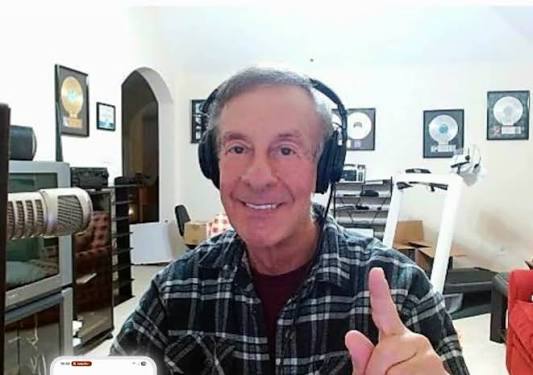
There are people who work in radio.
There are people who build careers in radio.
And then there are those rare broadcasters whose resumes read almost like somebody grabbed a map of legendary American radio stations, started pointing at call letters and said:
Yep he worked there too
Ron Parker was one of those broadcasters.
And now radio has lost him.
The longtime CHR and Classic Hits personality and programmer passed away Friday night following a brief illness, leaving behind an extraordinary career that stretched across formats, generations, technologies and some of the most storied radio stations in America.
Atlanta.
Tampa.
Miami.
Houston.
San Francisco.
New York.
Chicago.
Satellite radio.
SiriusXM.
Programming.
Personality radio.
Ron Parker didn’t simply watch American radio history happen.
He spent decades sitting behind the microphone while it was happening.
Look At Those Call Letters
Sometimes a resume tells the story better than anything else possibly could.
WQXI.
WZGC.
WLCY.
WCKX.
WINZ-FM.
WHYI.
KKBQ.
KFRC.
WCBS-FM.
WLS-FM.
Read that again.
For radio geeks, those aren’t random combinations of letters.
Those are chapters of American broadcasting history.
These were stations in major markets where personalities mattered, competition was ferocious and the person behind the microphone wasn’t simply there to announce the next record.
You had to entertain.
You had to understand timing.
You had to know how to make twelve seconds matter.
You had to know when to talk.
More importantly, you had to know when NOT to talk.
You had to hit the post.
You had to sell the station.
You had to make the listener believe something exciting was happening right now and that they’d miss it if they touched the dial.
Ron Parker understood that kind of radio.
Boy, did he understand it.
From CHR To Classic Hits Ron Could Do Radio
That’s another part of Parker’s career worth celebrating.
He wasn’t trapped inside one particular era.
He worked CHR.
He worked Classic Hits.
He programmed.
He performed.
He transitioned from the era when radio personalities were surrounded by carts and turntables into a world of digital automation, streaming, satellite radio and smartphones.
And he remained relevant.
That might be one of the greatest compliments you can give somebody who spent decades in broadcasting.
HE ADAPTED.
Because plenty of people can become successful during one particular moment in radio.
The great ones survive when the moment changes.
Music changes.
Formats change.
Audience expectations change.
Technology changes.
Ownership changes.
The definition of a radio personality changes.
And somehow the great broadcasters figure out how to preserve the fundamental thing that made them great in the first place.
Connection.
And Then There Was KFRC
Come on.
If you’re a student of radio history, you cannot look at Ron Parker’s career without stopping at those four letters.
KFRC.
San Francisco.
One of the great call signs in American Top 40 radio.
A station whose history is filled with legendary personalities and programmers and whose influence extended far beyond Northern California.
Ron Parker became part of that lineage.
Think about that.
There are radio stations you work for.
And there are radio stations whose call letters become a permanent line in your broadcasting obituary because simply being good enough to sit behind that microphone meant something.
KFRC was one of those places.
Ron earned that microphone.
Then New York Came Calling
And not just New York.
WCBS-FM.
Another monster.
Another legendary set of call letters.
Another station where the music carried memories and the personalities had to understand that they weren’t merely playing old records.
They were opening time capsules.
That’s the beauty of great Classic Hits radio.
A song isn’t simply three minutes and forty seconds of audio.
It’s somebody’s first car.
Somebody’s wedding.
Somebody’s senior year.
Somebody’s mother singing in the kitchen.
Somebody driving down a highway in 1977 thinking life was going to last forever.
A great Classic Hits personality understands that.
The DJ doesn’t get between the listener and the memory.
The DJ helps unlock it.
Ron Parker knew how to do that.
And Chicago Is On The Resume Too
Because apparently San Francisco and New York weren’t enough.
Add WLS-FM Chicago.
Another city.
Another enormous radio heritage.
Another legendary set of call letters.
Another audience.
Another microphone.
Another chapter.
At some point you look at this career and realize we’re not talking about somebody who happened to have a long run in broadcasting.
We’re talking about somebody who repeatedly operated at an extraordinarily high level in some of America’s most demanding radio markets.
That doesn’t happen accidentally.
Ron Wasn’t Only The Guy Behind The Microphone
Here’s where the resume gets even more impressive.
Ron Parker also understood what happened on the other side of the studio glass.
He programmed Power 92 KKFR Phoenix.
He programmed Satellite Music Network’s Hot AC offering.
He programmed K-Hits 107.5 KLDE Houston.
That matters.
Because being a great personality and being a great programmer require overlapping but distinctly different instincts.
The personality thinks about the next break.
The programmer has to think about the entire radio station.
Music.
Talent.
Imaging.
Flow.
Competition.
Ratings.
Strategy.
Positioning.
Execution.
How does this station feel at 7:20 Monday morning?
How does it feel Saturday night?
What happens when the competitor changes?
What records belong?
What personalities fit?
What does the audience expect?
Ron Parker understood the microphone from both sides.
Two Radio Halls Of Fame Figured It Out
Georgia knew.
Texas knew.
Parker was inducted into both the Georgia Radio Hall of Fame and the Texas Radio Hall of Fame.
And when somebody has accumulated enough broadcasting history that multiple states decide the career belongs in a Hall of Fame…
we’re probably beyond debating whether the guy made an impact.
He did.
But even those honors only capture part of it.
Because radio careers aren’t ultimately measured by plaques.
They’re measured by people.
Listeners.
Coworkers.
Programmers.
Producers.
Salespeople.
Engineers.
Young broadcasters who heard somebody and thought:
I want to do THAT.
That’s how radio gets passed down.
One generation hears another generation doing something magical with a microphone and decides they want in.
And Ron Never Really Left The Party
What makes this especially poignant is that Parker remained connected to listeners through SiriusXM’s channels celebrating the music of the 1960s and 1970s.
How appropriate is that?
After all those markets.
All those stations.
All those studios.
All those years.
Ron was still doing what radio people do.
Playing records.
Telling stories.
Creating companionship.
Bringing personality to music that has already accompanied millions of people through their lives.
The technology changed dramatically from the radio world where his career began.
The basic mission really didn’t.
There’s a listener out there
Make them feel something
That’s radio.
An On The Dial Perspective
This is why we have to tell these stories.
Radio history isn’t simply transmitters, frequencies, ratings books and corporate acquisitions.
Radio history is PEOPLE.
It’s the voices between the records.
It’s the programmer sitting in an office obsessing over how the station sounds.
It’s somebody driving overnight to the next market because they just landed the biggest opportunity of their career.
It’s an aircheck in a cardboard box.
It’s a microphone with somebody’s name written on masking tape.
It’s hearing an old jingle forty years later and instantly remembering where you were.
And it’s people like Ron Parker.
His career crossed an astonishing amount of American radio history.
From Atlanta to Tampa.
Miami to Houston.
Houston to San Francisco.
New York to Chicago.
From terrestrial radio to satellite.
From CHR to Classic Hits.
From personality to programmer and back behind the microphone.
WHAT A RIDE.
Turn The Studio Monitors Up One More Time
There will be plenty of people in this industry who knew Ron personally and can tell stories far better than any resume ever could.
Stories from hallways.
Studios.
Ratings celebrations.
Bad books.
Great books.
Format launches.
Morning meetings.
Production rooms.
Road trips.
Christmas parties.
Those are the stories that matter now.
Tell them.
Share the pictures.
Pull out the airchecks.
Remember the breaks.
Remember the laugh.
Remember what he taught you.
Because one of radio’s great tragedies is that sometimes we don’t realize we’re living through history until the people who made it are gone.
Ron Parker made a lot of radio.
Really good radio.
He worked call letters generations of broadcasters would have dreamed about having on their resumes.
He programmed stations.
He entertained enormous markets.
He earned recognition from two Radio Halls of Fame.
And after decades of changes in this crazy business, he was still connected to the music and the listeners.
That’s a life in radio.
That’s a HELL of a life in radio.
Tonight, somewhere in America, one of those songs Ron played thousands of times will come through somebody’s speakers.
Maybe it’ll be Motown.
Maybe it’ll be the Beatles.
Maybe it’ll be something that instantly takes somebody back fifty years.
And for just a few minutes, time will do that beautiful thing music allows it to do.
It’ll stand still.
That’s the gift radio personalities like Ron Parker spent their lives giving the rest of us.
The microphone may have gone silent.
But the aircheck lives forever.
Rest easy, Ron.
From everyone who loves this ridiculous, magical, maddening, wonderful thing called radio…
THANK YOU FOR THE SHOW.
Our deepest condolences go to Ron Parker’s family, friends, colleagues, listeners and the generations of broadcasters who shared a studio, a hallway, a frequency or a friendship with him.
#OnTheDial #RonParker #RadioLegend #RadioFamily #RadioHistory #RadioHallOfFame #GeorgiaRadioHallOfFame #TexasRadioHallOfFame #KFRC #WCBSFM #WLSFM #KKBQ #WHYI #WQXI #KKFR #ClassicHits #CHRadio #Top40Radio #SiriusXM #RadioPersonality #RadioProgrammer #BroadcastRadio #RadioPeople #RadioLegends #RadioStillMatters #ThankYouForTheShow