


ON THE DIAL | RADIO INDUSTRY NEWS AND COMMENTARY | OCTOBER 28, 2026
Somewhere inside a radio station in San Francisco, somebody has apparently decided that the greatest hits of the 1970s, 1980s and 1990s need something else from the past brought back into rotation: the station’s longstanding tradition of changing its name. And while radio programmers across America are busy discussing audience retention, brand recognition, competitive positioning and the challenge of convincing listeners to remain loyal to terrestrial radio, iHeartMedia has decided to give its 103.7 FM property another identity adjustment.
Ladies and gentlemen, KOSF has changed its name again.
Not its frequency.
Not, as far as we’ve established, its underlying Classic Hits format.
Its name.
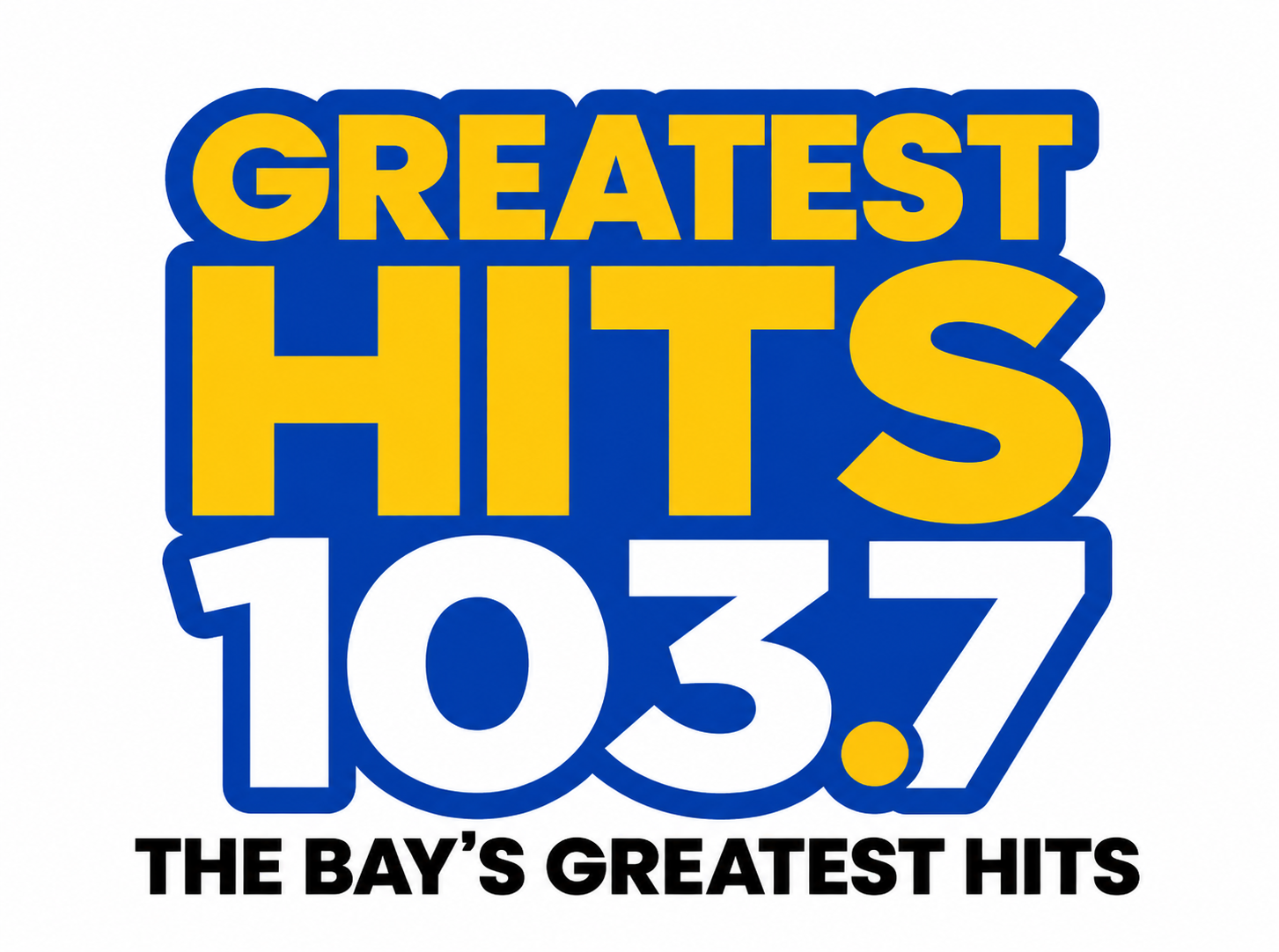
The station that became Classic Hits 103.7 in August 2024 is now presenting itself as The Bay’s Greatest Hits 103.7, with the new identity appearing on its official iHeartMedia website and corporate station listing. iHeartMedia+2
And while there’s nothing inherently wrong with updating a radio brand, this particular change raises a question that deserves considerably more than a passing mention.
WHY? AGAIN?
Seriously.
Didn’t we just do this?
Well, relatively speaking, yes. The previous rebranding happened a little more than two years ago.
And for a station with a history as colorful as KOSF’s, another name change feels less like a major programming announcement and more like somebody found an old branding presentation, changed the date and called another meeting.
At this rate, the station’s logo designer should be receiving residuals.
From Classic Hits to Greatest Hits and the songs apparently didn’t get the memo
Let’s examine what actually changed.
In August 2024, iHeartMedia announced that KOSF was moving away from its previous 1980s-centered identity and adopting the name Classic Hits 103.7.
The station positioned itself around familiar music from the 1970s, 1980s and 1990s.
At the time, management explained that the broader identity better reflected a playlist that had already expanded beyond its earlier 1980s emphasis.
That explanation made sense.
A station previously identified closely with a particular decade was acknowledging that its music had evolved.
Even then, KOSF Program Director Ricci Filiar told SFGATE that the change primarily involved the station’s name rather than a dramatic musical transformation. SFGATE
Fast-forward to October 2026.
The Classic Hits branding has now given way to The Bay’s Greatest Hits 103.7.
And here is where things become interesting.
Classic Hits and Greatest Hits are not fundamentally different programming formats.
One describes a category of familiar older music.
The other makes a promise about the quality and familiarity of the songs.
Both can support virtually the same playlist.
Both can appeal to listeners who enjoy established hits from previous decades.
Both can coexist with the same air personalities and promotional strategy.
Which means the important question isn’t whether the words sound attractive.
It’s whether the new identity accomplishes something the previous one could not.
Because if you’re playing Fleetwood Mac on Monday as Classic Hits 103.7 and Fleetwood Mac on Tuesday as The Bay’s Greatest Hits 103.7, the listener may reasonably wonder what all the excitement is about.
DID THE MUSIC CHANGE OR DID THE BUSINESS CARDS JUST GET EXPENSIVE?
The station’s official website continues to feature familiar artists and its established programming lineup, including Christie in the Morning, Martha Quinn and Big Rig. Nothing reviewed establishes a sweeping new format launch accompanying this rebrand. The Bay’s Greatest Hits 103.7
And that distinction matters.
This is a branding change, not a verified wholesale musical format flip.
But even a branding change can reveal something important about a company’s strategy.
This frequency has had more identities than a Hollywood undercover agent
To appreciate why the latest move deserves scrutiny, you have to understand the history of 103.7 FM in San Francisco.
Long before its current incarnation, the frequency was home to KKSF, one of America’s best-known Smooth Jazz stations.
That identity became a significant part of Bay Area radio history.
But the station eventually moved away from Smooth Jazz, adopting Classic Rock as 103.7 The Band in 2009.
Then came Oldies 103.7.
Then additional variations of Classic Hits branding.
Then Big 103.7.
Then, in 2016, the station shifted toward an all-1980s identity under the iHeart80s 103.7 brand.
Later came 80s Plus.
Then Classic Hits 103.7 in 2024.
And now The Bay’s Greatest Hits 103.7.
The Bay Area Radio Museum documents much of the frequency’s earlier evolution, including its Smooth Jazz years, the transition to The Band and its subsequent Oldies identity. Bay Area Radio Museum & Hall of Fame
That’s a lot of names.
And while every transition had its own circumstances, the cumulative effect raises a legitimate question about the value of continuity.
At what point does a radio station stop refreshing its brand and start making listeners wonder whether the building has a new tenant every other year?
Imagine walking into your favorite restaurant.
You’ve been going there for years.
The food is familiar.
The employees are familiar.
The building hasn’t moved.
But every couple of years, the sign changes.
First it’s Joe’s Diner.
Then Joe’s Classic Diner.
Then Joe’s Greatest Diner.
Then The Bay’s Greatest Joe’s Diner.
Eventually, you’re going to ask whether Joe is still cooking or somebody in marketing has been drinking too much espresso.
And radio is no different.
Brand recognition is built through repetition.
Listeners hear a station name hundreds or thousands of times.
They associate that name with songs, personalities, promotions and emotional experiences.
Then management changes the name.
And the process begins again.
Sometimes that’s necessary.
Sometimes it’s brilliant.
Sometimes a new identity helps rescue a struggling product or signals a meaningful improvement.
But sometimes?
Sometimes the radio station was perfectly capable of playing Phil Collins without another logo.
But there may actually be a strategy hiding underneath the new name
Let’s give iHeartMedia the benefit of a serious programming analysis.
The phrase The Bay’s Greatest Hits has one obvious advantage over Classic Hits 103.7.
It’s more geographically specific.
It connects the brand to the Bay Area.
And it makes an emotional promise rather than merely identifying a format category.
That distinction isn’t meaningless.
Listeners don’t necessarily think about music in the same terms broadcasters do.
A programmer might describe a station as Classic Hits, Adult Hits, Classic Rock or Adult Contemporary.
The average listener may simply want songs they recognize, enjoy and associate with meaningful moments in their lives.
Greatest Hits is arguably a more accessible promise.
And adding The Bay’s gives the station a local identity that a generic national format description lacks.
In an industry where many stations are criticized for sounding increasingly interchangeable, that local connection could be valuable.
But there’s a catch.
A local-sounding slogan doesn’t automatically create a locally distinctive radio station.
If the music, imaging, personalities, promotions and listener experience remain unchanged, the new name must still earn its place.
And that raises the central programming question.
What is The Bay’s Greatest Hits 103.7 going to deliver that Classic Hits 103.7 wasn’t already delivering?
More local personality?
A refreshed music library?
Better integration with Bay Area events?
A more memorable promotional campaign?
A clearer competitive position?
Those would all be reasonable possibilities.
But iHeartMedia’s publicly available station materials do not yet establish which, if any, motivated this latest adjustment.
And we should not mistake speculation for an official programming explanation.
The biggest irony is that they were already calling it that
Here’s the detail that makes this entire situation particularly fascinating.
When iHeartMedia introduced Classic Hits 103.7 in August 2024, the station’s positioning already incorporated the phrase The Bay’s Greatest Hits.
In other words, the company has effectively taken language that was already part of the station’s identity and promoted it to the primary brand.
That’s not necessarily a bad decision.
In fact, if audience research suggested that listeners remembered the positioning statement more readily than the format label, elevating that language might be perfectly sensible.
But it makes the move feel considerably less revolutionary.
This isn’t so much a brand-new outfit as taking the jacket you’ve been wearing for two years and deciding it should now be the entire wardrobe.
And that’s why the timing deserves examination.
Why now?
Why not make this the primary identity in 2024?
What changed in the market?
What did the audience research reveal, assuming research played a role?
And how will success be measured?
Those are questions worth asking of any major radio operator.
Because while changing a logo is relatively straightforward, changing listener behavior is not.
A station can change its name but listeners decide whether the brand means anything
There is a tendency in broadcasting to treat branding as though it exists independently of programming.
It doesn’t.
A station’s name is a promise.
The music fulfills that promise.
The personalities give it character.
The promotions make it visible.
And the audience ultimately decides whether the whole thing deserves a place in its daily routine.
A name can help establish those expectations.
But it cannot substitute for delivering them.
For KOSF, the opportunity is clear.
If The Bay’s Greatest Hits becomes a stronger, more memorable identity that better reflects the station’s relationship with San Francisco, Oakland, San Jose and the surrounding communities, the change could prove worthwhile.
But if it simply replaces one generic description with another while the listening experience remains virtually identical, the benefit may be harder to establish.
And in a marketplace where broadcasters face competition from streaming services, podcasts, satellite radio and virtually unlimited digital music choices, every strategic decision should serve a meaningful purpose.
The question isn’t whether the new name sounds good. It does. The question is whether it makes the station better.
That’s a much higher standard.
And it’s the standard radio should be applying more often.
One last request from those of us who have been around the radio dial a while
To the folks at iHeartMedia San Francisco, this isn’t an indictment of your programming team or the talented personalities who continue entertaining Bay Area listeners.
Martha Quinn remains an instantly recognizable connection to the music television era.
Christie James brings an established morning presence.
Big Rig and the station’s other personalities remain part of the brand’s public presentation.
There is real value in that continuity.
But the repeated branding adjustments invite a fair amount of curiosity.
And a little humor.
Because somewhere, a longtime KOSF listener is probably sitting in traffic on the Bay Bridge thinking:
Wait. Weren’t they Classic Hits?
Yes.
And before that, weren’t they 80s Plus?
Yes.
And before that, weren’t they iHeart80s?
Also yes.
And now they’re The Bay’s Greatest Hits?
Correct.
So what station am I listening to?
103.7. JUST REMEMBER 103.7. THE NAME MAY BE SUBJECT TO CHANGE WITHOUT NOTICE.
And that, perhaps, is the one thing that has remained remarkably consistent throughout the station’s modern history.
The frequency.
The dial position.
103.7.
Still there.
Still playing familiar music.
Still trying to find the most effective way to describe itself.
And perhaps that’s the broader lesson for radio.
Sometimes a fresh identity is exactly what a station needs.
Sometimes the best marketing decision is to simplify a complicated brand.
And sometimes, before ordering another batch of promotional T-shirts, somebody ought to ask whether the station has already spent enough time changing the name.
Because the greatest hits are supposed to be the songs, not the greatest hits of the station’s previous logos.
So congratulations to The Bay’s Greatest Hits 103.7 on its new identity.
We hope it works.
We hope listeners embrace it.
And most importantly, we hope the name sticks around long enough for everybody to learn it.
Because at this point, even Fleetwood Mac has had fewer reunions than this station has had branding meetings.
On The Dial will continue following KOSF’s latest branding transition and watching for any accompanying changes in programming, marketing or audience strategy. We welcome an explanation from iHeartMedia San Francisco about the thinking behind the move.
Hashtags
#OnTheDial #KOSF #1037FM #iHeartMedia #SanFranciscoRadio #BayAreaRadio #ClassicHits #GreatestHits #RadioRebranding #RadioProgramming #RadioIndustry #Broadcasting #RadioMarketing #MarthaQuinn #RadioNews