

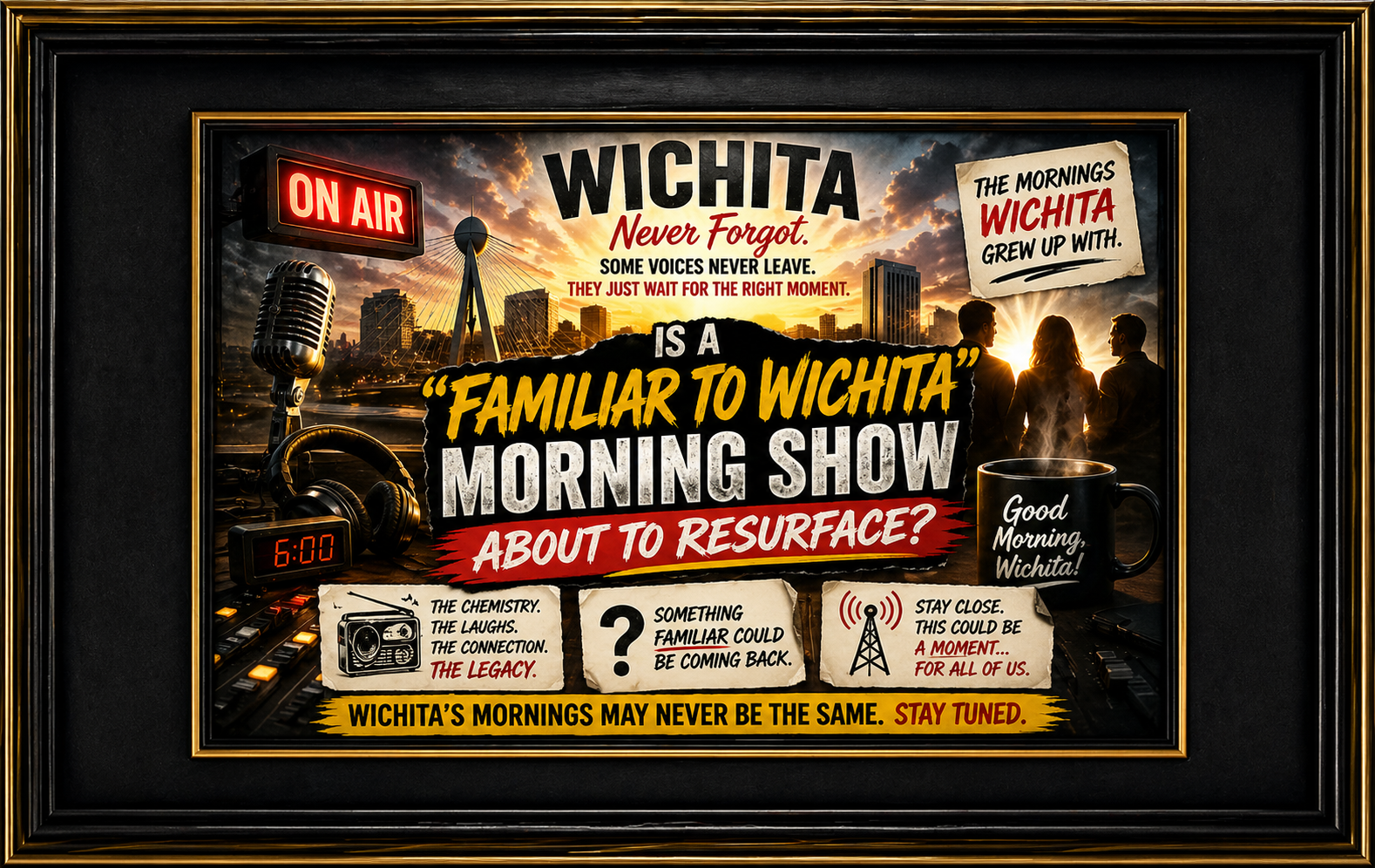
There are certain radio shows that don’t just fill a time slot — they become part of a city’s routine, its rhythm, even its identity. Wichita had one of those. For years, mornings weren’t just about getting to work or getting the kids out the door. They were about turning on the radio and stepping into something that felt consistent, relatable and unmistakably local. That kind of connection doesn’t fade easily, and lately, there are signs that it may not be finished yet.
Something is quietly building beneath the surface in Wichita. There’s no official word, no formal announcement, nothing you can point to and say, “that’s it.” But in this business, momentum doesn’t always start with headlines. It starts with movement — subtle shifts, renewed visibility, conversations happening just outside the spotlight. And when it involves voices that once defined a market, people start paying attention.
For nearly three decades, one morning show held down a level of consistency that is almost unheard of in modern radio. Through industry changes, ownership shifts and evolving listener habits, the formula worked because it was real. The connection wasn’t forced. It was built over time, with trust, familiarity and a sense that listeners weren’t just tuning in — they were part of it.
That kind of legacy has a way of sticking around.
Wichita remembers what those mornings felt like. It remembers the pacing, the humor, the balance between entertainment and everyday life. It remembers when radio didn’t feel like it was competing with everything else — it felt like the centerpiece. And when something like that goes away, it doesn’t just disappear. It leaves a space.
What makes this moment interesting is that the key voices behind that run never truly stepped away from being visible, relevant or connected. Their paths may have shifted, their platforms may have evolved, but the core of what made them work — communication, personality and relatability — never left. In radio terms, that means one thing: the foundation is still there.
And when the foundation is still there, the question naturally follows.
Is the timing right?
Because comebacks in radio don’t happen by accident. They happen when opportunity aligns with memory — when someone behind the scenes believes that what once worked could work again, possibly even stronger in a different landscape. And right now, Wichita feels like a market where that kind of thinking could take hold.
No names are being confirmed. No stations are being tied to anything. But the signals — quiet as they may be — are enough to spark curiosity.
Something familiar is being talked about again.
And if it becomes something more than talk, it won’t just be a return. It will be a moment that reminds an entire market what it sounded like when everything clicked.
Stay close to this one.
On The Dial covers breaking radio industry news, including layoffs, programming changes, talent moves, and broadcast trends across the United States.