


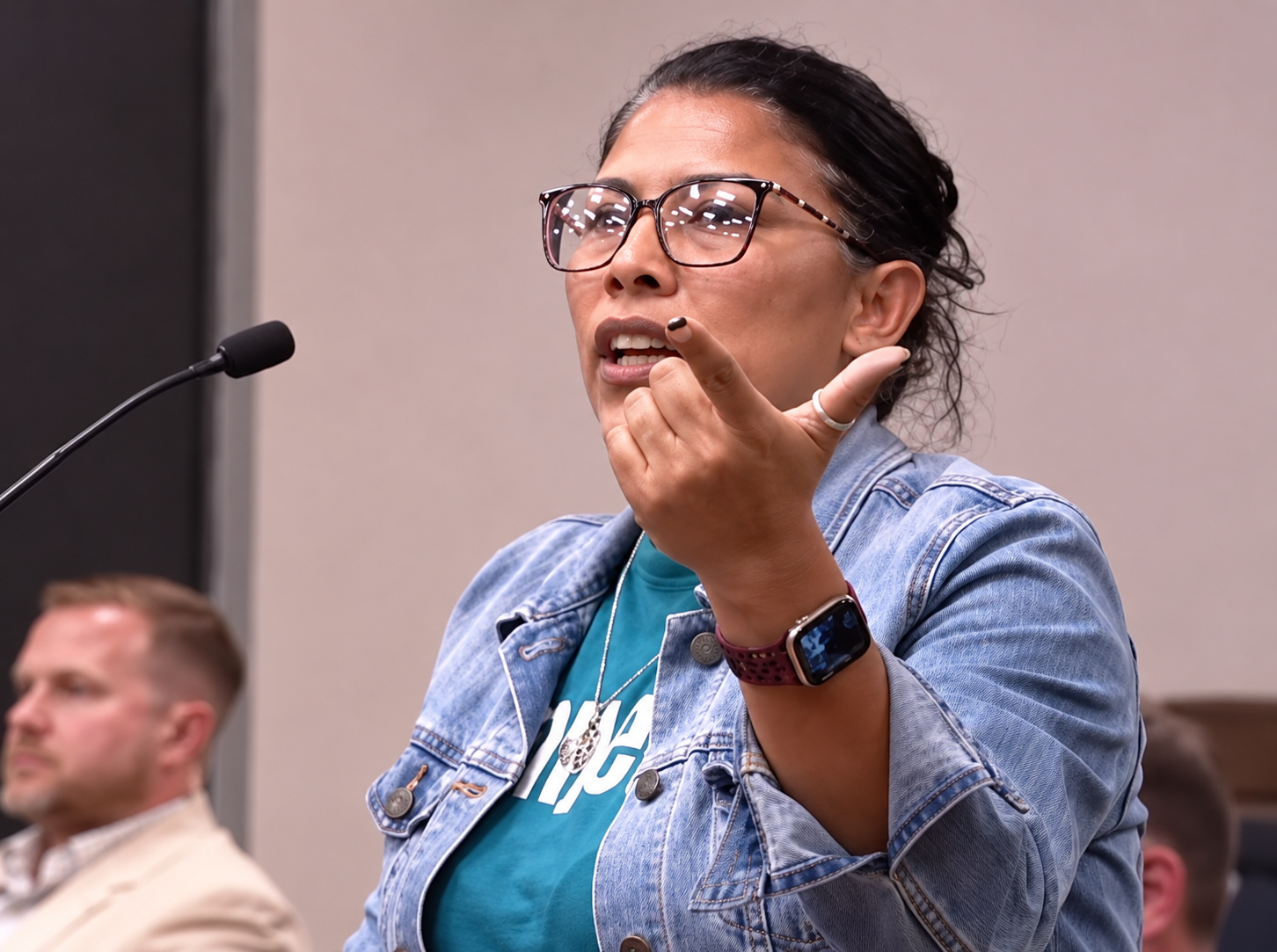
A woman’s allegations during a public meeting have spread across social media but the bigger question is what can actually be established…
A woman approaches the microphone at a Pasadena, Texas, City Council meeting and makes allegations serious enough to stop people in their tracks. The subject isn’t property taxes, road construction, or the usual disagreements that fill municipal meetings. Instead, she accuses a council member of involvement in cocaine sales and attempting to involve her son in selling drugs. A video of the exchange is now circulating across social media, raising questions about what happened inside City Hall on October 20 and whether there is evidence behind the accusations. And while this may appear to be another sensational viral moment, it represents something much more important for Houston-area journalism.
This is exactly the kind of situation where responsible local broadcasting has an opportunity to distinguish itself from social media.
The October 20 Pasadena City Council meeting is documented in the city’s public records, and video of the proceedings is available online.
A circulating clip features a woman speaking during the meeting, along with edited graphics identifying a city council member. The allegations described in the video are extraordinarily serious, but the graphics and the woman’s statements do not establish criminal wrongdoing.
There is no independently verified evidence available to On The Dial confirming that the alleged cocaine distribution or attempted recruitment occurred. No related criminal charge, police finding, or official investigation has been established through the records reviewed for this article.
Those distinctions matter.
Because a public accusation is not a criminal conviction, and a video receiving thousands of views is not proof that everything being alleged is true.
But here’s where the story becomes especially interesting.
The internet can make a moment famous overnight. Local journalism is supposed to help people understand what that moment actually means.
Pasadena is a major community within Harris County, just southeast of Houston. Its residents work in the region’s industries, attend its schools, raise their families, and participate in the same metropolitan economy served by some of America’s most recognized broadcasting operations.
This isn’t some distant controversy with no connection to the Houston audience.
It’s happening in their backyard.
Stations such as NewsRadio 740 KTRH, Houston Public Media’s KUHF, and the region’s television newsrooms have the journalistic resources and local connections to examine matters of public accountability.
And that’s important because allegations involving elected officials should never be treated casually.
Neither should they be ignored simply because the facts are complicated.
The responsible approach begins with the public record: the complete council meeting, the actual statements made, and any independently verifiable documentation that may exist.
It also requires recognizing what remains unknown.
I’ve watched the broadcasting industry spend years discussing the competition between traditional media and social platforms. We talk about declining attention spans, disappearing audiences, and the speed at which information travels.
But stories like this illustrate something that deserves greater attention.
Speed and credibility are not the same thing.
Anybody can share a provocative video.
Anybody can write an explosive headline.
And anybody can repeat an accusation without knowing whether it’s true.
But the public deserves something better than that, particularly when an individual’s reputation and the integrity of local government are involved.
Good journalism isn’t about protecting politicians from uncomfortable questions.
It’s also not about declaring somebody guilty because a microphone captured an accusation.
It’s about establishing facts.
The October 20 meeting provides a documented starting point. The allegations remain unproven, and the circulating edited clip should not be mistaken for a complete evidentiary record.
For Pasadena residents, the central issue is whether the public receives reliable answers rather than another round of internet speculation.
For broadcasters, the lesson reaches far beyond Texas.
Our industry doesn’t need to compete with social media to see who can repeat an allegation the fastest. We need to demonstrate why accurate reporting still matters.
That’s a responsibility worth taking seriously.
Because when the cameras stop recording, the comments slow down, and the viral moment eventually disappears from everyone’s feed, the people of Pasadena will still be living in their community.
And they’ll still deserve the truth.
Social media brought attention to the microphone at Pasadena City Hall. What matters now is whether the public record can provide answers.
#OnTheDial #PasadenaTexas #HoustonRadio #LocalJournalism #PublicAccountability