


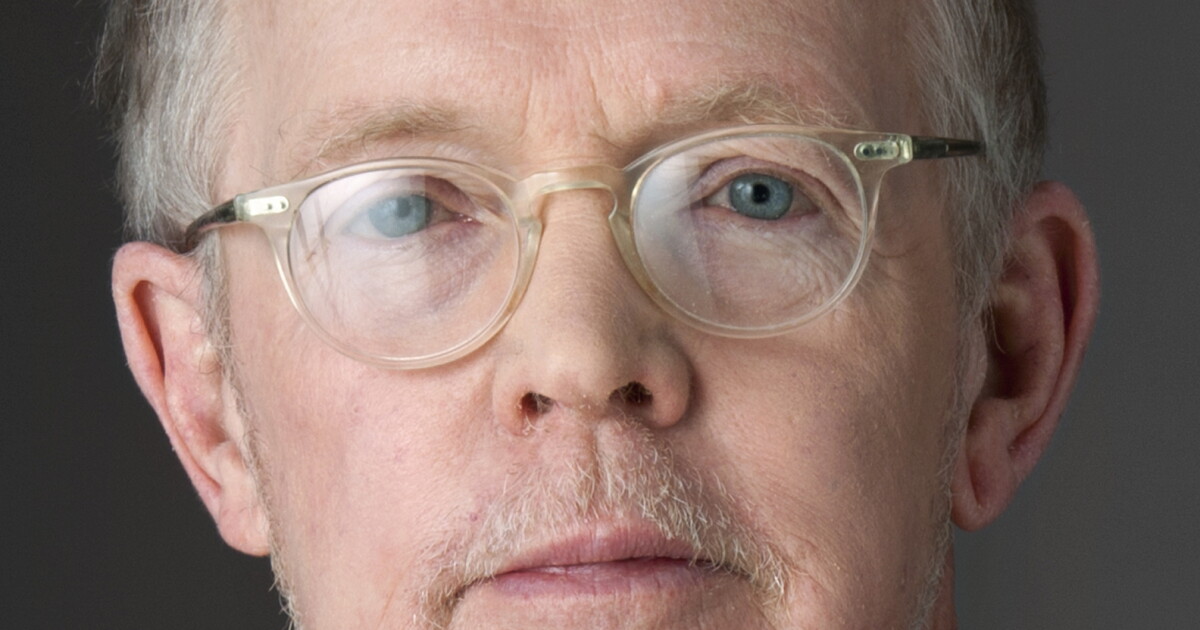
He helped America understand the biggest events in modern history, but his greatest gift may have been making ordinary people in forgotten places feel extraordinary.
There are broadcasters who become famous because of the size of their audience, the power of their personality, or their ability to command attention whenever a microphone is placed in front of them. And then there are broadcasters like Noah Adams, who understood that sometimes the most powerful thing you can do behind a microphone is stop talking long enough to hear what somebody else has to say. Adams, the legendary NPR journalist and longtime host of All Things Considered, died Friday, October 16, at his home in Yellow Springs, Ohio. He was 84. His wife, Neenah Ellis, confirmed his passing, bringing to a close an extraordinary career that helped shape the sound of American public radio and demonstrated that compelling storytelling doesn’t always require celebrities, controversy, or a breaking-news banner.
Sometimes all it requires is an ordinary person with an extraordinary story and a broadcaster willing to listen.
And if there’s one thing I’ve learned after more than thirty years in this business, it’s that listening may be the most underrated skill in radio.
Noah Adams mastered it.
For eighteen years, Adams helped guide listeners through some of the most consequential events in modern American history on NPR’s All Things Considered. He was on the air during presidential elections, the collapse of the Berlin Wall, and the September 11 terrorist attacks. His delivery was measured, thoughtful, and reassuring, even when the world seemed to be coming apart.
But here’s what made him different.
Noah Adams understood that the people living between America’s biggest cities were every bit as important as the people making headlines inside them.
He didn’t need a famous name to make an interview interesting. He could travel through a small community, talk with a farmer, a factory worker, a local business owner, or someone sitting on a front porch, and discover a story worth telling to the entire country.
That’s not something every broadcaster knows how to do.
And frankly, it’s something our industry could stand to rediscover.
Adams was born in Ashland, Kentucky, along the Ohio River, and his earliest radio experience came in 1962 at WIRO in nearby Ironton, Ohio. He was a young announcer working morning radio, playing records at night, and handling everything from basketball broadcasts to local events.
Think about that for a moment.
Before NPR.
Before the national recognition.
Before the books and awards.
There was a young guy doing what countless broadcasters have done in small markets across America.
Playing music.
Reading announcements.
Covering local sports.
Learning how to communicate with people.
And probably discovering that the microphone could become one of the most powerful tools he’d ever touch.
His early career also included WCMI in Ashland, WSAZ in Huntington, West Virginia, and WCYB in Bristol, Virginia, before he eventually found his way into public radio at the University of Kentucky.
I love that part of his story.
Because it reminds us that broadcasting greatness doesn’t always begin in New York, Los Angeles, or Chicago.
Sometimes it begins in a small studio along the Ohio River.
And sometimes the person sitting behind that microphone goes on to change the way an entire country hears itself.
Adams joined NPR in 1975, when the network was still developing its identity and learning what it wanted to become. He initially worked behind the scenes, eventually moving into hosting responsibilities and becoming one of the defining voices of All Things Considered.
And what a remarkable period that was for broadcasting.
Public radio was establishing a different kind of relationship with listeners. Rather than relying exclusively on the urgency of headlines, it could give stories time to develop. It could allow conversations to unfold. It could take listeners somewhere they’d never been and introduce them to people they might otherwise never meet.
Adams embraced that opportunity.
One of his most significant projects was the 1981 documentary Father Cares The Last of Jonestown, developed with producer Deborah Amos and writer James Reston Jr. The experimental production used recordings associated with the Peoples Temple tragedy and an unusual narrative approach to examine an event that had horrified the world. It earned major honors, including a Peabody-era level of recognition through the Alfred I. duPont-Columbia University Award and the prestigious Prix Italia.
It also demonstrated Adams’ willingness to experiment with what recorded sound and carefully constructed storytelling could accomplish.
But what I find especially meaningful about his career is how consistently he returned to the experiences of ordinary Americans.
He traveled through Appalachia.
He explored the history of the New River.
He wrote about the Wright brothers and the places where their aviation experiments changed history.
And in Piano Lessons, he documented his own experience learning to play the piano in his fifties.
As someone who has played piano since childhood, I particularly appreciate that last project.
Imagine a nationally recognized journalist admitting that he didn’t know everything about something, then inviting people to follow along as he learned.
There’s something wonderfully human about that.
No manufactured expertise.
No pretending.
Just curiosity, humility, and the willingness to tell an interesting story.
His connection to Ohio eventually brought him to Yellow Springs, the distinctive community near Dayton where his wife, Neenah Ellis, served as General Manager of public radio station WYSO.
That connection is particularly appropriate.
WYSO has long been an important voice for the Miami Valley, serving communities whose stories don’t always receive national attention.
Adams spent his career demonstrating why those places matter.
And although he became nationally recognized, he never seemed to lose his appreciation for the local experiences that made broadcasting meaningful.
Former NPR colleague Melissa Block remembered his extraordinary powers of observation, describing how he could return from a reporting trip with a few handwritten notes and transform them into a vivid portrait of a person or community.
That’s a remarkable skill.
And it’s one I wish more young broadcasters had the opportunity to learn.
Because somewhere along the way, we’ve become so focused on delivering content quickly that we sometimes forget the value of delivering it thoughtfully.
We’re surrounded by breaking-news alerts, social media posts, automated programming, and endless demands for attention.
Everybody wants to be first.
Everybody wants to be loud.
Everybody wants another impression, another click, another reaction.
Noah Adams demonstrated that you could earn an audience’s trust without shouting for it.
He didn’t need to be the biggest personality in the room. He needed to be the person who understood why everybody else in the room mattered.
And I think there’s a lesson in that for all of us.
I’ve spent much of my career in commercial radio, where personalities, energy, entertainment, and audience engagement are essential parts of what we do. I love those elements of broadcasting, and I always will.
But great radio also requires sincerity.
It requires preparation.
It requires understanding your community.
And most importantly, it requires recognizing that the people listening are human beings with experiences worth acknowledging.
Adams understood those principles better than most.
His influence extended well beyond the programs he hosted. Broadcasters including Ira Glass and generations of public radio journalists learned from the storytelling traditions he helped establish.
And the audiences who spent years hearing his voice became part of a relationship that only radio can create.
There’s something remarkable about that.
A man born in Kentucky, who began his career at a small station in Ohio, eventually became a trusted companion to millions of Americans.
He helped them understand their country.
He introduced them to their neighbors.
And he reminded them that fascinating stories existed far beyond Washington, Wall Street, and Hollywood.
That’s a remarkable broadcasting legacy.
To Neenah Ellis, his family, former colleagues, and the countless listeners who welcomed Noah Adams into their homes and automobiles over the years, we extend our condolences.
And to those of us who still love this extraordinary medium, his passing is another reminder that our greatest responsibility isn’t simply filling airtime.
It’s making that airtime matter.
Noah Adams did that for decades.
He helped listeners understand a complicated world while never forgetting the simple humanity of the people living in it.
And if there’s one thing I hope younger broadcasters take from his career, it’s this:
You don’t have to be the loudest voice on the radio to become one of the most important.
Sometimes you just have to listen.
Rest well, Noah Adams.
The microphone has gone silent, but the stories you told will continue reminding us what great radio sounds like.
And somewhere in a small American town, there’s still somebody with a remarkable story waiting for a broadcaster who cares enough to hear it.
That’s the kind of radio Noah Adams believed in.
And that’s the kind of radio we ought to keep making.
#OnTheDial #NoahAdams #NPR #AllThingsConsidered #PublicRadio #WYSO #YellowSprings #OhioRadio #KentuckyRadio #RadioLegends #BroadcastJournalism #RadioStorytelling #LocalRadio #RadioHistory #RememberingNoahAdams