


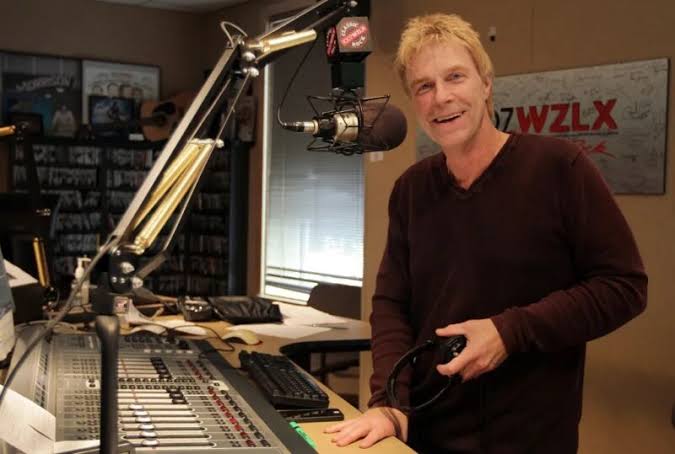
Boston has never been a city that takes its rock and roll lightly. From the clubs of Cambridge and the legendary stages along Lansdowne Street to the studios that helped introduce America to some of the biggest bands in music, this market has a history that few cities can match. And for nearly five decades, Carter Alan has been right in the middle of it. Now, one of Boston’s most respected broadcasters is preparing to close an extraordinary chapter, announcing that he will retire Friday, December 18, ending a remarkable 47-year run on the city’s airwaves.
For listeners of iHeartMedia’s Classic Rock 100.7 WZLX, where Alan serves as Assistant Program Director and midday personality, this isn’t simply another familiar voice leaving the building.
This is a man who helped write the soundtrack of Boston rock radio. And then he literally wrote the book about it.
Alan arrived at legendary Rock 104.1 WBCN in 1979, joining a station that was already rewriting the rules of American FM radio. This was the era of Charles Laquidara, Oedipus, groundbreaking personalities, fearless music decisions, and a station that didn’t just reflect Boston’s rock culture.
It helped create it.
Alan spent nineteen years at WBCN, eventually becoming Music Director, where his ear for emerging artists helped connect Boston audiences with music that would become part of rock history.
One of my favorite stories involves a little-known Irish band called U2. In 1980, Alan became one of the first American DJs to play the group’s debut single, I Will Follow.
Imagine that.
Long before Bono was filling stadiums, somebody in a Boston radio studio recognized that this band might have something worth hearing.
That’s what great music directors did.
They didn’t simply wait for somebody else to tell them what was a hit.
They listened.
Alan also helped oversee WBCN’s legendary Rock ‘n’ Roll Rumble, the local music competition that became an important launching pad for Boston-area artists, including ‘Til Tuesday, The Neighborhoods, and Gang Green.
That’s the part of his career I particularly admire.
He wasn’t simply playing rock records.
He was helping connect local musicians with an audience.
And that’s something radio should never forget how to do.
In 1998, Alan moved across the Boston radio dial to WZLX, where he would spend another 28 years bringing his knowledge, personality, and musical enthusiasm to Classic Rock listeners.
Along the way, he became something else that deserves recognition.
A historian.
His book Radio Free Boston The Rise and Fall of WBCN documented the extraordinary story of one of America’s most influential rock stations, preserving the personalities, music, controversies, and culture that made WBCN such an important part of broadcasting history.
The book even features a foreword from Aerosmith’s Steven Tyler.
And if you know anything about Boston rock radio, you understand just how appropriate that is.
Alan has also written extensively about U2, developing relationships with musicians whose careers he followed from their earliest days.
I’ve always believed there’s a special distinction between somebody who works in radio and somebody who genuinely loves radio.
Carter Alan clearly belongs in that second category.
He lived the music.
He knew the artists.
He understood the history.
And perhaps most importantly, he cared enough to preserve it for the broadcasters who would come after him.
Think about how much the industry has changed since 1979.
Vinyl records gave way to CDs. CDs gave way to digital libraries. Music directors watched computers assume responsibilities once handled through instinct, relationships, and countless hours of listening.
Ownership changed.
Formats changed.
Audiences changed.
And WBCN itself disappeared from the FM dial in 2009.
But Carter Alan remained a familiar presence in Boston.
Forty-seven years in one radio market is more than a career. It’s a relationship with generations of listeners.
That’s what makes this retirement significant.
Boston isn’t simply losing a midday personality.
It’s preparing to say goodbye to someone who helped connect its musical past with its broadcasting present.
And in an industry where longevity increasingly seems like a luxury, Carter Alan’s career reminds us what happens when knowledge, passion, and authenticity are allowed to grow over decades.
December 18 will mark the end of an extraordinary on-air chapter.
But the stories, the music, the musicians he championed, and the history he preserved aren’t going anywhere.
Congratulations, Carter, on 47 remarkable years.
And thank you for reminding those of us who still love this business that great radio has never been just about playing the next song.
Sometimes it’s about having the courage to play the song nobody knows yet and the wisdom to recognize when that song might change everything.
Boston radio will sound a little different after December 18.
But the music Carter Alan helped introduce to the world will keep playing long after he signs off.
#OnTheDial #CarterAlan #WZLX #WBCN #BostonRadio #ClassicRock #RockRadio #iHeartMedia #U2 #RadioLegends #RadioHistory #RadioPersonalities #MusicDirectors #BostonMusic