


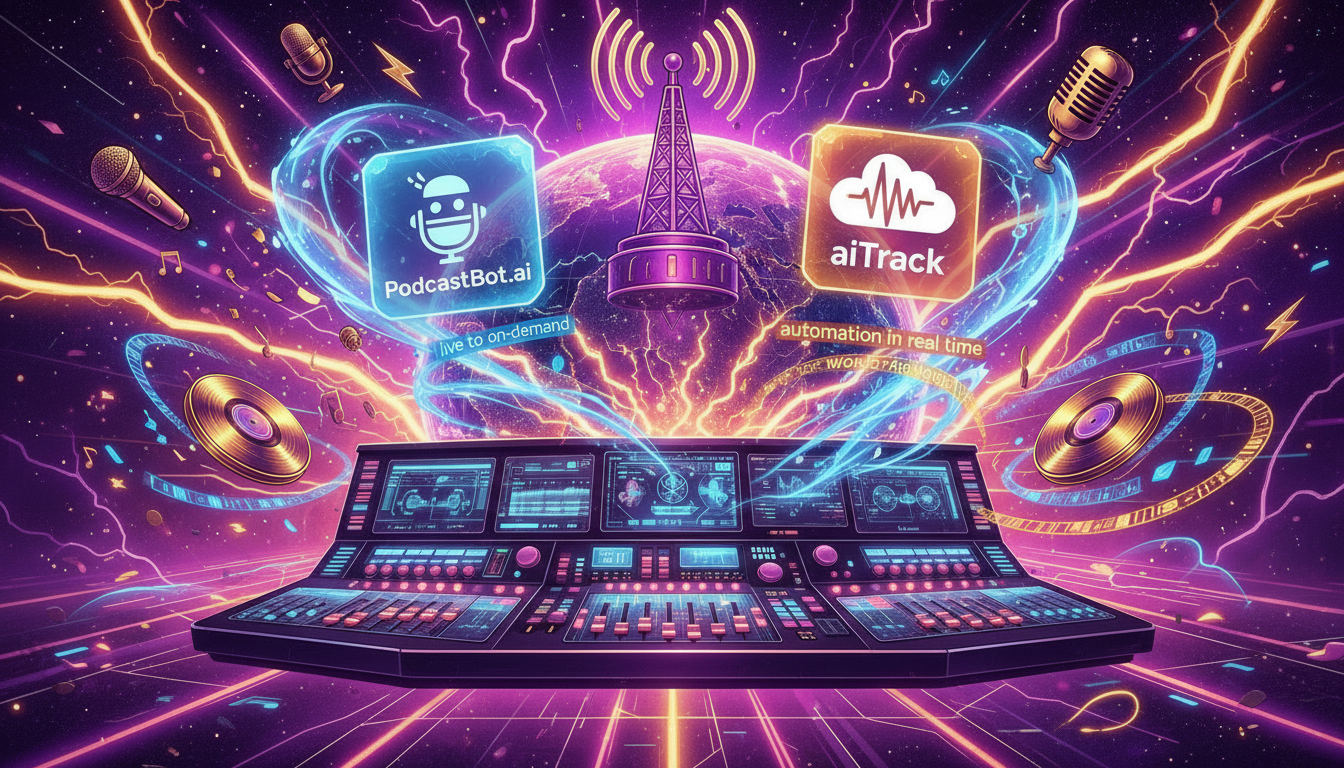
There’s always a moment at the NAB Show when you realize the theme of the year. You wander past the glossy booths, the billion-dollar buzzwords, the coffee-fueled pitches about “reimagining the experience.” By lunchtime, it’s obvious what the industry’s chasing. This year, it’s automation—the kind that doesn’t just make things easier, it makes them instant.
The real attention grabbers are a pair of tools called PodcastBot.ai and aiTrack, and they’re doing more than shortening workflows—they’re redrawing the entire concept of time in broadcasting. The idea is simple on paper: whatever goes out live can live again on demand, immediately. Every word, every pause, every unexpected on-air gem is captured, clipped, cleaned, labeled, and distributed to every platform before the next segment even starts. These systems don’t wait for someone in a backroom to edit the file. They do it while the conversation’s still happening.
If it feels futuristic, that’s because it is—but not in the way the trade brochures would have you believe. This isn’t some grand reinvention of radio or streaming. It’s more like fine-tuning a machine that’s been grinding for decades. We’ve always known that the window between broadcasting and archiving was wasted time. These tools lock that window shut. With a live show now feeding directly into podcasts, social feeds, and video platforms, the line between “live” and “replay” has officially blurred into a single ongoing loop.
That loop changes the game for everyone. Programmers can repurpose a morning interview before the noon traffic report. Producers can grab highlights mid-segment instead of marking timestamps for later. Even advertisers, always a step behind innovation, can tie campaigns to live moments that keep resurfacing for weeks. Everything becomes a river of replays, each piece of content refusing to disappear.
Of course, there’s a murmur beneath the excitement—a quiet discomfort that events like NAB never quite say out loud. These systems are efficient. They save hours. And they eliminate the kind of tedious, hands-on tasks that once gave a lot of people in this business their start. The question isn’t whether machines can handle that work—they can, easily. The question is what people do once they no longer have to.
Maybe that’s the upside. If the editing, tagging, and uploading now happen automatically, what’s left is the creative part—the energy, the humor, the clash of personalities that no algorithm can mimic. Automation doesn’t kill creativity; it exposes who actually has some. The talent that treats every broadcast like a spark worth preserving could find these tools liberating. The rest might find them terrifying.
There’s a human rhythm that still can’t be coded: the split-second instinct, the emotion in a breath, the sound of someone thinking out loud. Machines can preserve those moments, but they can’t invent them. The people who understand that difference will be fine. The rest may soon realize technology doesn’t replace relevance—it just tests it faster.
Walking the convention floor, it’s clear this isn’t the year automation arrives—it’s the year it stops asking for permission. PodcastBot.ai and aiTrack are the proof. What once took entire departments now happens in real time, silently and flawlessly in the background. But what happens after that background work is stripped away—that’s the story worth watching.
Automation isn’t erasing live radio or streaming. It’s trapping them in amber—preserving every moment, good or bad, for replay at the tap of a finger. If that’s the future, then it’s a perfect reflection of now: speed over silence, content over pause, and no more excuses for letting a great broadcast fade into static.
-JPS